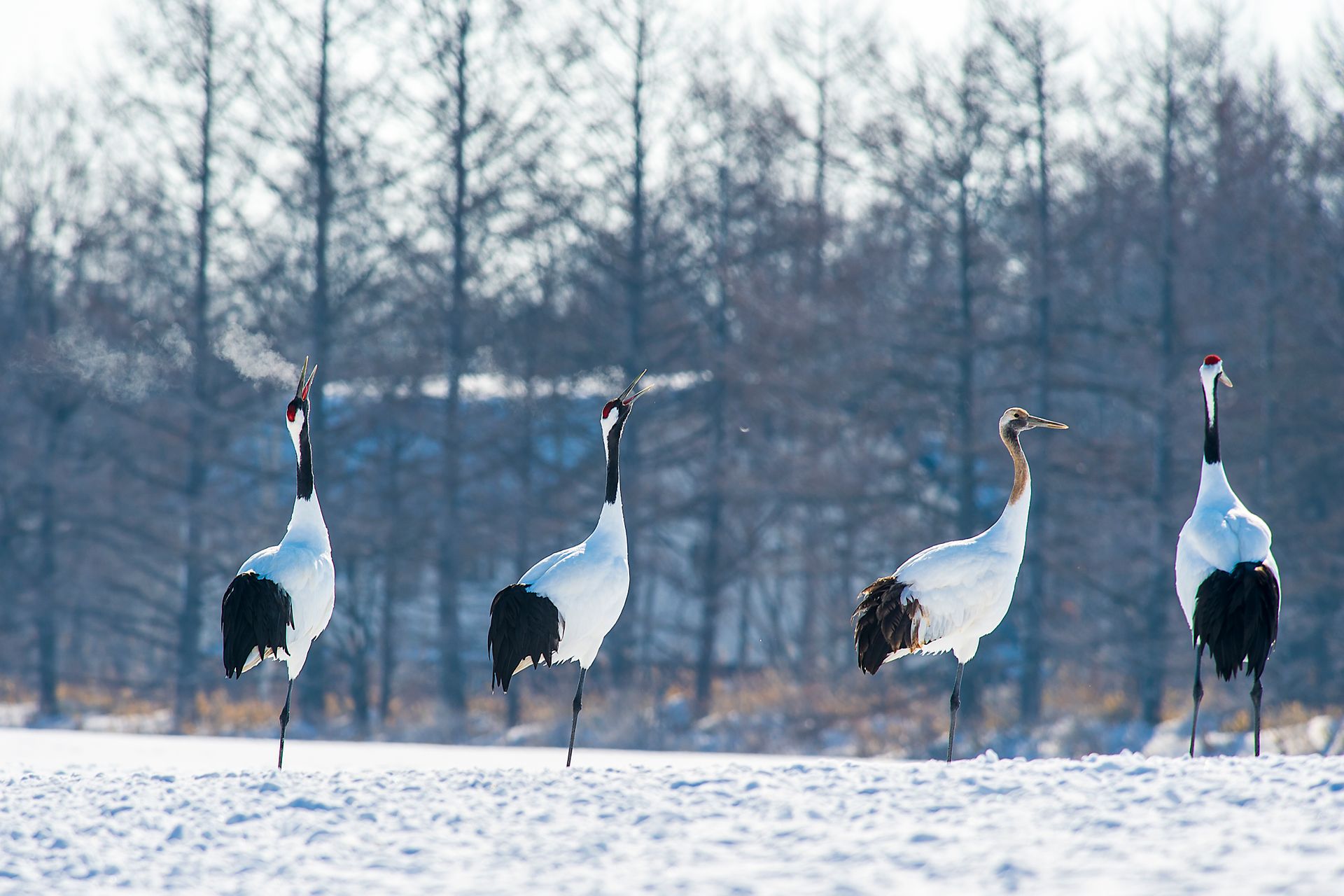
In Japanese tattooing, few symbols carry as much quiet weight as the crane. The tsuru, the Japanese crane, stands for longevity, fidelity, and good fortune, and it has done so for centuries, in poetry, in painting, in origami, and in the skin. A crane tattoo is not a fashion choice. It is a wish, made visible: a wish for a long life, for a faithful partnership, for luck that lasts, and for a recovery from illness or hardship. This guide explains what the crane means in Japanese tattooing, where the meaning comes from, how the thousand cranes tradition shapes the design, which symbols the crane is paired with, and how the bird is composed in irezumi, the traditional Japanese tattoo, so that you can choose a crane design that is beautiful, respectful, and true to the tradition it comes from.
Key Takeaways
- The crane, or tsuru, means longevity, fidelity, and good fortune in Japanese tattooing.
- The red-crowned crane is the bird behind the symbol, a tall white bird with a red crown that mates for life and dances in pairs.
- Senbazuru, the thousand cranes tradition, ties the crane to wishes for healing, hope, and recovery from illness.
- Crane pairings matter. Pine and tortoise strengthen the longevity meaning, while waves and the sun add movement and energy.
- In irezumi, the crane is composed to flow with the body, with the neck following a curve and the wings filling the space around it.
- Choose a single crane, a pair, or a flock based on what you want the tattoo to say, and choose an artist who knows the tradition.
Table of Contents
- What the Crane Means in Japan
- The Tsuru: Longevity, Fidelity, and Good Fortune
- Senbazuru: The Thousand Cranes Tradition
- Cranes With Pine, Tortoise, and Other Symbols
- How the Crane Is Composed in Irezumi
- Choosing Your Crane Design
- Crane Tattoo Aftercare and Ageing
- Our View
- Frequently Asked Questions
- Sources
- Recommended
What the Crane Means in Japan
To understand the crane in a tattoo, start with the bird. Cranes are a family of large, long-legged, long-necked birds found around the world, and they have been woven into human culture for thousands of years because they are conspicuous, graceful, and easy to watch. They fly with their necks outstretched, they call loudly, and many species dance, leaping into the air with their wings spread, which has made them a natural symbol of joy, celebration, and freedom. In Japan, the crane that matters most is the red-crowned crane, the tancho, a tall white bird with black on its neck and wings and a patch of bare red skin on its crown. It is one of the largest cranes in the world, and it lives in the wetlands of Hokkaido and the far east of Asia, where its winter gatherings have been watched and painted for centuries.
The meaning of the crane in Japan is built from what the bird does. Cranes are long-lived, and the red-crowned crane can live for decades, so the bird became a symbol of longevity. Cranes mate for life, and pairs stay together year after year, dancing and calling together, so the bird became a symbol of fidelity and a happy marriage. Cranes are also lucky. In Japanese mythology and folklore, the crane is a bird of good fortune, a messenger of the gods, and a creature that brings happiness to those who see it. A crane on a wedding kimono wishes the couple a long and faithful marriage. A crane on a New Year decoration wishes the household good fortune for the year ahead. A crane folded from paper wishes the folder health and hope. The same three meanings, longevity, fidelity, and good fortune, carry directly into the tattoo, and they are the reason the crane has lasted as a tattoo motif while other designs have come and gone.
The table below compares the crane with three other Japanese tattoo symbols, so you can see where the crane sits in the system and what each motif is best used for.
| Symbol | Core meaning | Best paired with | Best placement |
|---|---|---|---|
| Crane (tsuru) | Longevity, fidelity, good fortune | Pine, tortoise, plum blossom, sun | Back, chest, full sleeve |
| Koi | Perseverance, strength, ambition | Waves, water, lotus | Full sleeve, back, thigh |
| Dragonfly | Victory, courage, agility | Water, reeds, wind | Shoulder blade, arm, calf |
| Maple leaf | Passing time, the beauty of change | Wind, water, branches | Shoulder, back, sleeve |
The comparison is worth studying, because it shows that Japanese tattoo symbols are not interchangeable decorations. Each one carries a different wish, and the choice of symbol is a choice of meaning. Our guide to koi swimming upstream explains how the koi stands for perseverance and ambition, a meaning built on the story of the carp that swims upstream to become a dragon. Our guide to dragonfly tattoo meaning explains how the dragonfly stands for victory and courage, a meaning built on the insect’s speed and its role as a symbol of the samurai. Our guide to maple leaf tattoo meaning explains how the maple leaf stands for the passing of time and the beauty of change. The crane belongs in that company, but its meaning is gentler. It is a wish for a long, faithful, fortunate life, rather than a wish for victory or ambition, and that gentleness is part of its appeal.

The Tsuru: Longevity, Fidelity, and Good Fortune
The red-crowned crane is the bird that gives the symbol its power, and it is worth knowing the bird itself. The red-crowned crane is one of the largest cranes in the world, standing up to 1.6 metres tall, with a wingspan of more than two metres. Its body is white, its neck and the trailing edge of its wings are black, and the top of its head carries a patch of bare red skin that gives the bird its name. It lives in the wetlands of eastern Asia, and in Japan it is found in Hokkaido, where it gathers in the snow in winter. The bird is rare and protected, and it has become a symbol of Japan itself, appearing on coins, on stamps, and on the logo of the national airline. When a tattoo shows a white crane with a red crown, this is the bird it is showing.
Longevity is the oldest of the crane’s meanings, and it comes from the bird’s long life. A red-crowned crane can live for twenty to thirty years in the wild, and longer in captivity, which is a long life for a bird. In Japanese folklore, the crane was said to live for a thousand years, and that legend gave the bird its place as a symbol of a long life. A crane tattoo given for a birthday, a retirement, or a recovery from illness carries that wish directly. It says, in the language of the symbol, may you live long. The wish is often strengthened by pairing the crane with other long-lived things, as the pairings section explains below. A crane on its own is already a longevity wish, and a crane with pine or tortoise is a stronger one still.
Fidelity is the second meaning, and it comes from the bird’s family life. Red-crowned cranes mate for life, and pairs stay together for years, raising their chicks together and defending their territory together. The pair bond is so strong that the birds dance together, leaping into the air with their wings spread, bowing, and calling in unison, a display that has become one of the most photographed sights in Japanese wildlife. That dance is why the crane is a wedding symbol. A pair of cranes on a wedding kimono wishes the couple a faithful marriage that lasts as long as the birds’ own partnership. A pair of cranes in a tattoo carries the same wish, and it is one of the most common reasons people choose a crane design for a wedding, an anniversary, or a memorial to a partner.
Good fortune is the third meaning, and it is the broadest. The crane is a lucky bird in Japanese culture, a bird whose appearance is taken as a good omen, and a bird that is said to carry the souls of the dead to paradise. Cranes appear on New Year decorations, on gifts for new babies, and on the envelopes of lucky money, always as a wish for happiness and good luck. In a tattoo, that meaning makes the crane a good choice for a fresh start, a new job, a move to a new city, or any moment when the wearer wants luck on their side. It is also the meaning that connects the crane to the thousand cranes tradition, because a thousand cranes is a thousand wishes for good fortune, folded one by one. The crane’s luck is not loud or showy. It is the quiet, steady luck of a bird that returns to the same wetlands year after year, and that is why it suits people who want a meaningful tattoo without a dramatic one.
It is worth noting how the crane differs from other birds in Japanese tattooing. The phoenix is a mythical bird of rebirth and fire, dramatic and powerful. The crane is a real bird, and its power is quieter. It does not rise from ashes. It lives a long time, stays faithful, and brings luck. That realism is part of its appeal, and it is why the crane suits a wider range of people than the phoenix does. A crane tattoo can be a memorial, a wedding tattoo, a birthday tattoo, or a tattoo for someone who has recovered from an illness, and in each case the meaning is clear without needing to be explained. The bird explains itself, if you know what to look for.
Senbazuru: The Thousand Cranes Tradition
No part of the crane’s story is more moving than senbazuru, the tradition of folding one thousand origami cranes. One thousand origami cranes are folded one by one, often strung together in long garlands, and given as a wish for good luck, for a long life, or for recovery from illness. The tradition is old, and it is said that anyone who folds a thousand cranes will be granted a wish by the gods, although the number matters less than the act itself. Folding a thousand cranes takes weeks of steady, patient work, and that patience is part of the wish. Each crane is a small act of hope, and a thousand of them together are a powerful one. Origami, the art of paper folding, gives the tradition its form, and the crane is its most famous shape, a bird folded from a single square of paper with no cuts and no glue.
The tradition became known around the world through the story of Sadako Sasaki, a young girl who was exposed to radiation from the atomic bombing of Hiroshima as a child and who developed leukaemia as a result. While she was in hospital, she began folding paper cranes, hoping that a thousand cranes would grant her wish to recover. She died before she finished them, and her classmates finished the thousand in her memory. Her story made the paper crane a symbol of peace, of hope, and of the wish for a world without war, and today paper cranes are sent to Hiroshima from all over the world as a prayer for peace. A crane tattoo that draws on senbazuru carries that weight. It is not just a pretty bird. It is a wish for healing, a memorial to someone who is gone, or a statement of hope after a hard time, and it should be chosen with that weight in mind.

In a tattoo, senbazuru can be shown in several ways. A single paper crane, drawn with the sharp, folded lines of origami, is a quiet reference to the tradition, and it suits a small tattoo on the wrist, the ankle, or the shoulder blade. A string of paper cranes, shown hanging in a row or falling down the arm, is a bolder reference, and it suits a forearm or a calf, where the line of cranes can follow the limb. A flock of a thousand cranes is usually shown as a smaller number of cranes in flight, with the understanding that they stand for the thousand, and it suits a back or a chest, where there is room for the flock to spread. Our guide to best shoulder blade tattoo designs shows how a small crane or a flock can sit on the shoulder blade, where the flat surface suits a paper crane’s sharp lines. Whichever form you choose, keep the number meaningful. A single crane for a single wish, a pair for a partnership, and a flock for a thousand wishes are all clear, and a clear number makes the tattoo easier to read.
Cranes With Pine, Tortoise, and Other Symbols
Japanese tattooing rarely uses a symbol on its own, and the crane is almost always paired with other symbols that strengthen or complete its meaning. The most important pairing is with the pine tree. The pine is an evergreen, a tree that stays green through the winter, and it is a symbol of longevity and endurance in Japanese culture. A crane with a pine branch is a double wish for a long life, and it is one of the classic combinations in Japanese art, appearing on kimonos, on screens, and in tattoos. The pine gives the design a natural frame, with the branches reaching across the top of the piece and the crane standing or flying beneath them. A crane with plum blossom is a similar pairing, with the plum standing for the arrival of spring and for hope, and it suits a design that marks a new beginning.
The tortoise is the second classic pairing, and it is the one that most deepens the longevity meaning. The tortoise is a symbol of long life in Japanese culture, and the mythical minogame, a tortoise with a long tail of algae, is said to live for ten thousand years. A crane with a tortoise is a wish for a life that is both long and steady, and the two animals balance each other well in a design, with the crane’s height and lightness set against the tortoise’s low, solid shape. The pairing is traditional, and it appears in Japanese art alongside the pine as one of the three auspicious symbols of longevity, the crane, the pine, and the tortoise together. If you want a tattoo that is unmistakably about a long life, those three together are the strongest statement you can make. The irezumi tradition, the art of traditional Japanese tattooing, uses these pairings deliberately, and a good artist will know them without being told.
Flowers complete the design, and two flowers matter most. The chrysanthemum is the flower of long life and the imperial flower of Japan, and a crane with chrysanthemums is a design that wishes the wearer both a long life and good fortune. Our guide to chrysanthemum tattoo meaning explains the flower’s place in Japanese tattooing in full, and it is worth reading before you add it to a crane. The peony is the flower of good fortune and wealth, and a crane with peonies is a design that wishes the wearer luck and prosperity. Our guide to peony tattoo meaning explains that flower’s meaning, and the two guides together will help you choose the flower that matches your wish. Waves and wind bars are the background elements that tie a crane design together, giving the bird movement and filling the space around it. Our guide to Japanese wave tattoo meaning explains how waves are used in irezumi, and a crane flying over waves is one of the most dynamic compositions in the tradition.
How the Crane Is Composed in Irezumi
Composition is where a crane tattoo succeeds or fails, because the bird’s shape is both its beauty and its difficulty. A crane has a long neck, long legs, and wide wings, and those three features need space. In irezumi, the traditional Japanese tattoo, the crane is usually drawn large, with the body filling the main panel and the neck and wings reaching into the space around it. The neck is the key. A crane’s neck is a long, graceful curve, and in a tattoo it is drawn to follow a curve of the body, such as the curve of the ribs, the line of the arm, or the sweep of the back. A neck that follows the body’s own curves looks natural. A neck that fights them looks stiff. When you look at a crane design, follow the neck first. If it flows, the rest of the design usually flows too.
The wings are the second key, and they are where the artist shows their skill. A crane in flight has its wings spread wide, with the black tips of the primary feathers showing against the white body, and those wings need room to spread. On a back piece, the wings can stretch across the shoulders. On a sleeve, they can wrap around the arm, with one wing on the front and one on the back. On a chest piece, they can reach across the collarbones. A crane with folded wings is a different design altogether, quieter and more formal, and it suits a smaller piece, such as a single crane standing on one leg with its wings folded. Ukiyo-e, the woodblock prints of Edo-period Japan, are the source for many crane compositions, and the prints show the bird in every pose, standing, flying, dancing, and calling, with the same attention to the curve of the neck and the spread of the wings. An artist who knows ukiyo-e will have a library of crane poses to draw from, and will know which pose suits which part of the body.
Colour is the third key, and the crane is one of the few Japanese motifs where restraint works well. The bird itself is white, black, and red, and those three colours are enough. The white of the body is often left as bare skin or as a very light grey shading, the black of the neck and wing tips is solid, and the red of the crown is a small, bright accent that draws the eye to the head. The background does the colour work. A red sun, a blue wave, a green pine branch, or a pink peony can carry the colour while the bird stays simple, and that contrast is what makes a crane tattoo readable from a distance. A crane done entirely in black and grey is also traditional and can be very striking, especially on the back, where the shading can be soft and the lines can be bold. Avoid a crane that is coloured like a photograph, with every feather in a different shade. The tradition is graphic, not realistic, and a graphic crane ages better than a realistic one.
Background matters as much as the bird. In irezumi, the background is not empty space. It is wind bars, water, clouds, or waves that fill the gaps between the main motifs and give the tattoo its rhythm. A crane without a background can look stranded, especially on a large piece, while a crane with wind bars behind it looks finished. The background also gives the artist a place to hide the joins between the crane and the rest of the piece, so the tattoo reads as one design rather than as a bird pasted onto the skin. When you discuss a crane with your artist, talk about the background as much as the bird, and ask to see how they plan to fill the space around it. The history of tattooing shows that the great Japanese tattoo traditions were built on this idea of the whole body as a single composition, and a crane that is planned as part of that whole will always look better than one planned in isolation.
Choosing Your Crane Design
The first choice is the number of cranes, and it is a choice of meaning. A single crane is a personal wish, for a long life, for good fortune, or for a recovery, and it suits a tattoo that is about you alone. A pair of cranes is a shared wish, for a marriage, a partnership, or a deep friendship, and it suits a tattoo that is about two people, whether it is worn by one of them or shared between both. A flock of cranes is a bigger wish, for healing, for hope, or for peace, and it suits a tattoo that marks a major event in your life. Think about which of those three the tattoo is for before you think about size or placement, because the number changes the design. A single crane needs room for its neck and wings. A pair needs room for two birds to interact, often facing each other or flying together. A flock needs a large area, such as the back, where the birds can spread out.
The second choice is the pose. A standing crane, with one leg tucked up and its neck curved, is formal and calm, and it suits a design that is meant to be looked at quietly. A flying crane, with its wings spread and its neck outstretched, is dynamic and hopeful, and it suits a design that is meant to be seen in motion. A dancing crane, with its wings raised and its head thrown back, is joyful and celebratory, and it suits a wedding or an anniversary. A paper crane, with its sharp, folded lines, is a reference to senbazuru and to the wish for healing, and it suits a small, simple tattoo. Look at reference images of each pose before you decide, and ask your artist which pose suits the part of the body you have chosen. A flying crane needs a wide, flat area. A standing crane needs a tall, narrow one. The body you have chosen should shape the pose, not the other way round.
The third choice is the artist, and for a crane it matters more than for most motifs. A crane is a traditional Japanese design, and it rewards an artist who knows the tradition, who has studied ukiyo-e, who understands the pairings, and who has tattooed cranes before. Ask to see the artist’s crane work, and look for the curve of the neck, the spread of the wings, and the way the background fills the space. Ask how they would compose the crane on your body, and listen to whether they talk about the body as well as the bird. A good artist will ask what the crane means to you, and will shape the design around your answer. A mediocre artist will show you a flash sheet and ask which one you want. The crane deserves the first kind of artist, because the meaning is the point of the tattoo, and an artist who does not know the meaning cannot draw the bird properly.
Crane Tattoo Aftercare and Ageing
Aftercare for a crane tattoo is the same as for any large Japanese piece, with a few points worth stressing. The skin is the largest organ of the body, and a tattoo places pigment into its deeper layer, so the first two weeks are a healing process that needs gentle care. Wash the tattoo with lukewarm water and a mild, fragrance-free soap, pat it dry, and apply only the thin layer of aftercare your artist recommends. Keep it out of the sun, out of baths and swimming pools, and away from tight clothing that rubs the healing skin. A crane on the back or the chest will be rubbed by clothing more than a crane on the arm, so wear soft, loose clothes while it heals, and be careful with straps and waistbands that cross the tattoo.
Ageing is kinder to a crane than to many other designs, because the bird is built from bold shapes. The black of the neck and wing tips holds well, the white of the body is mostly bare skin and cannot fade, and the red of the crown is a small area that is easy to touch up. The parts that fade first are the fine lines in the feathers and the background, especially the wind bars and the waves, which are often drawn with fine grey shading. Sunscreen is the best protection, and it matters more for a crane than for a tattoo that is usually covered, because a crane on the back or the shoulder is exposed whenever you wear a vest or go swimming. A touch-up every few years will keep the red crown bright and the black lines crisp, and it is a small price for a tattoo that is meant to last as long as the wish behind it.
Our View
The crane is the gentlest of the great Japanese symbols, and that gentleness is its strength. Choose a single crane for a personal wish, a pair for a partnership, or a flock for a wish for healing, pair it with pine or tortoise if longevity is the point, and give the bird the space its neck and wings need. Done with respect for the tradition, a crane tattoo is a wish you can carry for life.
Frequently Asked Questions
What does a crane tattoo mean in Japanese tattooing?
A crane tattoo means longevity, fidelity, and good fortune. The crane, or tsuru, is a long-lived bird that mates for life, and in Japanese culture it is a symbol of a long life, a faithful marriage, and good luck. A single crane is a personal wish, a pair suits a partnership, and a flock suits a wish for healing or hope.
What is the difference between a crane and a heron in a tattoo?
A crane and a heron look similar, but they are different birds with different meanings. In Japanese tattooing, the crane is the red-crowned crane, a white bird with a black neck and a red crown, and it stands for longevity, fidelity, and good fortune. A heron is a separate bird with its own place in Japanese art. If you want the crane’s meaning, make sure the design shows the red crown and the white body of the red-crowned crane, and tell your artist that the crane, not a heron, is what you want.
What does a thousand cranes mean?
A thousand cranes, or senbazuru, is a wish for good luck, a long life, or recovery from illness. The tradition is to fold one thousand paper cranes, one by one, and the act of folding them is part of the wish. In a tattoo, a flock of cranes stands for the thousand, and it is often chosen as a memorial, as a wish for healing, or as a statement of hope after a hard time.
What should I pair with a crane tattoo?
Pine and tortoise are the classic pairings, because both strengthen the longevity meaning. Plum blossom adds hope and a new beginning, chrysanthemum adds long life, peony adds good fortune, and waves or wind bars add movement and fill the background. Choose the pairing that matches the wish behind your tattoo, and ask your artist how the elements will fit together on your body.
Where is the best placement for a crane tattoo?
The back is the best placement for a large crane, because the bird’s neck and wings need space to spread. A full sleeve suits a flying crane, a chest piece suits a pair of cranes, and a shoulder blade suits a single crane or a small flock. Small paper cranes suit the wrist, the ankle, or the forearm. Ask your artist which pose suits the part of the body you have chosen, because a flying crane needs a wide area and a standing crane needs a tall one.
Are there health risks with a large Japanese tattoo?
Any large tattoo carries the same risks as any tattoo, including infection, allergic reaction, and scarring, and the risks are higher for a large piece because the session is longer and the area covered is bigger. The Mayo Clinic guide to tattoo risks explains the safety questions to ask your artist, including how the studio handles hygiene and aftercare. Choose a licensed studio, follow your artist’s aftercare instructions, and seek medical advice promptly if the tattoo becomes very painful, swollen, or hot.
Questions About Your Design?
If you are still deciding between a single crane, a pair, or a flock, or you want to compare the crane with another Japanese symbol before you book, browse the rest of the site for ideas. You can start on the home page and work through the Japanese tattoo guides from there. Bring your favourite crane images to your consultation, and let your artist adapt them to your body.
Sources
- Crane (bird) — Wikipedia. Cranes as a family of large, long-legged, long-necked birds, and their place in human culture.
- Red-crowned crane — Wikipedia. The tancho, the tall white crane with a red crown that lives in Hokkaido.
- One thousand origami cranes — Wikipedia. Senbazuru, the tradition of folding a thousand paper cranes as a wish.
- Sadako Sasaki — Wikipedia. The girl whose paper cranes made the crane a symbol of peace and hope.
- Irezumi — Wikipedia. The art of traditional Japanese tattooing, and how its symbols are paired.
- Ukiyo-e — Wikipedia. The woodblock prints of Edo-period Japan, the source for many crane compositions.
- Origami — Wikipedia. The art of paper folding, and the crane as its most famous shape.
- Japanese mythology — Wikipedia. The crane as a bird of good fortune and a messenger of the gods.
- History of tattooing — Wikipedia. How the great Japanese tattoo traditions were built around the whole body.
- Tattoo — Wikipedia. How a tattoo is made, and how pigment is placed in the skin.
- Skin — Wikipedia. The largest organ of the human body, and how its layers are built.
- Tattoos: Understand risks and precautions — Mayo Clinic. Safety questions to ask before getting a tattoo.