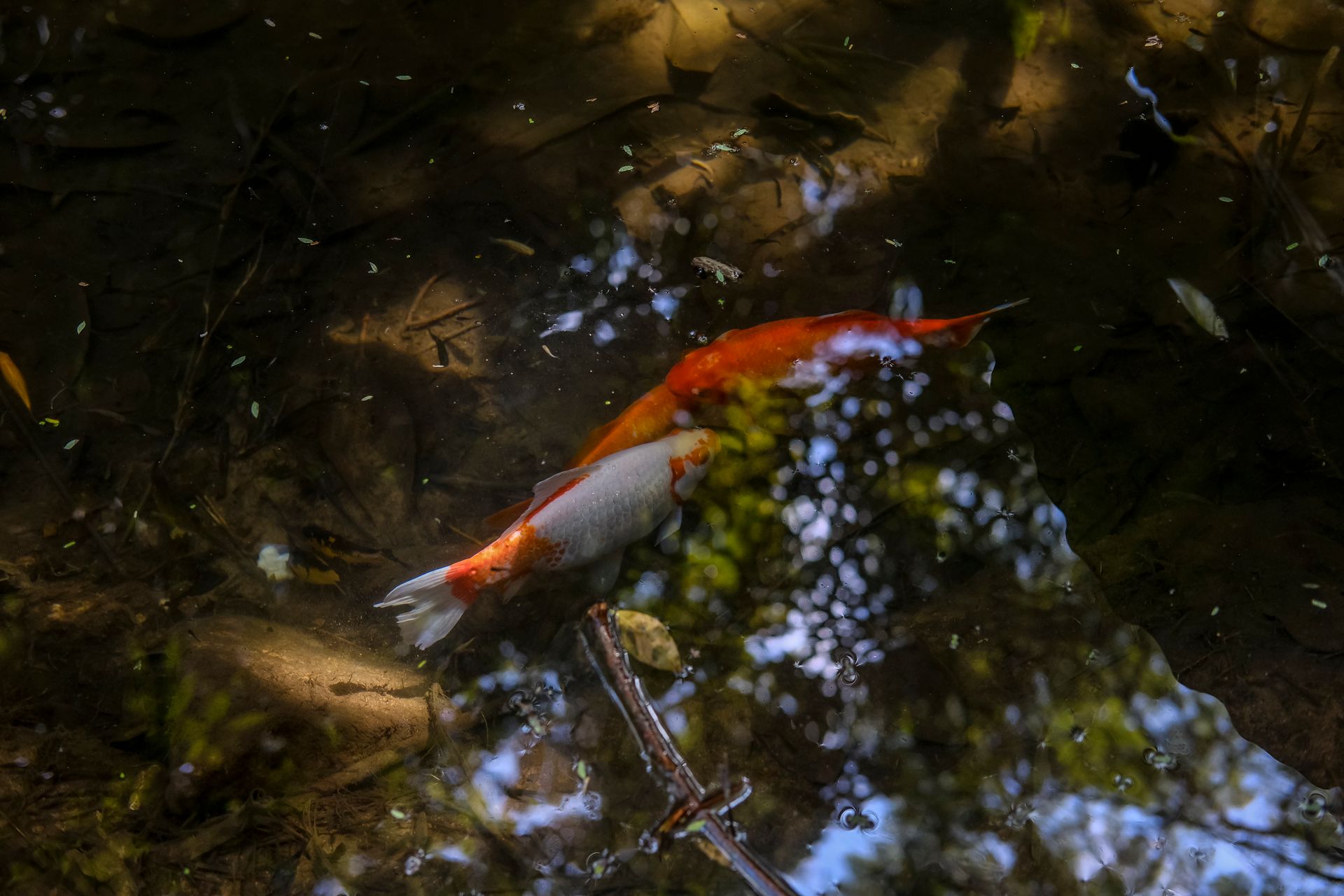
A koi swimming upstream is not a decoration. It is a story, told in a single image, and it is one of the oldest stories in East Asian art. The fish is a carp fighting the current of the Yellow River. The river ends at a waterfall so high and so steep that it is called the Dragon Gate. And the fish that leaps the gate does not simply reach the top. It changes into something else entirely: a dragon.
This guide tells that story the way it deserves to be told, in full, and then shows what it means inside a tattoo. You will learn where the legend comes from, how it changed as it traveled from China to Japan, what each part of the story stands for, and how tattoo artists stage the journey across a body. This is a guide about the narrative. For the practical questions of color and swimming direction, our Japanese koi tattoo guide and our koi fish tattoo designs guide cover those choices in detail, and this guide will point you to them rather than repeat them.

Key Takeaways
- The legend is a transformation story. A carp swims upstream, leaps the waterfall at the Dragon Gate, and becomes a dragon. The change is the point of the tale.
- The gate is a real place. Longmen, the Dragon Gate, is a narrow gorge on the Yellow River, and the cliffs there hold the Longmen Grottoes, a UNESCO World Heritage site.
- The story means perseverance and reward. In China the leaping carp became a byword for passing the imperial examinations and rising in the world.
- Japan kept the story and made it its own. As Tōryūmon, the Dragon Gate became a favorite subject of paintings, prints and tattoos, and of the carp streamers flown for Children’s Day.
- A koi tattoo tells the story in stages. Artists stage the journey across the body, with the river low, the climb in the middle and the transformation high.
- Choose your moment in the story. A koi still in the river, a koi mid-leap and a dragon above the gate say different things, and the choice is the most personal decision in the design.
Table of Contents
- The Legend in Full: The Carp and the Dragon Gate
- The Place: Longmen and the Grottoes
- What the Story Means
- The Story in Japanese Art
- How Artists Stage the Journey in a Tattoo
- Choosing Your Moment in the Story
- What the Story Is Not
- Getting the Tattoo: Scale, Artist and Sessions
- Our View
- Frequently Asked Questions
- Questions About Your Design?
- Sources
- Recommended Reading
The Legend in Full: The Carp and the Dragon Gate
The story begins in the Yellow River, the great river of northern China. Every year, so the legend goes, carp gather in the river and swim upstream, fighting a current that grows stronger with every mile. The river carries them toward a narrow place where the water drops in a cataract between steep cliffs. That place is called Longmen, the Dragon Gate, and it is the test at the end of the journey.
At the gate, the legend says, the river falls so steeply that only the strongest and bravest fish can attempt the final leap. Most of the carp turn back. A few gather their strength and jump, and of those few, fewer still clear the falls. The fish that makes the leap is changed in mid-air: it becomes a dragon, and flies away over the mountains. The fish that fail return to the river below, unchanged, to try again another year or to give up.
In one telling, the challenge is set by the Jade Emperor, the ruler of heaven, who promises that any carp able to leap the falls at the Dragon Gate will become a dragon. The carp gather each year and try, and the contest becomes a yearly event in the natural world, like a migration. In another telling, demons raise the waterfall higher to make the leap harder, and the carp must beat both the river and the demons. In still another, a god does the same, and the fish that succeed have defeated a divine obstacle, not merely a natural one. The details change with the telling, but the shape of the story never does: a long effort, a single leap, and a transformation.
The gate itself has a story too. According to the tradition, the hero Yu the Great cut the channel at Longmen to control the floods of the Yellow River, carving a way through the mountains so the water could pass. The cleft he left behind became the Dragon Gate, a place where the river narrows, speeds up and falls. The legend of the carp and the legend of Yu belong together: one is the story of a river mastered by a hero, and the other is the story of a fish that masters the same river.
It is worth pausing on the word carp. The fish of the legend is not a rare or magical creature at the start. It is an ordinary river fish, a carp, one of the most common freshwater fish in Asia. That ordinariness is essential to the story. The carp is not born a dragon, and it is not given a dragon’s powers. It earns the change by swimming against the current, year after year, until the day it jumps. The Dragon Gate legend works because the hero of the story starts out unremarkable, and ends up transformed.
The Place: Longmen and the Grottoes
Longmen is not only a place in a story. It is a real gorge on the Yellow River, at the border of Shanxi and Shaanxi provinces, where the river squeezes between cliffs. The name means Dragon Gate, and the cliffs there have been carved into one of the great religious sites of China: the Longmen Grottoes, nearly 2,345 caves and niches cut into the limestone, holding around 110,000 Buddhist statues, from the tiny to the monumental. The site was inscribed on the UNESCO World Heritage list in 2000, and it remains one of the most visited places in China.
The grottoes and the legend share more than a name. The same cliffs that make the river narrow and fast also made the site a natural place for carving, and the same story that made the place famous drew artists, monks and pilgrims to it for centuries. A tattoo of a koi at the Dragon Gate is therefore a picture of a real landscape as well as a myth: a river, a gorge, a waterfall and a leap, all tied to a place you can visit.
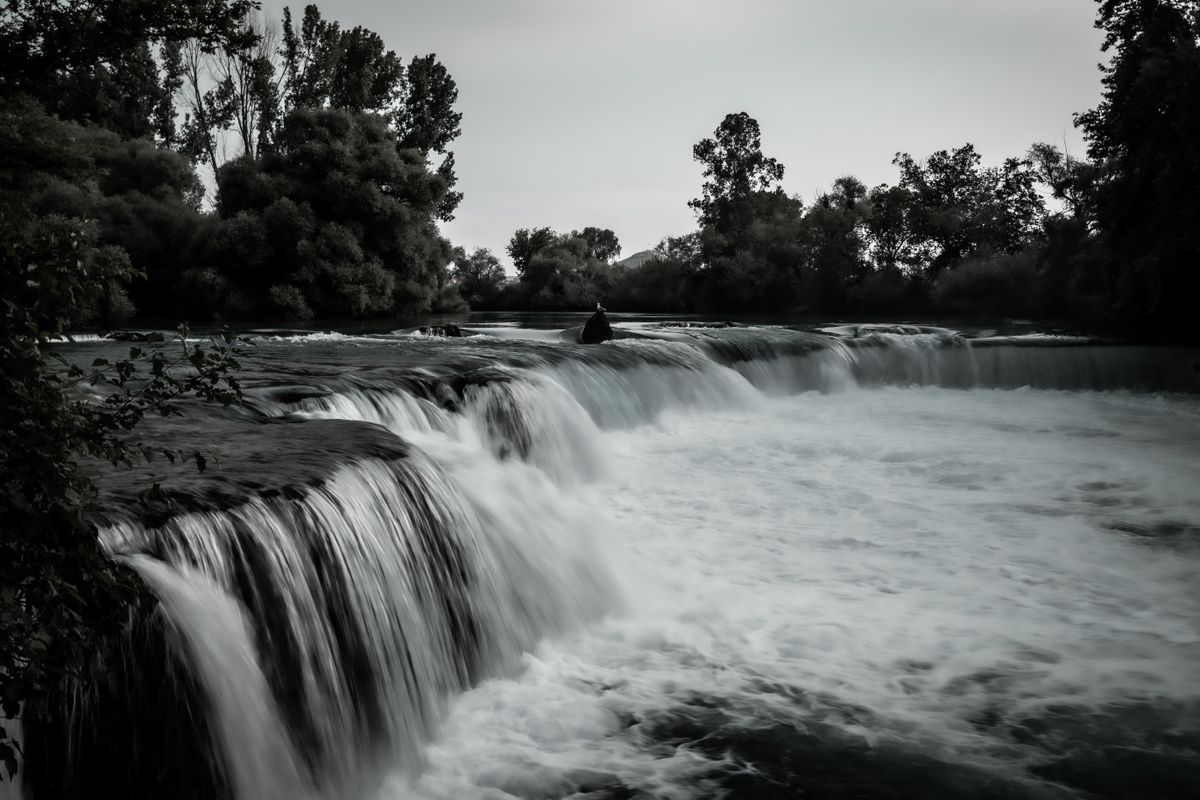
That sense of place is part of what makes the story work in a tattoo. A koi on its own is a beautiful fish. A koi with a waterfall, a gorge and a sky above it is a journey, and the viewer can read the journey without being told the story. The water shows where the fish has come from. The rocks show what it is climbing. The open sky at the top shows what it is climbing toward. Artists who understand the legend build the place into the piece, because the place is half the story.
What the Story Means
The first meaning of the legend is perseverance. The carp does not leap the gate on its first try, or on its first day. It swims upstream for a long time, against a current that pushes it back, before it even reaches the falls. The story is about the long effort, not only the final jump, and that is why it has lasted. Anyone who has worked toward something difficult over a long time recognizes the shape of it.
The second meaning is transformation. The carp does not merely succeed. It becomes something else. That is a stronger claim than a simple success story, and it is the reason the legend is used to mark the great turning points of a life: a recovery, a graduation, a new start after a hard time, a change of direction. The dragon is not a reward handed to the carp. It is what the carp becomes by making the leap, and that distinction matters to the people who choose the story for a tattoo.
The third meaning is ambition and advancement, and it comes from the way the story was used in imperial China. Passing the imperial examination system, the civil service exams that selected officials for the empire, was compared to a carp leaping over the Dragon Gate. Success in the exams meant a complete change of station: a student from an ordinary family could become an official, and the phrase for it was the same as the legend. The expression passed into everyday language, and it is still used to describe a great success against the odds. When a koi tattoo carries this meaning, it is a statement about where its wearer is going, not only about where they have been.
There is also a quieter meaning in the story, and it is easy to miss. Most of the carp turn back. The legend does not hide that, and it does not call the ones that turn back failures. They return to the river and live. The story is honest about the odds, and that honesty is part of its appeal. A koi tattoo that tells the whole story, with the school below and the leap above, says that trying matters even when the leap is not guaranteed.
These meanings overlap, and a single tattoo can carry several of them at once. That is normal for a story this old. The legend has been retold for so long that it has gathered layers, and a good design lets the viewer find the layer that speaks to them. What matters is that the design stays true to the story, because the story is what gives the image its weight.
The Story in Japanese Art
The legend traveled from China to Japan, where it became known as Tōryūmon, the Dragon Gate, and it took root in Japanese art. Images of carp climbing waterfalls became enduringly popular in Chinese and Japanese painting, and the motif moved naturally into ukiyo-e, the woodblock prints of the Edo period. One of the most famous images is Katsushika Hokusai’s print of two carps in a cascade, made around 1830 to 1831, which shows the fish in the falling water at the moment of the climb. The print is a reminder that the story was told in pictures long before it was told in tattoos.
In Japan the carp also took on a life of its own. Koi, the ornamental carp bred for color, became a familiar sight in ponds and gardens, and the word for carp became tied to ideas of good fortune and perseverance. Koinobori, the carp-shaped windsocks flown for Children’s Day on May 5, carry the same story into family life: the carp streamers swim in the wind above the house, and they are flown in the hope that children will grow up strong and succeed, as the carp of the legend did. A koi tattoo in Japan therefore carries echoes that go beyond the legend itself, into the yearly rhythm of festivals and family hopes.
Japanese tattooing, or irezumi, took the story and made it into one of its great subjects. In irezumi, the koi is not a standalone motif. It is part of a composition that includes water, wind, flowers and often a dragon, and the composition is built across the body as a bodysuit or a sleeve. The Dragon Gate story fits that tradition perfectly, because it is a story with a beginning, a middle and an end, and a bodysuit has room for all three. Our Japanese tattoo history guide explains how irezumi developed from the Edo period into the art form it is today, and why stories like this one became its core subject matter.
The Chinese dragon, which the carp becomes, is itself a creature of water and sky, associated with rain, rivers and power. In the legend, the transformation is not a change of species so much as a change of nature: the fish that lived in the water gains the sky. That is why the dragon in a koi tattoo is so often shown above the water, in clouds, rather than in the river. It has left one element for another, and the composition should show that.
How Artists Stage the Journey in a Tattoo
A tattoo is a flat image on a curved, moving body, so the story has to be staged, not just drawn. The convention in irezumi is to let the body do the work: the bottom of the composition is the river, the middle is the climb, and the top is the transformation. On an arm, that usually means the wrist and forearm hold the river and the school, the elbow and upper arm hold the falls and the leap, and the shoulder holds the gate and the dragon. On a back piece, the lower back holds the river and the shoulders hold the sky. The reader’s eye travels up the body the way the fish travels up the river.
Water is the tool that makes the staging work. In irezumi, water is drawn as stylized waves with dark outlines and pale crests, and the direction of the waves shows the direction of the story. Water that flows downward around a fish swimming up creates tension, and that tension is the point: the fish is fighting the current, and the viewer can see the fight. Our Japanese wave tattoo meaning guide explains the wave forms themselves, which is useful reading if you are planning a water-heavy composition.
The number of fish matters to the staging. A single koi alone in the composition is the lone hero of the legend, and it reads as a personal statement. A school of koi at the bottom, with one fish breaking away toward the falls, tells the fuller story: many try, one leaps. A pair of koi can suggest a shared journey, or two people facing the same climb. There is no rule about the number, but the number should be a choice, made with the artist, rather than an accident of filling space.

Flowers and leaves are used to mark the seasons of the story. Maple leaves suggest autumn, the season when the fish are strong and the water is cold, and they are the classic pairing for a koi. Cherry blossom suggests spring, and a new beginning. Cherry blossom tattoo meaning and maple leaf tattoo meaning explain what those pairings carry, and a good artist will use them to set the time of year for your story rather than as decoration. The season is part of the narrative: a koi among autumn leaves is a different story from a koi among spring blossom.
Scale is the practical side of staging. A story with five stages needs room, and a small tattoo cannot hold all of them. A sleeve, a half sleeve, a back piece or a thigh piece can carry the full journey. A small koi on its own is a fine tattoo, but it is a portrait of the fish, not the story, and it is worth knowing the difference before you book. If you want the story, plan for the space it needs, and be ready for more than one session.
Choosing Your Moment in the Story
Every koi tattoo shows a moment, and the moment you choose is the meaning of your tattoo. The legend has five natural moments, and each one says something different.
The gathering is the first moment: the school in the river, before the climb. A tattoo of the gathering is about belonging to something larger, about the effort still ahead, and about patience. It suits someone at the start of a long effort, who wants a reminder of the journey rather than a picture of the arrival.
The first rapids are the second moment: the fish has left the calm water and is fighting the current. This is the moment for someone in the middle of a hard time, who wants a picture of the struggle itself. It is honest and unglamorous, and it is the moment most people actually live in.
The leap is the third moment: the fish in the air at the falls, neither carp nor dragon yet. This is the most dramatic image in the legend, and it suits a turning point: a decision made, a risk taken, a change underway. It is a picture of courage rather than of victory, because the leap has not yet succeeded.
The transformation is the fourth moment: the fish becoming the dragon, scales changing, the body lifting toward the sky. This is the hardest moment to draw, and the most rewarding, because it holds both animals at once. It suits a change that has already happened, a recovery or a new life after a hard chapter.
The dragon above the gate is the fifth moment: the story complete, the dragon in the clouds. This is the image for someone who has made the leap and wants to mark the arrival. It is the most triumphant of the five, and it pairs naturally with water below and clouds above, so the whole composition carries the story from river to sky.
Talk through these five moments with your artist before you choose. A good artist will ask which moment you are living in, not only which fish you like, and the answer will shape the whole composition: the posture of the fish, the direction of the water, the flowers that set the season, and the space the piece needs. The moment is the design.
What the Story Is Not
It is worth being clear about what this guide is not, because the koi is one of the most written-about subjects in tattooing, and the story is often confused with the design choices around it. This guide is about the legend and how artists stage it. It is not a guide to koi colors or to the rules of swimming direction, and it does not repeat that material, because our two companion guides cover it properly. Our Japanese koi tattoo guide goes deep on color, direction and Dragon Gate symbolism as design choices, and our koi fish tattoo designs guide covers the range of designs themselves. Read them alongside this one, and you will have the story and the practical choices together.
The story is also not a single fixed text. It has been retold in China and Japan for centuries, in poems, paintings, prints and festivals, and the details vary: the Jade Emperor’s promise in one telling, demons raising the falls in another, Yu the Great cutting the channel in a third. None of those versions is the one true version. The story is a living tradition, and a tattoo that follows any of the tellings faithfully is telling the story truly. What matters is not which variant you choose, but that the design respects the shape of the tale: the river, the climb, the leap and the change.
Finally, the story is not a promise that effort always succeeds. The legend is honest that most carp turn back, and the fish that leap do not all make it. A koi tattoo that pretends otherwise is a weaker tattoo, not a stronger one. The story’s power comes from the difficulty, and a design that shows the difficulty, in the current, in the rocks, in the height of the falls, is a design that tells the truth.
Getting the Tattoo: Scale, Artist and Sessions
A story this big needs an artist who knows the tradition. Look for someone with healed Japanese work in their portfolio, and ask to see koi and water specifically, not just any Japanese piece. The water is the test: badly drawn water makes a koi composition fall flat, while well drawn water carries the whole story. Ask the artist how they would stage the journey on your body, and listen for a plan that mentions the river, the climb and the transformation, rather than only the fish.
Scale matters more here than in most tattoos. A full telling of the story needs a sleeve, a back piece or a thigh piece, and it will usually take several sessions of a few hours each, spaced weeks apart. A smaller piece can still tell part of the story, such as the leap alone, but it should be an honest choice, made knowing that the full journey needs more room. Talk about the budget and the number of sessions before you start, so the story is not cut short halfway up the river.
Aftercare follows the same rules as any large tattoo. The Mayo Clinic guide to tattoos and piercings covers the essentials: choose a licensed studio, follow the artist’s aftercare instructions, keep the area clean and lightly moisturized, and watch for signs of infection. Large pieces heal in stages, and the artist will usually want to see the healed work before the next session. Flowers can help the healing read well too: our Japanese tattoo flowers guide, our lotus flower tattoo meaning guide, our peony tattoo meaning guide and our dragonfly tattoo meaning guide all show how Japanese motifs pair with the koi, and how the seasons of those motifs set the time of your story.
Our View
The Dragon Gate story has lasted for centuries because it tells the truth about effort: it is long, it is mostly upstream, and it changes the person who makes it. A koi tattoo that tells the whole story, river and all, is a stronger piece than a fish on its own, because it gives the viewer the journey, not just the animal. Choose your moment in the story honestly, give it the space it needs, and let the water do half the work. The leap will take care of itself.
— The Editors, Tattoo Designs Pictures
Frequently Asked Questions
Is the Dragon Gate story Chinese or Japanese?
It began in China, as a legend of the Yellow River and the gorge at Longmen, and it traveled to Japan, where it became known as Tōryūmon and entered painting, prints, festivals and tattooing. Both traditions tell it, and a tattoo can honor either telling. The story belongs to the whole region, not to one country.
What does a koi swimming upstream mean?
In the legend, the upstream swim is the long effort before the leap: perseverance, ambition and the determination to keep going against the current. The fish is on its way to the Dragon Gate, and the tattoo shows the journey rather than the arrival. For the design rules of swimming direction and what each direction signals, see our Japanese koi tattoo guide.
What is the Dragon Gate?
The Dragon Gate, or Longmen, is a narrow gorge on the Yellow River where the water drops in a cataract between steep cliffs. In the legend it is the waterfall the carp must leap to become a dragon. The same place holds the Longmen Grottoes, a UNESCO World Heritage site with around 110,000 Buddhist statues carved into the cliffs.
Did the carp become a dragon, or a golden dragon?
The common telling says the carp that leaps the falls becomes a dragon. Some tellings add that the transformed fish is golden, and some art shows a golden dragon above the gate. The core of the story is the transformation itself, and the color is a detail that varies with the telling and the artwork.
Can I get a koi tattoo without the dragon?
Yes, and most koi tattoos do exactly that. A koi alone shows the fish on the journey, and the dragon is implied by the story rather than drawn. Showing the dragon is a choice for people who want to mark the arrival, and it needs more space, since the composition has to hold both the river and the sky.
How is the story different from the color and direction guides?
This guide tells the legend and explains how artists stage it as a narrative. The color and direction guides answer the practical design questions: what each color means, which way the fish should swim, and how to compose a piece for a particular part of the body. Read them together, and you will have the story and the design choices in full.
Questions About Your Design?
If you are still deciding on your moment in the story, or you want to see how the legend pairs with other Japanese motifs, browse the rest of the guides on the Tattoo Designs Pictures home page, where you will find Japanese tattoo meanings, flower guides and placement guides to help you choose.
Sources
- Dragon Gate (mythology) — Wikipedia. The legend of the carp, the waterfall at Longmen and the transformation into a dragon.
- Yellow River — Wikipedia. The river of the legend, its course and its floods.
- Yu the Great — Wikipedia. The hero who cut the channel at Longmen to control the floods.
- Longmen Grottoes — Wikipedia. The Buddhist grottoes at Longmen and their UNESCO World Heritage listing.
- Imperial examination — Wikipedia. The civil service exams compared to a carp leaping the Dragon Gate.
- Koi — Wikipedia. The ornamental carp and its place in Japanese culture.
- Carp — Wikipedia. The carp family and the fish at the center of the legend.
- Koinobori — Wikipedia. The carp streamers flown for Children’s Day in Japan.
- Ukiyo-e — Wikipedia. The woodblock prints that carried the carp and waterfall motif, including Hokusai’s work.
- Chinese dragon — Wikipedia. The dragon the carp becomes, and its ties to water and sky.
- Irezumi — Wikipedia. Traditional Japanese tattooing and its story-driven compositions.
- Tattoos: Understand risks and precautions — Mayo Clinic. Safety, studio choice and signs of infection.