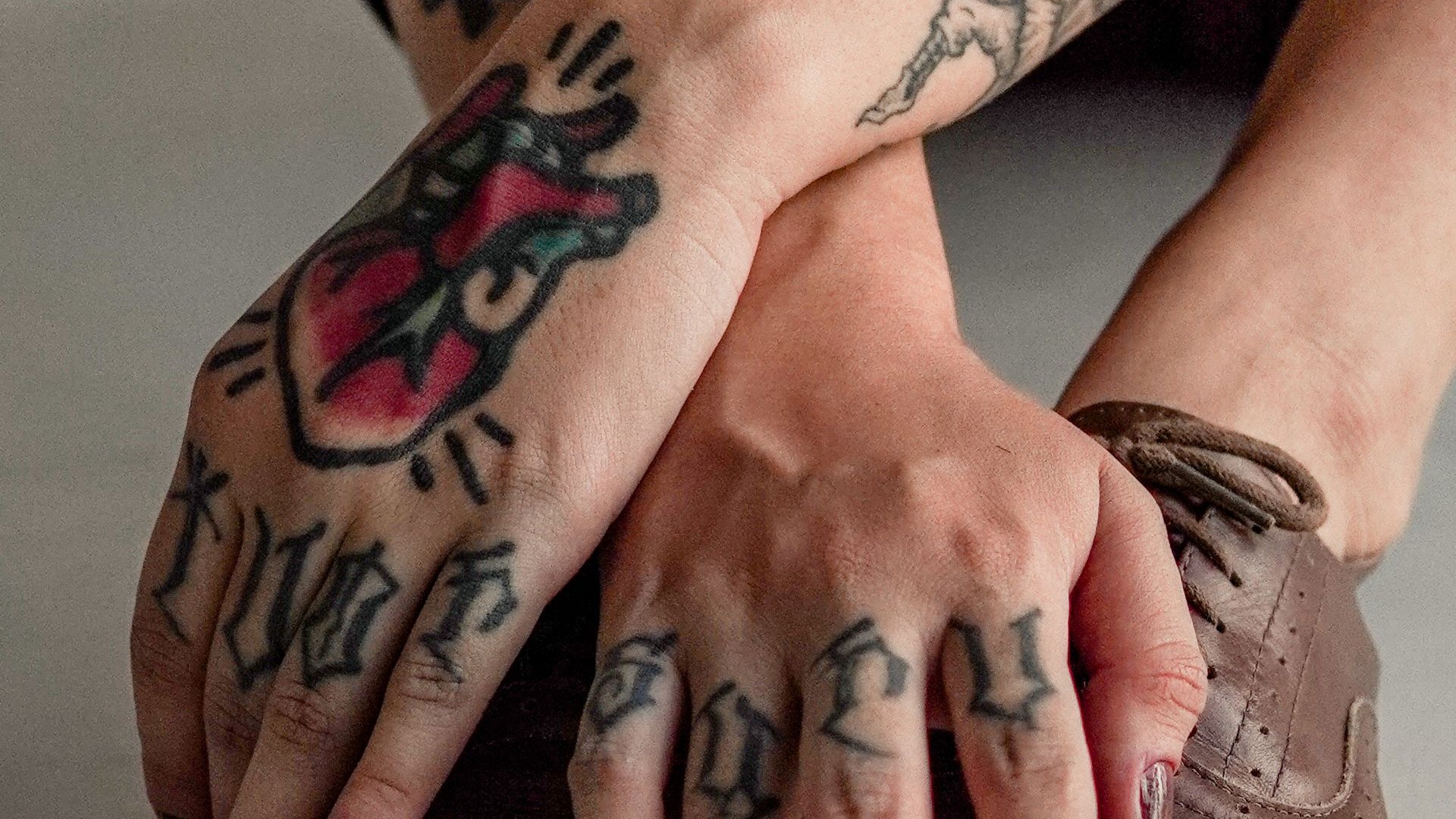
The hand is the most honest placement in tattooing. It is the part of the body everyone sees first, the part you use for almost everything, and the part where ink has the hardest time staying put. A hand tattoo is not a hidden piece you can show when you choose. It is there when you shake hands, type, cook, drive, and wave, which is exactly why people want one and exactly why it deserves more thought than almost any other placement.
This guide is a placement roundup for the hand itself. It covers the back of the hand, the fingers, the knuckles, the side of the hand, and the palm, and it looks at each zone on its own terms: how visible it is, how much it hurts, how fast it fades, and which designs actually hold up there. A tattoo on the hand is permanent ink in the skin, and the hand is a working surface, so the best hand tattoo designs are the ones chosen with that work in mind.
Key Takeaways
- The hand has five different zones, and each one fades, hurts, and shows differently. Choose the zone first, then the design.
- The back of the hand is the most forgiving hand placement. Fingers, knuckles, and the side of the hand fade faster, and the palm fades fastest of all.
- Bold traditional and blackwork designs hold up best on hands. Fine lines and tiny detail blur and spread sooner on high-wear skin.
- Hand tattoos are often called a job stopper because they cannot be hidden with normal clothing. Check your workplace rules before you book.
- Healing a hand tattoo means protecting it while you keep using your hands. Washing, gloves, sun, and friction all matter in the first two weeks.
- Pain is real but manageable, and it varies by zone. Knuckles and the side of the hand tend to hurt more than the flat back of the hand.
- Plan for touch-ups. A hand tattoo that looks sharp in year one usually needs a refresh sooner than a tattoo on the arm or leg.
Table of Contents
- What Makes the Hand Different
- Back of Hand Designs
- Finger Tattoos
- Knuckle Tattoos
- Side of Hand and Palm Tattoos
- Styles That Hold Up on Hands
- Pain and Healing While Using Your Hands
- The Job Stopper Reality
- Choosing Your Artist and Planning Touch-Ups
- Our View
- FAQ
- Sources
- Recommended
What Makes the Hand Different
The hand is not one placement. It is five placements sharing one very busy piece of skin. The flat back of the hand, the tops of the fingers, the knuckles, the knife-edge side of the hand, and the palm all move differently, shed skin at different rates, and take ink differently. That is why two tattoos done by the same artist on the same day can age in completely different ways when one sits on the back of the hand and the other wraps a finger. The dermis, the layer where tattoo ink sits, is thinner and more mobile on the hand than it is on the upper arm or thigh, and the hand is washed, rubbed, flexed, and exposed to sun more often than almost any other part of the body.
The skin on the back of the hand is thin, with little fat underneath and a lot of movement from tendons and knuckles. Ink placed there has less cushion and less room to settle, so artists often work a little more slowly and deliberately on hands than they do on a flat, fleshy area. The fingers are even more demanding. The skin is tight, the bones are close to the surface, and every bend of a joint pulls at fresh ink. The side of the hand, the edge you rest on a desk or a table, takes constant friction. The palm is the extreme case: thick skin that sheds quickly, constant contact, and sweat, which together make palm tattoos the least durable tattoos most artists will do. Understanding that range before you choose a design is the difference between a hand tattoo you still love in five years and one you are already planning to cover.
Visibility is the other half of what makes the hand different. A tattoo on the chest, hip, or upper thigh is private by default. A hand tattoo is public by default. You see it every time you look down, and so does everyone you meet. That constant visibility is a large part of the appeal. People choose hand tattoos because they want a design they can live with in plain sight, not one they have to remember is there. It also means the design has to work at a glance and at close range, from across a room and from a few inches away while you hold a cup. Simple, confident shapes tend to read better in that double role than fussy, crowded compositions.
Fading is the practical reality that shapes every good hand design. Hands are washed many times a day, and water, soap, and friction all work on fresh and healed ink. Sun exposure is nearly constant, because hands are rarely covered outdoors, and ultraviolet light breaks down tattoo pigment over time. The Mayo Clinic notes that sun exposure and skin changes can alter how a tattoo looks as it ages, and its guidance on tattoo risks and precautions is a useful starting point for anyone weighing a very visible placement. None of this means hand tattoos are a bad idea. It means the design, the placement within the hand, and the aftercare plan matter more here than they do almost anywhere else.
| Hand zone | Visibility | Pain level | How fast it fades | Best suited designs |
|---|---|---|---|---|
| Back of hand | Very high | Moderate | Moderate | Bold traditional, blackwork, roses, compasses, ornamental panels |
| Fingers | Very high | Moderate to high | Fast | Small symbols, bands, dots, tiny lettering, simple icons |
| Knuckles | Very high | High | Fast | Single letters, small symbols, stars, dots |
| Side of hand | High | High | Fast | Short words, small script, thin bands, minimal symbols |
| Palm | Low when relaxed | Very high | Very fast | Bold blackwork only, if at all; expect heavy fading |
The table above is a guide, not a promise. Two people can heal the same design differently, and skin type, age, sun habits, and the artist’s technique all shift the result. But the ranking is consistent across experienced hand tattoo artists: the back of the hand holds ink best, the fingers and knuckles are next, the side of the hand is harder, and the palm is the hardest of all. If you want a hand tattoo that ages gracefully, start with the zone that gives the ink the best chance, and let the design follow from there. Our guide to best foot tattoo designs makes a similar point about high-friction placements, and hands are the upper-body version of that same problem.
Back of Hand Designs
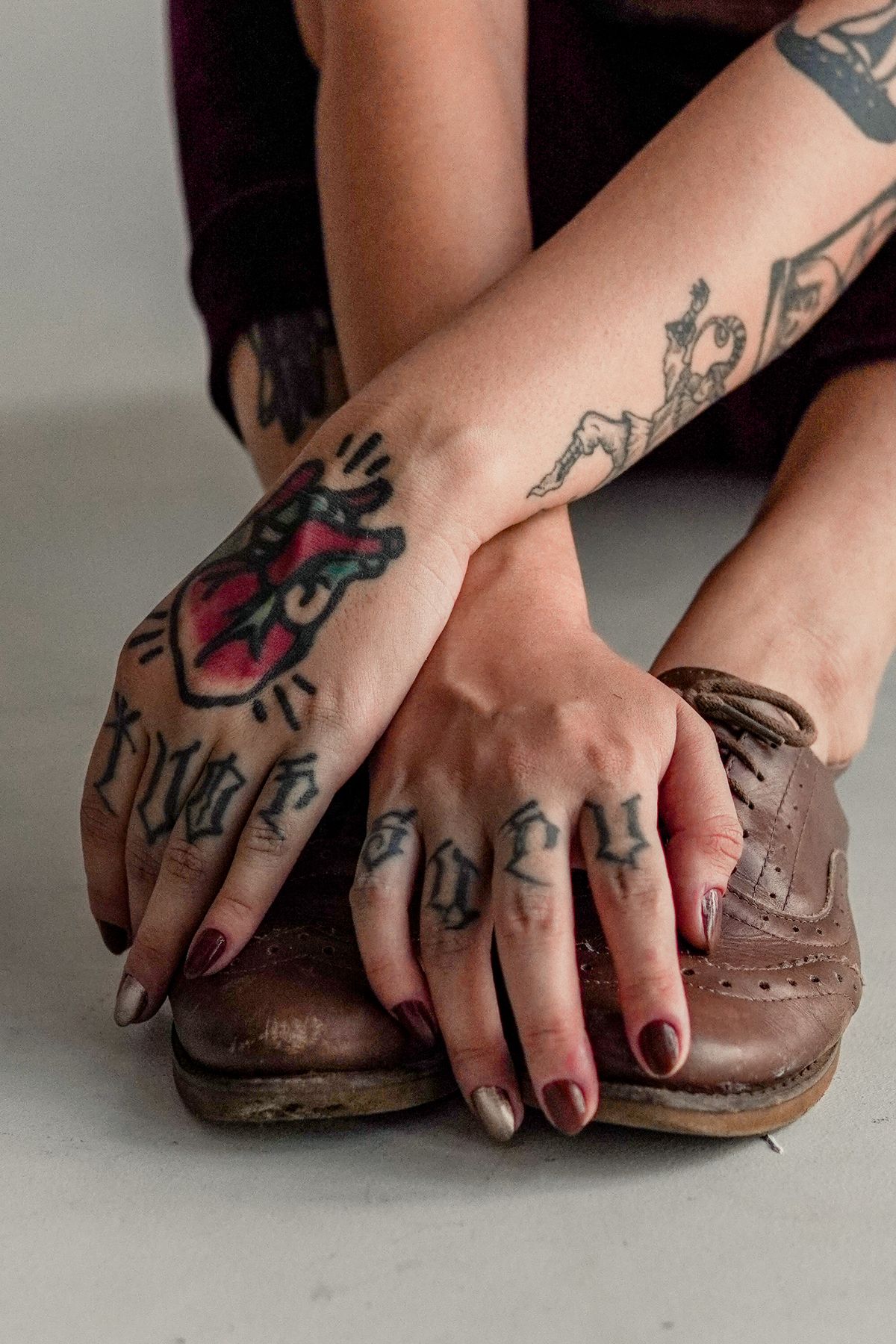
The back of the hand is the best place to start a hand tattoo, and it is where most of the best hand tattoo designs live. It offers the largest flat surface on the hand, it heals more predictably than the fingers or the palm, and it frames a design the way a small canvas frames a painting. A rose, a compass, a moth, an eye, a snake, or an ornamental panel can all sit on the back of the hand without being squeezed by joints or broken by a knuckle. The design reads from across a table and from your own point of view, which matters because you will see it more than anyone else will.
Roses are the classic back-of-hand design for a reason. A single rose, drawn boldly with solid petals and a strong outline, fills the space without crowding it, and the natural curves of a rose follow the shape of the hand. Our guide to a rose tattoo on hand looks at that motif in detail, and it is worth reading before you commit to a floral piece, because it covers size, shading, and how a rose ages on this exact placement. Compasses work for a similar reason: a circle sits naturally on the back of the hand, and the points of the compass can stretch toward the wrist and the fingers without fighting the anatomy. A compass hand tattoo for men is often drawn as a full back-of-hand piece, and the same logic works for anyone who wants a design with a clear centre and a strong silhouette.
Ornamental and mandala-style designs are another strong choice for the back of the hand, because their symmetry suits a flat, visible surface. A mandala centred on the back of the hand, with points reaching toward each finger, can look deliberate and balanced in a way that a random cluster of small images cannot. The same is true of a hamsa hand, which is a protective symbol in several traditions and a natural fit for the shape of the hand itself. Our hamsa tattoo meaning guide explains the hand of protection across three religions, and a hamsa drawn on the back of the hand carries that meaning in the most literal way possible. Whatever motif you choose, keep the composition simple enough to read at arm’s length. A back-of-hand piece with one clear subject and a little breathing room around it will age better than a piece that tries to fit three ideas into the same small space.
Size matters more than most people expect. A design that is too small on the back of the hand can look lost and will blur sooner, because small details have less room to spread before they merge. A design that is too large will wrap awkwardly onto the fingers or the wrist and lose its shape when the hand moves. Most artists will draw the design directly on your hand with a marker before they start, so you can see how it sits when the hand is relaxed, flat, and curled. Ask them to do that, and look at it from a few steps away in a mirror, not just from an inch away. The skin on the back of the hand is thin and moves over tendons, so a design that looks perfect on paper can distort when you make a fist. A good artist will adjust the drawing for that movement, and that adjustment is part of what you are paying for.
One practical note about the back of the hand: it is the zone most people mean when they say hand tattoo, and it is the zone most artists are happiest to tattoo. If you are getting your first hand tattoo, this is the sensible place to begin. You can always add finger work later, once you know how your skin heals and how you feel about a visible tattoo in daily life. Starting with the back of the hand also gives the artist a larger, more forgiving surface to show you what their line work and shading will look like on your skin, which is useful information before you commit to the trickier zones.
Finger Tattoos
Finger tattoos are small, visible, and honest about their limits, which is why they work best when they stay simple. A finger is a narrow, curved surface that bends dozens of times a day, and the skin there is tight over bone. A design that would look crisp on the forearm can look crowded on a finger, and fine detail that is legible when it is fresh can blur into a soft grey shape within a year or two. That is not a failure of the artist. It is the nature of the placement, and the best finger tattoos are designed around it from the start.
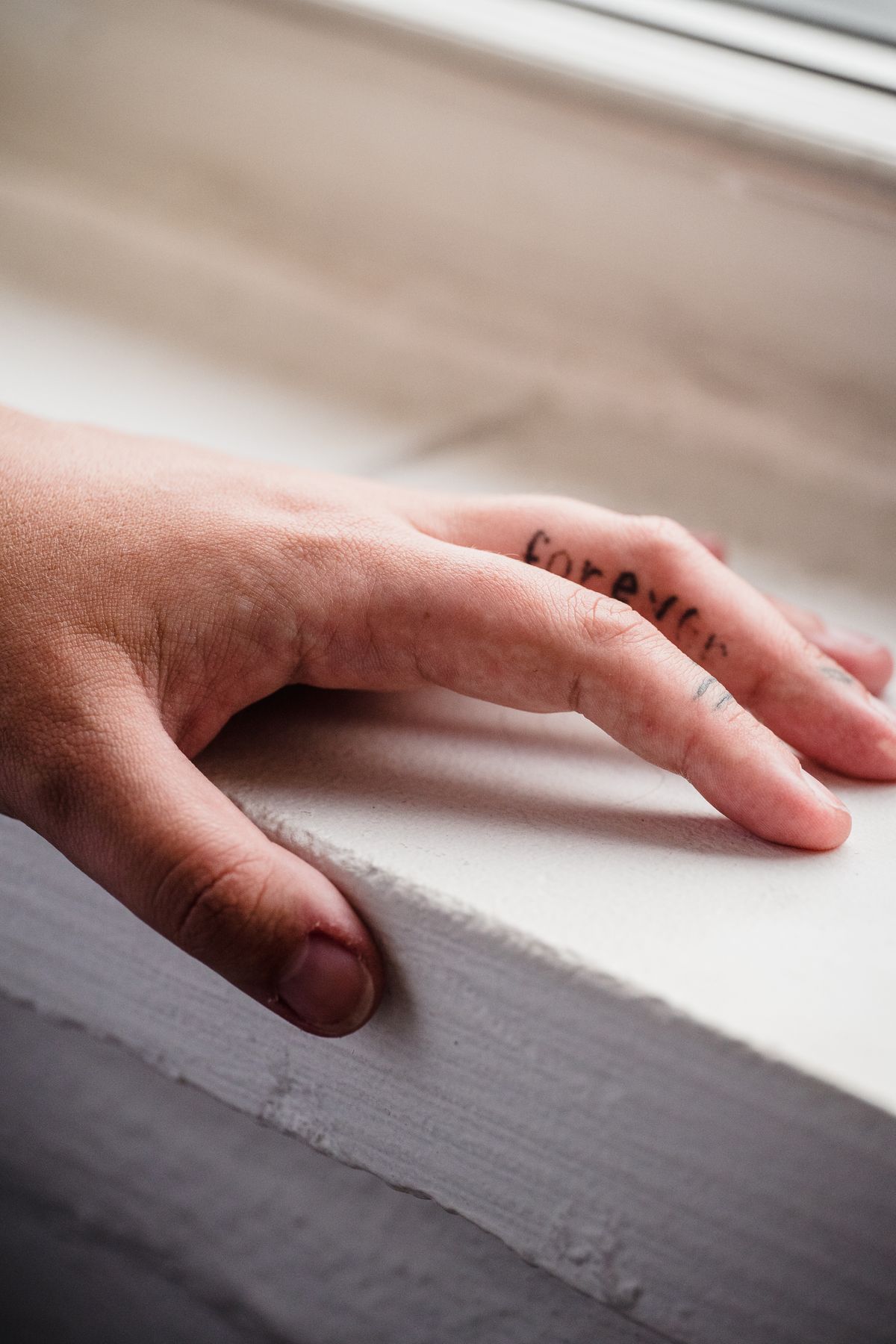
The designs that hold up best on fingers are the simplest ones: a small star, a dot, a cross, a tiny heart, a crescent moon, a single initial, or a thin band around a finger. Rings are a popular choice, and they make sense as finger tattoos, because they use the shape of the finger itself. A thin black band, a small symbol on the side of a finger, or a tiny icon on the top of a finger can look sharp for years if the lines are bold enough. What does not hold up well is tiny script, detailed faces, fine-line animals, and anything that depends on thin lines staying separate. On a finger, two thin lines a millimetre apart will often merge as the ink spreads slightly with age, and a word written in a delicate script can become hard to read. If you want lettering on a finger, keep it to one or two letters, or a single short word, and ask the artist to draw it larger than you think it needs to be.
Placement within the finger matters too. The top of the finger, the side facing you when your hand is relaxed, is the most visible and the most durable spot. The sides of the fingers, where fingers rub against each other, fade faster, and the underside of a finger, near the palm, is almost always a poor choice, because it is constantly in contact with something. The same logic applies to the space between fingers. Artists who are honest about finger tattoos will tell you that some spots are not worth tattooing, and it is worth listening to them. A tattoo machine can put ink anywhere, but ink that is placed where skin sheds fastest will not stay there, however well it is applied.
Finger tattoos also heal differently from other tattoos. The fingers are hard to keep still, hard to keep clean without washing them, and hard to protect from the sun and from friction. Washing your hands, typing, cooking, and gripping things all pull at healing skin on the fingers. That does not mean finger tattoos are impossible to heal well. It means the first two weeks need more care, and it means you should expect some patchiness and plan for a touch-up. Many artists offer a free or low-cost touch-up for finger tattoos, precisely because they know the placement is demanding. Ask about that before you book, and factor it into your decision. If you already have a wrist tattoo that has healed well, your fingers are still a step up in difficulty, and they deserve to be treated as a separate decision.
Knuckle Tattoos
Knuckle tattoos are the boldest statement on the hand, and they are also the most demanding to wear. Four letters across four knuckles, a word split across both hands, or a single symbol on each knuckle has been a classic tattoo choice for generations, from sailors and soldiers to musicians and boxers. The appeal is obvious: knuckle tattoos are visible every time you make a fist, and they turn the hand into a message. The challenge is equally obvious. Knuckles are bony, the skin is thin and tight, and the joints move constantly. Ink placed over a knuckle has to survive all of that, and it often does not survive it neatly.
Pain is part of the knuckle conversation. The knuckles are close to bone, with little padding, and the needle passes over a joint that you use constantly. Most people who have knuckle tattoos describe the experience as sharp and intense rather than long and dull, and the skin can feel sore for several days afterwards, especially when you bend your fingers. That is normal, and it is worth knowing before you book, because a knuckle tattoo is not a good first tattoo for someone who is nervous about pain. The tattoo artist will usually work quickly on knuckles, because the area is small, but the intensity is high for those few minutes.
Design is everything with knuckles. Single letters are the classic choice, and they work because a letter is a bold, simple shape that can be read even if the edges soften a little with age. Four-letter words such as LOVE, HOPE, TRUE, and STAY are the usual examples, and two-word phrases split across both hands are common too. Small symbols can work as well: a star, a dot, a cross, or a tiny diamond on each knuckle. What does not work well is detailed imagery, fine-line drawings, or anything that needs shading to be understood. A knuckle is not a canvas for a portrait or a landscape. It is a canvas for a letter or a mark, and the best knuckle tattoos respect that limit. If you want a word longer than four letters, consider the side of the hand or the fingers instead, where there is more room to work.
Healing and fading are the other half of the knuckle story. Knuckle tattoos are prone to patchiness, because the skin over the joint is constantly flexing while it heals, and because the knuckles are exposed to friction, sun, and washing. It is common for a knuckle tattoo to look a little uneven as it heals, and many artists will plan a touch-up a few months later to even it out. That touch-up is not a sign that something went wrong. It is part of the process for this placement. If you are choosing knuckle tattoos, choose them knowing that they are a commitment to maintenance, and choose a design that will still read clearly after a touch-up or two. A bold letter will. A delicate drawing probably will not.
Side of Hand and Palm Tattoos
The side of the hand and the palm are the two zones where honesty matters most, because both of them punish designs that are too delicate. The side of the hand, the knife edge from the base of the little finger to the wrist, is a narrow strip that is constantly in contact with desks, tables, steering wheels, and anything you rest your hand on. A short word or a thin band can work there, but the friction is relentless, and the skin is thin. The palm is a different problem altogether: thick skin that renews itself quickly, constant contact, and sweat, which together mean that even a bold palm tattoo will fade, blur, and patch within months for most people.
Side-of-hand tattoos suit short script, small words, and minimal symbols. A single word such as breathe, stay, or faith, written in a clean, bold typeface, can sit along the edge of the hand without wrapping awkwardly. A thin line, a small arrow, or a tiny symbol can work too. What does not work well is long text, fine script, or detailed art, because the strip is too narrow and too exposed. Artists often warn that side-of-hand tattoos fade unevenly, and they are right. The edge of the hand is also one of the more painful spots to tattoo, because the skin is thin and the bone is close, and the needle works over the edge of the hand where there is little cushion. If you choose this zone, choose it for a short, meaningful word, and accept that it will need a touch-up sooner than a back-of-hand piece.
Palm tattoos deserve a frank conversation. Some artists will not do them at all, and those who will usually do them only in solid black, with very bold lines, and only after warning you that the result will fade. The palm is not a good place for colour, for fine lines, or for detail, because the skin sheds so quickly that the ink is carried away with it. A palm tattoo that looks solid on the day it is done can look patchy within a few weeks, and the healing process is uncomfortable, because you use your palm for almost everything. The history of tattooing includes palm tattoos in several traditions, and they have a long cultural history, but in modern practice they are best understood as a temporary-looking tattoo with a permanent price. If you love the idea of a palm tattoo, talk to an artist who has done many of them, look at healed examples, not just fresh ones, and go in with your eyes open.
There is also a practical question about the palm that has nothing to do with fading: it hurts. The palm is one of the most sensitive areas to tattoo, because the skin is dense with nerve endings and the needle works on a surface you use constantly. Healing is awkward too, because you cannot easily keep your palm clean, dry, and still while you go about your day. For most people, the back of the hand gives them the visible hand tattoo they want, without the pain and the rapid fading of the palm. If you are drawn to the palm, consider a small, bold black design on the side of the hand instead, and keep the palm for henna, which sits on the surface of the skin and is made for exactly that placement. Our guide to henna tattoo hand designs shows how temporary designs can fill the palm beautifully without the permanence problem.
Styles That Hold Up on Hands
Bold traditional and blackwork are the styles that hold up best on hands, and the reason is simple: thick lines and solid black survive movement, washing, and sun better than anything else. Traditional tattooing, with its strong outlines, limited palette, and solid colour, was developed for skin that works hard, and the hand is the hardest-working skin there is. A traditional rose, dagger, snake, or swallow on the back of the hand will still read clearly years later, because the outlines are thick enough to stay separate as the ink settles, and the colour is solid enough to fade evenly rather than patchily. Blackwork is the same idea taken further: solid black shapes, heavy lines, and bold geometry that use the contrast of black ink against skin to stay legible even as the edges soften.
Fine-line tattooing is the style that struggles most on hands. Fine-line work depends on thin lines staying thin and separate, and on delicate shading staying delicate. On the hand, thin lines spread a little with age, and two lines that were a millimetre apart when fresh can merge into one soft line within a couple of years. That does not mean fine-line hand tattoos are always a mistake. A single, simple fine-line design on the back of the hand, with plenty of space around it, can look beautiful, especially in the first year. But a crowded fine-line composition, or fine-line work on the fingers or knuckles, is a design that is fighting the placement. If you love fine-line work, ask the artist to draw it larger than the version you first imagined, and to leave more space between the lines than feels necessary. That extra space is what keeps the design readable as it ages.
Dotwork, ornamental blackwork, and geometric designs sit in the middle. They can hold up well on the back of the hand if the dots and lines are bold enough, and they suit the flat surface of the hand, where symmetry can be seen clearly. Colour can work on hands too, but it needs the same boldness. Solid, saturated colour in a traditional palette, reds, greens, blues, and yellows with strong outlines, will last better than soft, watercolour-style colour, which depends on subtle washes that fade quickly on sun-exposed skin. A collarbone tattoo can carry delicate colour because it is usually covered, but a hand tattoo cannot hide from the sun, and its colour needs to be chosen with that in mind.
The practical test for any hand design is simple. Look at it from arm’s length, in a mirror, and ask whether you can read it in two seconds. If you can, it will probably age well. If you have to squint, or move closer, or explain what it is, it is probably too detailed for the placement. A good artist will tell you this, and will suggest simplifying the design, enlarging it, or moving it to a larger placement. Listen to that advice. It is not a lack of skill or enthusiasm. It is the artist protecting the work, and protecting you from a tattoo that will not look the way you wanted it to in three years. The same principle applies to other high-movement placements, and our guide to best elbow tattoo designs makes the same point about skin that bends and folds.
Pain and Healing While Using Your Hands
Hand tattoos hurt more than arm tattoos, and healing them is harder, because you cannot stop using your hands. That is the honest starting point, and it is better to know it before you book than to discover it in the chair. The back of the hand is usually described as a moderate pain, sharp and stinging, but over quickly, because the area is small. The fingers and knuckles are more intense, because the skin is thin and the bone is close. The side of the hand and the palm are the most painful, because the skin is thin and the nerve endings are dense. Everyone’s pain tolerance is different, and a tattoo that one person finds manageable can be very painful for another, but the ranking by zone is consistent enough to be useful when you are choosing where to start.

Healing a hand tattoo is a two-week exercise in being careful with something you use constantly. The fresh tattoo will be sore, swollen, and tender for the first few days, and the skin will peel as it heals. During that time, you need to keep the tattoo clean, moisturised, and protected from sun, water, and friction, while still washing your hands, working, cooking, and living your life. The Cleveland Clinic’s guidance on tattoo aftercare covers the basics well: wash gently with mild soap, pat dry, moisturise lightly, and avoid soaking, scratching, and picking at the peeling skin. On the hand, that advice is harder to follow, because you wash your hands many times a day, and because the tattoo is exposed to everything you touch. Wash with lukewarm water, use a fragrance-free soap, pat dry instead of rubbing, and moisturise after washing, rather than waiting until the skin feels tight.
Work is the biggest practical question during healing. If your job involves washing your hands frequently, wearing gloves, handling chemicals, food, or dirt, or using your hands heavily, you may need to plan time off, or at least a few days of lighter duties. Gloves can protect a healing hand tattoo, but they can also trap moisture and irritate the skin, so talk to your artist about what kind of gloves to use and how often to change them. If you work with your hands in a way that cannot be paused, consider booking the tattoo before a weekend or a few days off, so the most tender stage passes while you are not at work. A best ankle tattoo designs guide would make a similar point about shoes and walking, and hands are the same idea, only more constant, because you use your hands for almost everything.
Sun protection matters from the start and for the life of the tattoo. A fresh tattoo should not be exposed to direct sun at all, and a healed hand tattoo should be protected with sunscreen whenever you are outdoors, because hands are almost always uncovered. Ultraviolet light breaks down pigment, and the hand gets more sun than any other tattooed area. The Healthline guide to tattoo aftercare makes the same point about sun and soaking, and it is worth reading alongside your artist’s instructions. If you work outdoors, or spend a lot of time driving with your hands on the wheel, sunscreen on the hands is not optional. It is part of owning a hand tattoo.
One more healing note: do not be surprised if a hand tattoo looks patchy as it heals. The skin on the hand sheds quickly, and the tattoo will go through a stage where it looks dull, dry, and uneven. That is normal, and the colour will usually settle and brighten again once the top layer of skin has fully healed. Do not pick at scabs or peeling skin, do not soak the hand in a bath or a pool, and do not apply heavy creams or ointments that your artist did not recommend. If the tattoo is hot, very swollen, or leaking, or if you develop a fever, contact your artist and a healthcare professional, because those can be signs of infection. The Mayo Clinic’s page on tattoo risks lists the warning signs to watch for, and it is worth knowing them before you need them.
The Job Stopper Reality
Hand tattoos are often called a job stopper because they cannot be hidden with normal clothing, and that nickname exists for a reason. A tattoo on the arm can be covered with a long sleeve. A tattoo on the leg can be covered with trousers. A hand tattoo can be covered only with gloves, makeup, or a bandage, and none of those is a normal part of most workplaces. That does not mean a hand tattoo will stop you getting a job. It means some employers, some professions, and some clients will judge it, and you should decide with that in mind rather than discovering it afterwards.
The rules vary enormously by industry, by employer, and by country. Creative industries, hospitality, trades, and many service jobs are often relaxed about visible tattoos. Healthcare, law, finance, education, and customer-facing corporate roles are often stricter, and some employers still have written policies about visible tattoos. Even where there is no written policy, a hand tattoo can affect first impressions in an interview, a client meeting, or a courtroom. That is not fair, and it is not a comment on the quality of the tattoo or the person wearing it, but it is real, and it is part of the decision. Before you book a hand tattoo, check your employer’s policy, talk to people in your industry, and think about the jobs you might want in five or ten years, not just the job you have today. A best chest tattoo designs guide would not need this warning, because the chest is easy to cover. The hand does.
Covering a hand tattoo is possible, but it is not as simple as it sounds. Makeup designed to cover tattoos can work for a day, but it needs to be applied carefully, it can rub off on clothing and keyboards, and it needs to be reapplied. Gloves work in some jobs, but not in others, and wearing gloves all day can irritate a fresh tattoo and look unusual in an office. A ring, a watch, or a bracelet can cover a small finger tattoo, but it will not cover the back of the hand. If you need to hide a hand tattoo regularly, you will be managing that every day, and that management is part of the cost of the placement. Some people are happy to do that. Others decide that a less visible placement suits their life better, and choose a hip tattoo or a knee tattoo instead, and keep the hand for later, when their career is more settled.
Removal is the other side of the job question. A hand tattoo can be removed with laser treatment, but removal is expensive, painful, and slow, and it does not always remove the ink completely. The Wikipedia article on tattoo removal explains the process and its limits, and it is worth reading before you treat removal as a backup plan. Removal is not a reset button. It is a long, costly process that can leave scarring or a faint shadow of the original design. A hand tattoo should be chosen as if it is permanent, because it is, and because the cost of changing your mind is high. If you are unsure, try a temporary design first, or start with a smaller, less visible placement, and see how you feel about living with a tattoo day to day.
Choosing Your Artist and Planning Touch-Ups
Choosing the right artist matters more for a hand tattoo than for almost any other placement, because the margin for error is so small. Look for an artist who has a portfolio of healed hand tattoos, not just fresh ones. Fresh hand tattoos almost always look good. Healed hand tattoos, photographed a year or more later, show you what the artist’s work actually looks like once the skin has settled. Ask to see healed examples, and ask how the artist approaches the hand differently from the arm or the leg. An artist who is experienced with hands will talk about line weight, about avoiding the sides of the fingers, about the way the skin moves over the knuckles, and about touch-ups. An artist who treats the hand like any other placement may not have the experience you need.
Consultation is the time to be honest about what you want and to listen to what the artist tells you. Bring reference images, but be open to the artist redrawing the design for your hand, rather than copying an image exactly. A design that was drawn for a flat piece of paper, or for a different person’s hand, will need to be adapted to your hand, your skin, and your knuckles. Ask about size, about line weight, about colour, and about how the design will age. Ask about the touch-up policy, and about how many touch-ups are included in the price. Ask about aftercare, and about what to do if the tattoo heals patchily. A good artist will welcome those questions, because they show that you are taking the placement seriously. If you already have a best outer forearm tattoo designs piece from the same artist, you will already know how their work heals on you, and that is useful information for a hand tattoo.
Skin type and scarring are part of the conversation too. Some people are prone to raised scarring, and the keloid article explains how that kind of scarring works and why it matters for tattooing. If you have a history of keloid scarring, or if you have had problems healing tattoos before, tell your artist, and talk to a healthcare professional before you book. Hand tattoos are not the place to discover that your skin scars badly, because the hand is so visible and so hard to hide. Age matters as well. Older skin is thinner and less elastic, and it can take ink differently from younger skin. An experienced artist will adjust for that, but it is another reason to choose an artist who has worked on a range of skin types.
Cost and touch-ups are the final practical points. Hand tattoos are often priced as small pieces, but they can cost more than their size suggests, because they take longer, they need more care, and they often need a touch-up. Ask for the full price, including any touch-up, before you book, and ask how long you should wait before the touch-up. Most artists will want to wait at least a few months, so the skin has fully healed, before they go over a hand tattoo again. Plan for that touch-up in your calendar and your budget, and think of it as part of the tattoo, not as a correction. A hand tattoo that is touched up once, at the right time, by the same artist, will usually look better and last longer than one that is left as it healed the first time.
Our View
“A hand tattoo is a promise you make in public, every day, with your hands. Choose the zone first, choose a bold design second, and choose an artist who has healed hands to show you. If you do those three things, a hand tattoo is one of the most rewarding placements there is.” — Tattoo Designs Pictures
FAQ
Do hand tattoos fade faster than other tattoos?
Yes. Hand tattoos fade faster than tattoos on the arm, leg, or torso, because the hands are washed often, exposed to sun, and in constant use. The back of the hand fades slowest, the fingers and knuckles fade faster, and the palm fades fastest. Bold lines and solid black hold up best, and sunscreen and touch-ups help a hand tattoo stay sharp for longer.
How painful are hand tattoos?
Hand tattoos are more painful than most arm or leg tattoos, because the skin is thin and the bone is close to the surface. The back of the hand is usually a moderate pain, the fingers and knuckles are more intense, and the side of the hand and the palm are the most painful. The area is small, so the session is usually short, but the intensity is high while it lasts.
Can you hide a hand tattoo for work?
It is difficult. A hand tattoo cannot be hidden with normal clothing, and covering it needs gloves, tattoo-cover makeup, or a bandage. Makeup can work for a day, but it rubs off and needs reapplying. Check your employer’s policy and think about your career plans before you book a hand tattoo, because it will be visible in interviews and client meetings.
How long does a hand tattoo take to heal?
The surface usually heals in two to three weeks, and the skin underneath can take a few months to settle fully. Hands are hard to heal because you use them constantly, and washing, friction, and sun all slow the process. Follow your artist’s aftercare instructions, wash gently, moisturise lightly, avoid soaking, and protect the tattoo from sun while it heals.
Will a finger tattoo stay?
A finger tattoo will stay, but it will usually fade and blur sooner than a tattoo on the back of the hand. Small, simple, bold designs hold up best on fingers, and many finger tattoos need a touch-up within a year or two. Tiny script and fine detail are the most likely to blur, so keep finger designs simple and ask the artist to draw them larger than you first imagined.
Are palm tattoos a good idea?
For most people, no. Palm tattoos fade very fast, they are very painful, and they are awkward to heal, because the skin sheds quickly and the palm is in constant contact with everything. Some artists will not do them at all. If you love the idea, talk to an artist with a lot of palm experience, look at healed examples, and go in knowing that the result will fade and will probably need frequent touch-ups.
Questions about this guide? Visit the Tattoo Designs Pictures home page to browse more tattoo ideas, placement guides, and tattoo meanings.
Sources
- Tattoo – Wikipedia, on what a tattoo is and how ink sits in the skin.
- Hand – Wikipedia, on the anatomy and movement of the hand.
- Dermis – Wikipedia, on the skin layer where tattoo ink is placed.
- Skin – Wikipedia, on skin structure, shedding, and healing.
- Keloid – Wikipedia, on raised scarring and who is prone to it.
- Tattoo machine – Wikipedia, on how modern tattoo machines work.
- Tattoo artist – Wikipedia, on the work and training of tattoo artists.
- History of tattooing – Wikipedia, on tattoo traditions across cultures and time.
- Tattoo removal – Wikipedia, on laser removal, its cost, and its limits.
- Tattoos: Understand risks and precautions – Mayo Clinic, on tattoo risks, safety, and warning signs.
- Tattoo Aftercare: Instructions and Healing Tips – Cleveland Clinic, on washing, moisturising, and protecting a new tattoo.
- Tattoo Aftercare: Tips, Daily Routine, Products, and More – Healthline, on daily aftercare, sun protection, and soaking.