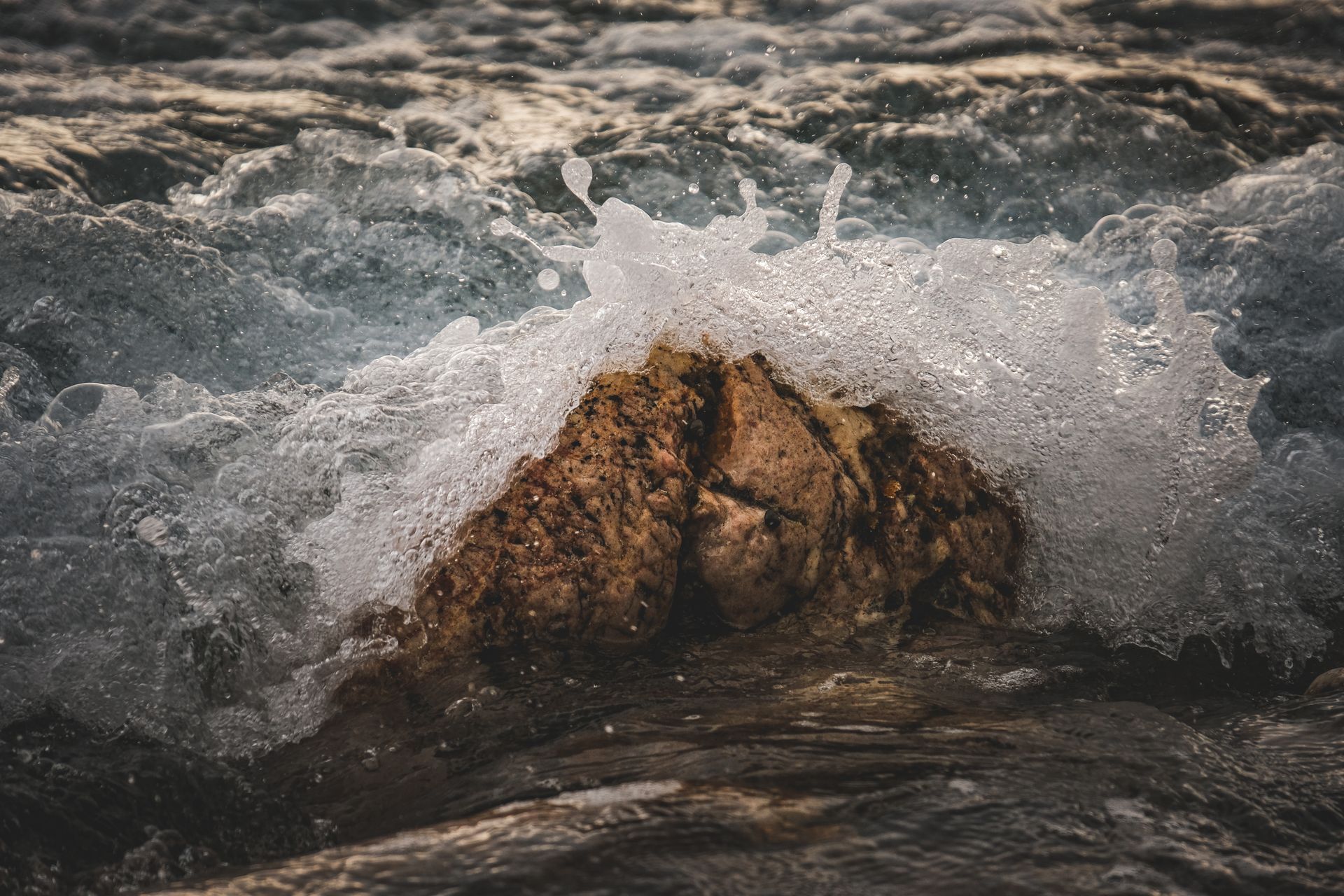
In Japanese tattooing, a wave is never just decoration. Nami, the Japanese word for wave, carries meanings of power, change, perseverance, and the force of nature, and it has been a central motif in Japanese art and tattooing for centuries. A wave can stand alone as a single bold image, it can carry a koi upstream, or it can fill the background of a sleeve and tie a whole composition together. This guide explains what a Japanese wave tattoo means, where that meaning comes from, how the Great Wave of Hokusai shaped the image the world recognises, and how to choose a wave design that will still read clearly on skin in ten years.
In This Guide
- What Nami Means in Japanese Tattooing
- The Great Wave and Hokusai
- Water in Japanese Culture and Belief
- Wave Designs That Work as Tattoos
- Where to Place a Wave Tattoo
- Colour, Line and Style Choices
- Pain, Healing and Aftercare
- Mistakes to Avoid
- Frequently Asked Questions
Key Takeaways
- Nami means wave in Japanese, and in tattooing it stands for power, change, resilience, and the force of water that cannot be stopped or held still.
- The most famous wave image in the world is Hokusai’s Great Wave, a woodblock print from the early 1830s that still shapes how wave tattoos are drawn today.
- A wave is a primary motif in its own right, not only a background: a single wave, a wave with a koi, or a wave with Mount Fuji each tell a different story.
- Traditional Japanese wave work uses bold outlines, strong black, and limited colour, with the wave’s claw-like crest and foam as the key visual features.
- Wave tattoos work best on larger, flowing placements such as the arm, back, side, or leg, where the curve of the body can follow the curve of the water.
- Small, thin wave lines fade and blur faster than bold work, so keep the design simple if you want it small, and choose an artist who understands Japanese composition.
Table of Contents
- What Nami Means in Japanese Tattooing
- The Great Wave and Hokusai
- Water in Japanese Culture and Belief
- Wave Designs That Work as Tattoos
- Where to Place a Wave Tattoo
- Colour, Line and Style Choices
- Pain, Healing and Aftercare
- Mistakes to Avoid
- Our View
- Frequently Asked Questions
- Sources
- Recommended
What Nami Means in Japanese Tattooing
A wave is a moving disturbance on the surface of water, and that simple physical fact is the start of its meaning. A wave cannot be held, it cannot be stopped, and it returns again and again. In Japanese tattooing, that quality is read as resilience: the ability to keep moving, to rise after being knocked down, and to accept change rather than fight it. A wave tattoo is therefore often chosen after a difficult period, or as a reminder to stay flexible when life changes. It is a hopeful image, but it is not a gentle one. The wave is powerful, and the tattoo should show that power.
That meaning is different from the way waves are used as background filler. In traditional Japanese tattooing, known as irezumi, waves often fill the space around a main subject, such as a koi, a dragon, or a flower. The Japanese tattoo background designs guide on this site covers that background role in detail, including clouds, wind bars, and the way negative space is used to tie a sleeve together. This guide takes a different angle: the wave as the primary motif, with its own meaning, its own history, and its own design rules. When a wave is the subject, it should be drawn larger, bolder, and with more detail than a background wave, and it should have a clear shape that can be read from a distance.
The tattoo tradition in Japan is long and complex, and the history of tattooing in Japan includes periods when tattooing was a mark of punishment, periods when it was a fashion among firefighters and labourers, and periods when it was banned outright. The Japanese tattoo history guide on this site traces that story from the Edo period to the present, and it is worth reading before you choose a Japanese design, because it explains why traditional motifs are treated with respect and why some designs are associated with particular groups. A wave is one of the safest and most widely used Japanese motifs, because it is a natural image rather than a clan or gang symbol, but it still deserves to be drawn correctly.
| Wave design | Main meaning | Best size | Best placement |
|---|---|---|---|
| Single nami wave | Power, change, resilience | Medium to large | Arm, back, side, thigh |
| Great Wave style | Force of nature, awe, impermanence | Large | Back, chest, full sleeve |
| Wave with koi | Perseverance, ambition, transformation | Large | Sleeve, back, leg |
| Wave with cherry blossom | Beauty, impermanence, the passing of time | Medium to large | Arm, shoulder, back |
| Seigaiha pattern | Good fortune, calm seas, repetition | Small to medium | Forearm, calf, chest |
| Small wave band | Flow, freedom, a love of the sea | Small | Wrist, ankle, collarbone |
The table above shows how the same motif changes meaning when it is paired with another image or drawn in a different style. A wave alone is about power and change. A wave with a koi is about the struggle to swim upstream and the transformation that follows. A wave with cherry blossom is about beauty that does not last, and the acceptance of that fact. A seigaiha pattern, made of overlapping concentric arcs, is a calmer, more decorative version of the wave, and it is often used as a pattern rather than as a single image. Choose the version that matches the story you want to tell, and do not mix too many stories into one design.

The sleeve in the photo above shows the Japanese approach to flow. The design does not sit in a single box; it wraps around the arm, and the dark background, the flowers, and the snake all move in the same direction. A wave tattoo works in the same way. It should follow the shape of the body, not sit on it like a sticker. That is why the best wave tattoos are often sleeves, back pieces, or side pieces, where the artist has room to let the water move.
The Great Wave and Hokusai
Almost every wave tattoo owes something to The Great Wave off Kanagawa, the woodblock print by Katsushika Hokusai that shows a huge wave about to break over three small boats, with Mount Fuji in the distance. The print was made in the early 1830s, during the Edo period, and it was the first image in Hokusai’s series Thirty-six Views of Mount Fuji. It is one of the most reproduced images in the world, and it is the image most people picture when they hear the words Japanese wave.
Hokusai lived from 1760 to 1849, and he was a master of ukiyo-e, the woodblock print tradition that flourished in Edo, now Tokyo. Ukiyo-e prints were made by a team: an artist who drew the design, a carver who cut it into wood blocks, and a printer who inked and pressed it. The Great Wave uses Prussian blue, a pigment that had recently arrived from Europe, and that blue is part of what makes the image so striking. The wave itself is drawn with a claw-like crest, with fingers of foam reaching out, and the boats and the fishermen inside them are tiny by comparison. Mount Fuji, small and calm in the centre, provides the contrast: the mountain does not move, while the wave is about to break.
For a tattoo, the Great Wave is a demanding subject. It is a wide, horizontal image, with a lot of detail in the foam and the boats, and it needs space to work. A small, simplified version can work on an arm or a leg, but a faithful copy needs a back, a chest, or a thigh. Many tattoo artists simplify the design: they keep the wave’s shape and the crest, they keep Fuji as a small triangle, and they leave out the boats or reduce them to a few lines. That simplification is not a mistake; it is how a print becomes a tattoo. A tattoo that tries to copy every line of the print at a small size will blur, while a tattoo that keeps the wave’s silhouette will still read as the Great Wave from across a room.

The painting in the photo above is not a tattoo, but it shows how far the Great Wave’s influence has travelled. The wave’s shape is now used in paintings, textiles, and tattoos around the world, often mixed with other styles. That popularity is a warning as well as a compliment: a Great Wave tattoo can look generic if it is copied without thought. Talk to your artist about what the image means to you, and ask them to draw a version that fits your body and your story, rather than copying a flash design exactly.
The diagram above labels the parts of a wave that a tattoo artist needs to get right. The crest is the top of the wave, drawn with fingers or claws that reach out and curl. The body is the main mass of water, usually drawn with bold black and blue shading. The trough is the hollow underneath the wave, and the foam is the white spray that breaks off the crest. In a good wave tattoo, the foam is open and lace-like, not a solid white block, and the crest is the focal point. If you are judging an artist’s wave work, look at the crest first: if it is soft and rounded, the wave will look like a hill, not like water about to break.
Water in Japanese Culture and Belief
Water has a central place in Japanese culture, in Shinto purification rituals, in gardens, in poetry, and in art. A wave is therefore not only a picture of the sea; it is a reminder that water cleanses, renews, and, when it is angry, destroys. That double nature is part of the wave’s appeal as a tattoo. It can mean a fresh start after a difficult time, or it can mean respect for a force that is bigger than any person. The same double nature appears in the Great Wave itself: the wave is beautiful and terrifying at the same time, and the fishermen in the boats are small and vulnerable inside it.
Mount Fuji, which appears in the Great Wave and in many other wave images, adds another layer. Fuji is a symbol of Japan itself, of endurance, and of spiritual aspiration. A wave with Fuji in the background is therefore a picture of nature in balance: the moving, changing water in the foreground, and the still, permanent mountain behind it. That contrast is one of the reasons the Great Wave has lasted so long as an image. It is not only a wave; it is a picture of how change and permanence sit together. If you choose a wave with Fuji, keep Fuji small and simple, so it does not compete with the wave for attention.
It is also worth understanding the difference between a wave and a tsunami in Japanese art. The Great Wave is often described as a tsunami, but art historians point out that it is more likely a large ocean wave, or a rogue wave, drawn at the moment before it breaks. The distinction matters for a tattoo, because a tsunami is a disaster, while a wave is a natural, repeating event. A wave tattoo is usually about the repeating, natural force, not about a specific disaster. If you are choosing a wave to mark a survival or a loss, talk to your artist about how to draw it so that it reads as power and resilience, not as a picture of a catastrophe.
Wave Designs That Work as Tattoos
The most successful wave tattoos are the ones that are drawn for skin, not copied from a print. A Japanese koi tattoo is the classic partner for a wave, because the koi swims upstream against the current, and the wave is the current it must overcome. The Japanese koi tattoo guide on this site explains the Dragon Gate legend in detail, and it is worth reading if you are considering a koi and wave combination, because the direction of the koi, its colour, and its position in the wave all change the meaning. A koi swimming up, against the wave, means perseverance and ambition. A koi swimming down, with the wave, means a journey completed or a goal reached. Koi are domesticated carp bred for their colour and pattern, and their ability to swim upstream is the heart of the legend.
A wave with cherry blossom is a different story. Cherry blossom, or sakura, is a symbol of beauty that does not last, and when it is paired with a wave, the design becomes a meditation on impermanence: the flower falls, the wave breaks, and both are beautiful for a moment. A wave with a dragon is a bolder, more dramatic combination, and it suits a large back or sleeve piece. A wave alone, with no other subject, is the cleanest choice, and it suits a person who wants the meaning of the wave itself, without a second story.
The wabori tattoo tradition, the hand-poked Japanese technique, is the best reference for how a traditional wave should be drawn. In wabori, the lines are bold, the black is strong, and the shading is built up slowly by hand. A wave drawn in that tradition will have a clear outline, a strong crest, and shading that gives the water depth without filling it in solid. Modern machine work can achieve a similar effect, but the artist needs to understand the tradition to draw it correctly. Ask to see the artist’s Japanese work, and look for waves that have a clear shape, not just a wash of blue.

Where to Place a Wave Tattoo
Placement matters more for a wave than for most motifs, because a wave needs to flow. The arm is the most popular placement, because a sleeve can follow the curve of the arm and the wave can wrap around it. The back is the best placement for a large Great Wave piece, because it gives the artist a wide, flat canvas. The side and the thigh are good for a tall wave that needs vertical space, and the chest can work for a wave that spreads across the body. The best rib cage tattoo designs guide shows how a long, vertical placement can suit a flowing design, and a wave can work in the same way on the side of the body. The best shoulder blade tattoo designs guide shows a flatter, broader placement, which can suit a wave that needs to spread out rather than wrap around.
Smaller placements are possible, but they need a simpler design. A wave band on the wrist or ankle, a small wave on the collarbone, or a single wave crest on the forearm can all work, provided the design is reduced to its essential shape. The best collarbone tattoo designs guide shows how a small, fine-line design can follow a bone, and a small wave can be drawn in the same way, as a single flowing line. The best sternum tattoo designs guide shows a vertical centre-line placement, which is less suited to a wave, because a wave is a horizontal, flowing image. If you want a wave on the sternum, keep it small and centred, or choose a different motif for that placement.
Colour, Line and Style Choices
Traditional Japanese wave work uses a limited palette: black, indigo blue, and a small amount of red or white for accent. That palette is not a rule, but it is a good starting point, because it ages well and it reads clearly. Blue is the obvious colour for water, but too much blue can look flat, and a wave that is all blue will lose its shape as it ages. Black is what gives the wave its structure, and it is the colour that will still be clear in ten years. If you want colour, ask your artist to use it as an accent, in the foam, in a koi, or in a flower, rather than filling the whole wave with it.
Line weight is the other key choice. A wave needs a bold outline to hold its shape, and fine lines inside the wave to suggest movement. A wave drawn entirely in fine lines will look like a sketch, and it will fade quickly. A wave drawn entirely in heavy black will look like a solid shape, and it will lose the sense of water. The best wave tattoos balance the two: a strong outline, shading that builds depth, and open space for the foam. Blackwork waves, with no colour at all, can be very effective, especially on a larger piece, because they rely on that balance of black and skin.
Pain, Healing and Aftercare
A wave tattoo hurts as much as any other tattoo on the same placement, and the placement matters more than the subject. A wave on the arm or thigh is usually manageable, while a wave on the ribs, the sternum, or the side of the foot is more painful. A large wave piece that takes several hours will be tiring, and you should plan for multiple sessions if the design is large. Eat before your appointment, stay hydrated, and wear clothing that gives the artist easy access to the placement without rubbing the fresh tattoo afterwards.
Healing follows the usual pattern: two to four weeks for the surface, longer for the deeper layers. The Mayo Clinic guide to tattoos explains the risks that apply to every tattoo, including infection and allergic reaction, and the Cleveland Clinic tattoo aftercare guide gives clear instructions on washing, moisturising, and what to avoid while a tattoo heals. Keep the tattoo clean, do not pick at scabs, and keep it out of sun and water while it heals. The henna tattoo aftercare guide on this site covers the same patience for a temporary design, and that patience applies to a permanent wave tattoo as well: leave it alone, let it heal, and do not rush back into swimming or sunbathing.
Mistakes to Avoid
The most common mistake with a wave tattoo is choosing a design that is too small for the detail it contains. A Great Wave with boats, foam, and Fuji cannot be shrunk to the size of a coin and still read clearly. The second mistake is copying a print exactly, without adapting it to the shape of the body. A print is flat and rectangular; a body is curved, and a wave that is drawn for a flat rectangle will look wrong on an arm or a back. The third mistake is using too much colour, so that the wave loses its shape and becomes a blue wash. The fourth mistake is choosing an artist who does not understand Japanese composition, and who draws a wave like a cartoon surf wave, with no crest, no foam, and no sense of movement. The fifth mistake is getting a large wave tattoo just before a holiday in the sun or the sea, when healing will be difficult and the tattoo will be exposed to salt water and sun while it is still fresh.
Another mistake is to mix too many meanings into one design. A wave, a koi, a cherry blossom, a dragon, and a lotus in one small piece will not tell a clear story, and it will look crowded as it ages. Choose one main subject and one supporting element, and let the rest of the design be open space. That open space is not empty; it is what lets the wave breathe, and it is what makes a Japanese tattoo look Japanese.
Our View
A wave tattoo should move. If the design looks still, it is not a wave, it is a picture of a wave. Choose a bold crest, a clear shape, and a placement that lets the water flow, and the meaning will take care of itself.
Frequently Asked Questions
What does a Japanese wave tattoo mean?
A Japanese wave tattoo, or nami, means power, change, resilience, and the force of water. It is often chosen as a reminder to keep moving through difficult times, and to accept change rather than fight it.
What is the difference between nami and seigaiha?
Nami is a single wave, drawn as a flowing, breaking shape. Seigaiha is a pattern of overlapping concentric arcs, representing waves in a more decorative, repeating form. Nami is a primary motif; seigaiha is often used as a pattern or background.
Can I get a Great Wave tattoo if I am not Japanese?
Yes, the Great Wave is a widely reproduced work of art, and a wave tattoo is a natural motif rather than a clan or religious symbol. Treat it with respect, choose an artist who understands the tradition, and do not copy a sacred or gang-associated design.
How big should a wave tattoo be?
A single wave needs at least a medium size to show its crest and foam clearly. A Great Wave copy needs a large placement, such as a back, chest, or thigh. A small wave band can work on a wrist or ankle, but keep it simple.
Do wave tattoos fade faster?
Wave tattoos fade at the same rate as other tattoos on the same placement, but blue ink can fade faster than black in strong sun. Protect the tattoo with sunscreen once healed, and choose bold black outlines to help it stay readable.
What goes well with a wave tattoo?
Koi, cherry blossom, Mount Fuji, and dragons are the classic partners for a wave in Japanese tattooing. Each partner changes the meaning, so choose one that matches the story you want to tell.
Questions about this guide? Visit the Tattoo Designs Pictures home page to browse more tattoo designs, placements, and meanings.
Sources
- The Great Wave off Kanagawa – Wikipedia, on Hokusai’s print, its date, and its composition.
- Hokusai – Wikipedia, on the artist’s life and work.
- Irezumi – Wikipedia, on traditional Japanese tattooing.
- Ukiyo-e – Wikipedia, on Japanese woodblock prints.
- Koi – Wikipedia, on koi fish and their varieties.
- Tattoo – Wikipedia, on how tattoos are made.
- History of tattooing – Wikipedia, on the history of tattooing in Japan and elsewhere.
- Wave – Wikipedia, on waves as a physical phenomenon.
- Mount Fuji – Wikipedia, on the mountain in the Great Wave.
- Tattoos: Understand risks and precautions – Mayo Clinic, on tattoo risks and precautions.
- Tattoo Aftercare: Instructions and Healing Tips – Cleveland Clinic, on how to care for a healing tattoo.
- Thirty-six Views of Mount Fuji – Wikipedia, on Hokusai’s series that includes the Great Wave.