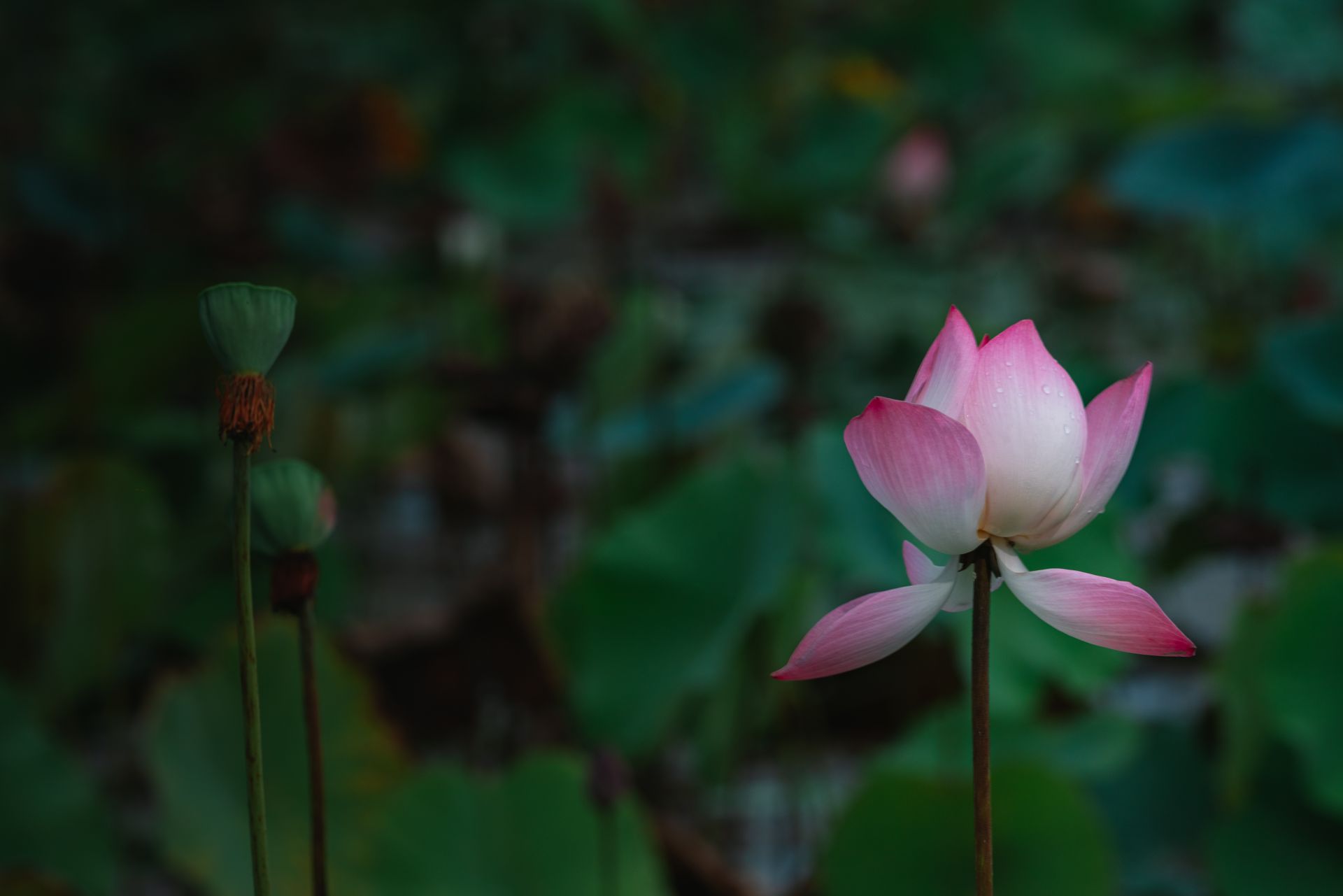
The lotus, the peony and the chrysanthemum are the three great flowers of Japanese tattooing, and choosing between them is harder than it looks. All three are beautiful, all three carry deep meaning, and all three appear in the same compositions, often side by side. The question is not which flower is best. The question is which flower is best for you, for the story you want to tell, the part of the body you want to tattoo, and the way you want the piece to age. This guide answers that question head to head, so you can choose with confidence instead of guessing.

Key Takeaways
- The three flowers answer different questions. The lotus asks what you are becoming, the peony asks what you have, and the chrysanthemum asks what will last.
- Season sets the mood. The peony belongs to late spring, the lotus to summer, and the chrysanthemum to autumn, and the season you choose is part of the meaning.
- Size decides more than taste does. The peony needs room to be a peony, the lotus works small, and the chrysanthemum fills space better than either.
- Line work ages differently. Open, simple lotus lines hold up well; dense peony petals need bold work to survive; layered chrysanthemum petals sit in between.
- Pairing is part of the choice. The lotus pairs with water and koi, the peony with dragons and lions, and the chrysanthemum with waves and maple leaves.
- When in doubt, pick the story, not the flower. The flower that matches your reason for getting the tattoo will always be the right one.
Table of Contents
- The Comparison at a Glance
- Meaning, Head to Head
- Season and Timing: What Time of Year Says
- Placement, Head to Head
- Pairing: What Goes With Each Flower
- Longevity of Line Work: How Each Flower Ages
- Which Flower for Which Person
- Common Mistakes When Choosing
- Getting the Tattoo: Artist, Scale and Sessions
- Our View
- Frequently Asked Questions
- Questions About Your Design?
- Sources
- Recommended Reading
The Comparison at a Glance
Before the detail, here is the whole decision on one table. Read across a row to see how the three flowers differ on one question, and read down a column to see the character of one flower. If you are short on time, this table is the guide in miniature, and the sections that follow explain the reasoning behind each cell.
| Question | Lotus | Peony | Chrysanthemum |
|---|---|---|---|
| Core meaning | Purity, rebirth, enlightenment | Wealth, honor, abundance | Longevity, nobility, endurance |
| Season | Summer | Late spring | Autumn |
| Best placement | Spine, chest, forearm, shoulder | Thigh, back, upper arm, shoulder | Sleeves, shoulders, back, wraps |
| Best pairing | Water, koi, dragonflies | Dragons, lions, waves | Waves, maple leaves, koi |
| Line work aging | Good: open, simple petals | Demanding: dense petals need bold lines | Good: layered petals hold shading well |
| Minimum size | Small works well | Needs to be large to read | Medium to large |
| Mood | Quiet, calm, hopeful | Bold, lush, celebratory | Dignified, steady, enduring |
| Best for | A fresh start or a quiet statement | A statement piece or a celebration | A long-term piece or a family tribute |
Notice what the table does not do. It does not rank the flowers, because there is no ranking. It shows trade-offs, and a trade-off is only a problem if you ignore it. A peony is the wrong flower for a small, quiet wrist piece, but it is the right flower for a large, bold thigh piece. A lotus is the wrong flower for a dense, busy sleeve, but it is the right flower for a clean, open chest piece. The table is a tool for matching the flower to the job, and the rest of this guide works through each row in turn.
Meaning, Head to Head
The three flowers carry different kinds of meaning, and the difference is the fastest way to choose between them. This section compares those meanings briefly. Each flower has its own full guide on this site, and those guides are the place for the complete story of a single flower. What follows here is the comparison only, so you can weigh the three side by side.
The lotus means purity, rebirth and enlightenment. The sacred lotus grows in muddy water and rises above it to bloom clean, and that journey from mud to bloom is the heart of its meaning. In Buddhism, the lotus is a symbol of purity and of the mind rising above the world, and in the language of flowers it stands for purity, beauty and rebirth. A lotus tattoo is a statement about becoming: about leaving something behind, starting again, or holding onto clarity in a difficult time. It is the quietest of the three meanings, and it suits a personal story more than a public one.

The peony means wealth, honor and abundance. In East Asian art it is called the king of flowers, and it is associated with prosperity, good fortune and high status. The peony is also tied to bravery and to the samurai, who admired its bold, unapologetic bloom. A peony tattoo is a statement about having and showing: about abundance, celebration and confidence. It is the loudest of the three meanings, and it suits a piece that is meant to be seen.
The chrysanthemum means longevity, nobility and endurance. In China it is one of the Four Gentlemen of East Asian art, and it stands for longevity. In Japan it represents longevity and rejuvenation, and it is the symbol of the Imperial Family: the Imperial Seal of Japan is a chrysanthemum, and the emperor’s throne is called the Chrysanthemum Throne. The chrysanthemum blooms in autumn, when other flowers are fading, and that timing is part of its meaning: it endures. A chrysanthemum tattoo is a statement about lasting: about family, dignity and the long run.
Put side by side, the three meanings answer three different questions. If your reason for the tattoo is a new beginning, the lotus fits. If your reason is a celebration or a statement of who you are, the peony fits. If your reason is endurance, family or the long term, the chrysanthemum fits. Many people find that one of those sentences describes them immediately, and that is usually the right flower. If two of them describe you, the pairing section below will help, because the flowers combine well when the story supports it.
Season and Timing: What Time of Year Says
Japanese tattooing is a seasonal art. The flowers in a composition set the time of year, and the time of year sets the mood of the piece. Choosing a flower is therefore also choosing a season, and the season is part of what the tattoo says.
The peony belongs to late spring. It blooms when the year is at its fullest and most generous, and a peony tattoo carries that feeling: warmth, abundance and the peak of the year. In Japanese art, the peony is often paired with the lion or the dragon, and the combination reads as power in full bloom. If your story is about a high point, a peak or a celebration, late spring is your season.
The lotus belongs to summer. It blooms on still water in the heat of the year, and its meaning is tied to that setting: calm water, open sky and a flower that rises clean. A lotus tattoo carries the feeling of a summer morning, quiet and clear, and it suits a story about clarity or a fresh start. The language of flowers tradition, including the Japanese hanakotoba, ties each flower to a season and a sentiment, and the lotus is the summer flower of purity.

The chrysanthemum belongs to autumn. It blooms when the year is turning, and its festival, the Chrysanthemum Festival, falls on the ninth day of the ninth month. In Japan, autumn is the season of hanami in reverse: where spring has cherry blossom viewing, autumn has maple leaf viewing, and the chrysanthemum is the flower of that season. A chrysanthemum tattoo carries the feeling of autumn: dignity, endurance and beauty that does not fade with the year. If your story is about lasting through a hard time, autumn is your season.
Season also matters for pairing. A composition that mixes a spring peony with an autumn chrysanthemum is not wrong, but it is a deliberate choice, and it should be made knowingly, because the seasons will pull the piece in two directions. Most artists prefer to keep one season dominant, with the other flower as an accent, so the composition has a single time of year. Talk to your artist about the season of your story before you choose the flowers, and let the season narrow the choice for you.
Placement, Head to Head
Placement is where the comparison becomes practical, because the three flowers have different shapes, and different shapes fit different parts of the body. A flower that fits the shoulder may not fit the wrist, and a flower that fills a back piece may not work on a forearm.
The lotus is the most flexible of the three. Its open, simple shape works on flat areas and on narrow ones: the spine, the chest, the forearm and the shoulder are all natural homes for a lotus. It works small, which is rare for a Japanese flower, and a single lotus on the forearm or the shoulder can be a complete tattoo. It also works as the center of a larger piece, with water and leaves spreading around it. If you want a smaller tattoo, or a first tattoo, the lotus is the safest of the three choices.
The peony is the least flexible, and that is a compliment, not a criticism. A peony needs room to be a peony: its layered petals and full, round shape only read when the flower is large. The thigh, the back, the upper arm and the shoulder are the natural placements, and a peony on the wrist or the ankle will usually disappoint, because the detail has nowhere to go. If you want a peony, plan for a large piece, and be ready for the sessions that go with it. Our best hip tattoo designs guide and our best foot tattoo designs guide both deal with curved, moving placements, and the lessons there apply to placing a large flower on the body.
The chrysanthemum is the best filler of the three. Its dense, layered petals can be scaled up or down, and it wraps around curves well, which makes it the natural choice for sleeves, shoulders and back pieces. It is the flower artists reach for when a composition needs to fill space without losing its meaning, and it is the flower that most often appears alongside other motifs. If you are building a sleeve or a back piece, the chrysanthemum will probably be in it, whether as the star or as the supporting flower.
Think about visibility too. A lotus on the forearm is a quiet, visible piece. A peony on the thigh is a bold piece that is easy to cover. A chrysanthemum on the shoulder is a classic that shows in a T-shirt. The placement you choose should match how much you want the tattoo to be seen, and the flower should match the placement. The same thinking runs through our placement guides: our best ankle tattoo designs guide, our best calf tattoo designs guide, our best shoulder blade tattoo designs guide and our best collarbone tattoo designs guide all weigh visibility, pain and aging for their own spots, and the same questions apply here.
Pairing: What Goes With Each Flower
Japanese flowers are rarely tattooed alone. They are paired with animals, water, wind and other flowers, and the pairing is part of the meaning. The three flowers pair differently, and the pairing you choose will shape the whole composition.
The lotus pairs with water and with the creatures of the water. Koi swimming beneath a lotus is the classic pairing, and it tells a complete story: the fish in the water, the flower above it, purity and perseverance together. Dragonflies are another natural pairing, and our dragonfly tattoo meaning guide explains why the dragonfly belongs near water. The lotus also pairs well with nothing at all: a single lotus with a few leaves and a hint of water is a complete composition, and it is often the best choice for a first Japanese piece.
The peony pairs with power. The classic pairings are the dragon and the lion, and both work because the peony’s abundance matches their strength. A peony with a dragon is a statement of power and prosperity, and a peony with a lion is a statement of courage and protection. The peony also pairs with waves, which set off its round, full shape against the movement of the water. Our Japanese wave tattoo meaning guide explains the wave forms that frame a peony best.
The chrysanthemum pairs with almost anything, which is both its strength and its risk. With koi, it tells a story of endurance and the seasons. With maple leaves, it sets an autumn scene that is one of the most beautiful compositions in Japanese tattooing, and our maple leaf tattoo meaning guide explains what the maple adds. With cherry blossom, it bridges spring and autumn, and our cherry blossom tattoo meaning guide explains the spring side of that pairing. Because the chrysanthemum pairs so easily, it is the flower most often used as a supporting motif, and that is a role it plays beautifully. The risk is using it as filler without thinking, which wastes a flower that deserves a purpose.
When you pair flowers with each other, keep the season in mind, as the previous section explains, and keep one flower dominant. A composition with a large peony and a small chrysanthemum as an accent reads clearly. A composition with three flowers competing at the same size reads as a garden, not a story. Japanese tattoo flowers as a group are covered in our overview guide, which shows how the flowers work together in full compositions, and it is worth reading before you plan a piece with more than one flower.
Longevity of Line Work: How Each Flower Ages
A tattoo is not finished on the day it is done. It ages with your skin, and the way it ages depends on the line work. The three flowers age differently, because their petal structures are different, and that difference should be part of your decision.
The lotus ages best of the three, because its petals are few, open and simple. A lotus drawn with clean, bold outlines and open space between the petals has little to blur, and the design stays readable for years. The risk with a lotus is the opposite: a design that is too fine, with thin lines and delicate shading, will fade faster than a bolder one. Ask your artist for lines that are strong enough to last, even if the reference photo you bring in is delicate.
The peony is the most demanding of the three. Its petals are many, layered and close together, and the detail that makes a peony beautiful is exactly the detail that blurs as skin ages. A peony needs bold outlines, strong contrast and enough size for the layers to stay distinct. A small peony, or a peony drawn with fine lines, will lose its structure within a few years, and the flower will become a soft, round blur. If you want a peony, accept the size and the boldness it needs, and budget for a touch-up.
The chrysanthemum sits between the two. Its petals are many and fine, but they are arranged in a regular, radiating pattern, and that regularity helps the design hold together as it ages. Shading works well on a chrysanthemum, because the layers give the shading somewhere to sit, and the flower keeps its shape longer than a peony of the same size. It still needs bold outlines and enough size, but it is more forgiving than the peony, and it is the flower most artists recommend when a client wants dense detail that will last.
The general rules apply to all three. Tattoo ink sits in the dermis, and the skin’s healing and aging will soften any design over time. Sun is the fastest way to fade a flower tattoo, so use sunscreen on the piece once it is healed, and reapply often. Touch-ups are normal, and a small session to sharpen the outlines after a year or two is part of owning a flower tattoo, not a sign that it failed. Our Japanese koi tattoo guide covers the same aging questions for koi, and the principles are the same: bold lines, enough size, sun protection and a touch-up when needed.
Which Flower for Which Person
By now you have the comparison. This section turns it into a decision, with five questions to ask yourself. Answer them honestly, and the flower will usually choose itself.
First, what is the story? A fresh start, a recovery or a new chapter points to the lotus. A celebration, an achievement or a statement of abundance points to the peony. Endurance, family, dignity or the long term points to the chrysanthemum. If your story does not fit any of those, say so to your artist, because the right answer may be a different flower, or a combination.
Second, how big is the piece? A small tattoo points to the lotus, which works at almost any size. A medium tattoo points to the chrysanthemum, which scales well. A large tattoo points to the peony, which needs room, or to a chrysanthemum-led composition. If you want a small peony, reconsider, because the flower will not thank you for it.
Third, where on the body? A flat, open area like the back or the thigh suits the peony. A narrow area like the forearm or the spine suits the lotus. A curved area like the shoulder or a sleeve suits the chrysanthemum. The placement and the flower should be chosen together, not separately.
Fourth, what is the mood? Quiet and hopeful is the lotus. Bold and celebratory is the peony. Dignified and steady is the chrysanthemum. The mood of the flower should match the mood of the story, because a mismatch will bother you every time you see the piece.
Fifth, what will it pair with? If you already have a koi, a dragon or a sleeve in progress, the flower should join that composition, not fight it. A koi pairs naturally with a lotus or a chrysanthemum. A dragon pairs naturally with a peony. A sleeve in progress will usually welcome a chrysanthemum. Bring photos of your existing work to the consultation, and let the artist plan the flower into the whole.
If you answer the five questions and still cannot choose, that is useful information too. It usually means you want two flowers, or you want a composition where one flower leads and another supports. That is a good outcome, and it is a normal one: the three flowers appear together in Japanese art for a reason, and a thoughtful combination is often better than a forced choice. Tell your artist what you are torn between, and let them design the combination.
Common Mistakes When Choosing
The most common mistake is choosing a flower for its picture rather than its story. A peony is beautiful in a photo, and a lotus is beautiful in a photo, but a tattoo is not a photo. It is a piece of your body, and it should mean something to you. If you choose a flower because it looked good on someone else, you may find that it means little to you in a year. Choose the story first, and the flower will follow.
The second mistake is going too small with a peony. A peony squeezed into a small space loses the layers that make it a peony, and it will age badly. If you love the peony but only have a small space, consider a different flower for that space, and save the peony for a larger piece later.
The third mistake is treating the chrysanthemum as filler. Because it fills space so well, it is often used to fill gaps in a sleeve without a thought about its meaning. That wastes a flower with one of the richest meanings in Japanese tattooing. If a chrysanthemum is in your piece, give it a reason to be there, and let it carry its share of the story.
The fourth mistake is mixing seasons without a plan. A spring peony and an autumn chrysanthemum in the same composition can work, but only if the artist plans the seasons deliberately. A random mix reads as a garden center, not a composition. Talk about the season of your piece with your artist, and let one season lead.
The fifth mistake is ignoring the rest of the body. A flower tattoo does not live alone: it sits next to your other tattoos, and it will be seen in the context of your whole arm or back. Bring photos of your existing work to the consultation, and talk about the long-term plan. A flower that clashes with a sleeve in progress is a worse outcome than a slightly different flower that ties the body together. Irezumi, the tradition these flowers come from, is a whole-body art, and its best work is planned as a whole, not as a collection of separate pieces.
Getting the Tattoo: Artist, Scale and Sessions
Look for an artist with healed Japanese flower work in their portfolio, and ask to see the flowers specifically, not just any Japanese piece. The petals are the test: badly drawn petals make a flower fall flat, while well drawn petals carry the whole composition. Ask the artist how they would handle your chosen flower at the size and placement you want, and listen for a plan that mentions line weight, shading and aging, rather than only the subject.
Scale and sessions follow from the flower. A single lotus can often be done in one session of one to two hours. A peony, because of its size, usually takes one long session or two shorter ones. A chrysanthemum-led sleeve or back piece takes several sessions over months, and the artist will usually want to see the healed work before continuing. Talk about the budget and the number of sessions before you start, so the piece is finished properly rather than cut short.
Aftercare follows the same rules as any tattoo. The Mayo Clinic guide to tattoos and piercings covers the essentials: choose a licensed studio, follow the artist’s aftercare instructions, keep the area clean and lightly moisturized, and watch for signs of infection. Flowers heal like any other tattoo, but the shading in a peony or a chrysanthemum needs care during healing, because the gradients are part of the design. Keep the piece out of the sun while it heals, and use sunscreen on it once it has settled. Tattoo ink sits in the dermis, and sun is the fastest way to fade it, so protection is the cheapest aftercare there is.
Our View
There is no best flower, and anyone who tells you otherwise is selling you their favorite. There is only the flower that matches your story, your body and the size you are willing to give it. The lotus is for beginnings, the peony is for abundance, and the chrysanthemum is for the long run, and the honest answer to which one you should choose is usually the one you thought of first, before you started second-guessing yourself. Trust the story, give the flower the room it needs, and let the seasons do their work.
— The Editors, Tattoo Designs Pictures
Frequently Asked Questions
Which flower is best for a first tattoo?
The lotus, for most people. It works small, it suits many placements, its line work ages well, and its meaning is personal rather than showy. A small lotus on the forearm or shoulder is a complete tattoo that does not demand a large commitment, and it can be extended into a larger piece later.
Can I combine all three flowers in one tattoo?
Yes, and Japanese compositions often do, but it needs planning. Keep one flower dominant, let the others support it, and talk to your artist about the season of the piece, since the peony is spring, the lotus is summer and the chrysanthemum is autumn. A combination without a plan reads as a collection, not a composition.
Which flower lasts longest?
The lotus and the chrysanthemum age best, for different reasons: the lotus because its lines are open and simple, and the chrysanthemum because its regular, layered petals hold shading well. The peony needs the boldest work and the most size to age as well, and it benefits most from a touch-up. Sun protection matters more than the choice of flower, and sunscreen after healing is the single best thing you can do for any of the three.
What does a peony mean compared to a lotus?
The peony means wealth, honor and abundance, and it is a bold, public statement. The lotus means purity, rebirth and enlightenment, and it is a quiet, personal one. The peony says what you have; the lotus says what you are becoming. For the full meaning of each flower, read our peony tattoo meaning guide and our lotus flower tattoo meaning guide.
Is the chrysanthemum only for autumn?
No, but autumn is its season, and a chrysanthemum tattoo carries that timing with it. You can get a chrysanthemum at any time of year, and many people choose it for its meaning of longevity rather than its season. The season matters most when the chrysanthemum is paired with other flowers, because the seasons should be planned together.
Which flower hurts least to tattoo?
The pain depends on the placement, not the flower. A lotus on the forearm will hurt less than a peony on the ribs, and a chrysanthemum on the shoulder will hurt less than a lotus on the spine. Choose the flower for its meaning, and choose the placement with pain in mind, using our placement guides to compare spots.
Questions About Your Design?
If you are still deciding between the three flowers, or you want to see how they work in full compositions, browse the rest of the guides on the Tattoo Designs Pictures home page, where you will find Japanese tattoo meanings, flower guides and placement guides to help you choose.
Sources
- Nelumbo nucifera — Wikipedia. The sacred lotus, its growth from muddy water and its symbolism.
- Peony — Wikipedia. The peony, its varieties and its place in East Asian art.
- Chrysanthemum — Wikipedia. The chrysanthemum, its autumn bloom and its symbolism.
- Language of flowers — Wikipedia. Flower symbolism across cultures, including hanakotoba and the meanings of lotus, peony and chrysanthemum.
- Buddhism — Wikipedia. The tradition in which the lotus symbolizes purity and enlightenment.
- Hanami — Wikipedia. Flower viewing in Japan, and the seasonal traditions around blossom and autumn leaves.
- Japanese art — Wikipedia. The traditions of Japanese art, including the seasonal flower motifs.
- Imperial Seal of Japan — Wikipedia. The chrysanthemum as the seal of the Imperial Family.
- Chrysanthemum Throne — Wikipedia. The throne of the Emperor of Japan, named for the chrysanthemum.
- Irezumi — Wikipedia. Traditional Japanese tattooing and its flower motifs.
- Tattoo — Wikipedia. How tattoos are made and how ink sits in the skin.
- Tattoos: Understand risks and precautions — Mayo Clinic. Safety, studio choice and signs of infection.