In Japanese tattooing, the dragonfly is not a decoration. It is a statement. Called tonbo in Japanese, the dragonfly has been a symbol of victory for centuries, carried by samurai on helmets, armour, and swords, and painted on screens and scrolls long before it was ever inked into skin. The reason is simple and unforgettable: a dragonfly flies only forward. It cannot fly backward, and it cannot hover in retreat. For a warrior, that was the perfect emblem, a creature that embodied the refusal to turn back. For a modern tattoo wearer, that same idea still holds, and it is why a dragonfly in the Japanese style means something very different from a dragonfly in a Western, decorative style.
This guide explains what the dragonfly means in Japanese tattooing, where that meaning comes from, and how it is used in irezumi, the traditional Japanese tattoo. You will learn why the dragonfly is linked to autumn, to rice fields, and to water, how it is paired with koi, reeds, and waves, and how placement, size, and colour change what the tattoo says. A dragonfly is an insect with two pairs of wings and a long, slender body, and in Japan it is also a seasonal creature, appearing in late summer and autumn over ponds and rice paddies. That natural history is part of its meaning, and it is why a dragonfly tattoo that ignores the seasons, the water, and the plants around it can look Japanese in style but not in meaning.

Related guide: Dragonflies are often paired with koi in Japanese tattooing. Start with our Japanese koi tattoo guide to see how the two creatures are combined, and what the koi itself means, before you plan a pairing.
Key Takeaways
- In Japanese tattooing, the dragonfly, or tonbo, means victory, courage, and the refusal to retreat, because it flies only forward.
- Samurai carried the dragonfly as a symbol of success in battle, and the insect was known as the winning insect in Japan.
- Dragonflies are autumn creatures, linked to rice fields, ponds, and water, and they are often paired with reeds, grasses, and koi.
- A dragonfly is not a butterfly: the two insects have different meanings, different seasons, and different places in Japanese tattooing.
- In irezumi, dragonflies are usually shown in flight or at rest over water, with a clear sense of movement and direction.
- Placement matters: a dragonfly on the upper arm, shoulder, or back can fly forward with the body, while a small, static dragonfly can lose that sense of motion.
- Colour in a Japanese dragonfly is usually restrained, with black, grey, and a touch of red or blue, rather than a rainbow of bright colours.
Table of Contents
- Tonbo: The Dragonfly as Victory
- The Samurai Symbol and the Winning Insect
- Autumn, Rice Fields, and Water
- Dragonfly, Not Butterfly: Why the Difference Matters
- Pairing Dragonflies with Koi, Reeds, and Waves
- Placement and Colour in Irezumi
- Designing Your Dragonfly Tattoo
- Our View
- Frequently Asked Questions
- Sources
- Recommended
Tonbo: The Dragonfly as Victory
The core meaning of the dragonfly in Japanese tattooing is victory, and it comes from the way the insect moves. A dragonfly flies forward, fast and direct, and it does not fly backward. That single fact made it a powerful symbol in a culture that valued courage and resolve, and it is the meaning that should come first in any Japanese dragonfly tattoo. If your dragonfly is shown flying backward, hovering without direction, or sitting in a way that hides its wings, the tattoo may still be beautiful, but it will not carry the meaning that makes a Japanese dragonfly different from a decorative one. The direction of flight is the meaning, and a good artist will show it clearly, with the body angled forward and the wings swept back.
The Japanese word for dragonfly is tonbo, and the insect has been part of Japanese art and poetry for more than a thousand years. It appears in haiku, in paintings of autumn, and in the design of kimono, sword fittings, and armour. The dragonfly page on Wikipedia describes the insect as a fast, agile flyer, with two pairs of strong wings and large eyes, and those physical facts are exactly what Japanese artists noticed: the dragonfly is a hunter, it moves with purpose, and it does not hesitate. In a tattoo, that purpose should be visible. A dragonfly that looks as if it is about to dart forward is a victory symbol. A dragonfly that looks as if it is resting, with its wings folded, is a quieter symbol, more about patience and the season than about battle.
| Japanese motif | Main meaning | Season | Common pairing | Typical placement |
|---|---|---|---|---|
| Dragonfly (tonbo) | Victory, never retreats | Autumn | Koi, reeds, water | Arm, shoulder, back |
| Koi | Perseverance, strength | All year | Waves, lotus | Arm, leg, back |
| Chrysanthemum | Long life, nobility | Autumn | Waves, dragonfly | Chest, back, sleeve |
| Peony | Wealth, good fortune | Spring | Lion, waves | Chest, back |
| Butterfly | Transformation, soul | Spring, summer | Flowers | Shoulder, back |
| Maple leaf | Passing time, autumn | Autumn | Waves, koi | Arm, chest |
The table shows how the dragonfly sits among the other classic Japanese motifs, and it makes one point clear: the dragonfly is an autumn motif, a water motif, and a victory motif all at once, and a good Japanese dragonfly tattoo will honour all three. A dragonfly shown with spring flowers, for example, would be out of season, and a Japanese tattoo artist would notice. A dragonfly shown with reeds, grasses, and water, on the other hand, will look right, because that is where dragonflies live. The Japanese tattoo history guide on this site explains how irezumi developed its own language of motifs, seasons, and pairings, and the dragonfly is a good example of that language in action: the motif is not just a picture, it is a word in a visual sentence.
Victory in this context does not only mean winning a battle. It can also mean overcoming an illness, getting through a hard time, or refusing to give up on a goal. That is why the dragonfly appeals to people who have never been in a battle and never will be: the idea of flying forward, of not retreating, is a useful idea in ordinary life. A dragonfly tattoo can mark a recovery, a new start, or a decision to keep going, and it can do so without the aggression of a tiger or a dragon. It is a quiet victory symbol, and that quietness is part of its appeal. The irezumi page on Wikipedia describes how traditional Japanese tattoos use motifs to tell a story about the wearer, and a dragonfly is a motif that tells a story about resolve, not about force.
The Samurai Symbol and the Winning Insect
Samurai valued the dragonfly because it embodied the ideal of a warrior who does not retreat. The insect was called kachimushi in Japanese, the winning insect, and it was worn on helmets, on sword fittings, and on armour, where it was believed to bring victory in battle. A samurai who carried a dragonfly was not just decorating his equipment; he was stating an intention, that he would go forward and not turn back. That association is the most important part of the dragonfly’s history in Japan, and it is the reason the insect appears in Japanese tattooing at all. Without the samurai connection, the dragonfly would be a pretty insect. With it, the dragonfly is a symbol of courage.
The winning insect idea is also linked to a story about the first emperor of Japan, who is said to have seen a dragonfly and taken it as a sign, and to the old name for Japan itself, Akitsushima, the island of the dragonfly. Whether you treat those stories as history or as legend, they show how deeply the dragonfly is woven into Japanese identity. The dragonfly is not a borrowed symbol in Japan, the way a rose or a skull might be borrowed from Western tattooing. It is a native symbol, with a history that goes back to the founding stories of the country. That depth is part of what makes a Japanese dragonfly tattoo feel different from a Western one, even when the drawing looks similar at first glance.
For a modern wearer, the samurai meaning does not require a military connection. It can be a reminder to face a difficult situation, to keep going when it would be easier to stop, or to make a decision and stand by it. The dragonfly’s victory is not about defeating another person; it is about not defeating yourself. That is a meaning that suits a tattoo on the arm, where you can see it when you need it, or on the back, where it flies forward as you walk. The wabori tattoo guide on this site explains how traditional Japanese tattooing, or wabori, uses large, bold motifs to cover the body, and a dragonfly in wabori is usually part of a larger scene, not a small, isolated insect. That is worth remembering if you want a traditional look: a single, small dragonfly on its own is more Western in style, while a dragonfly shown with water, reeds, and other motifs is more Japanese.

Autumn, Rice Fields, and Water
Dragonflies belong to late summer and autumn, to rice fields, and to water, and a Japanese dragonfly tattoo should show that world. In Japan, dragonflies appear in large numbers over rice paddies in the autumn, when the rice is ripe and the air is clear. They are a sign of the season, the way cherry blossom is a sign of spring, and they are celebrated in poetry and art as autumn creatures. The autumn page on Wikipedia notes that in Japan autumn is associated with the harvest and with the changing leaves, and the dragonfly is part of that seasonal picture. A dragonfly tattoo that is shown with autumn leaves, with ripe rice, or with the grasses of the field will feel Japanese in a way that a dragonfly shown with a spring flower will not.
Rice is central to Japanese life, and rice fields are where dragonflies hunt, breed, and rest. The insect is a welcome visitor to a rice field, because it eats the pests that damage the crop, and farmers have long seen it as a helpful, even lucky, creature. That link to rice gives the dragonfly a second meaning, alongside victory: it is a symbol of the harvest, of plenty, and of the good fortune that comes from a good year. A dragonfly shown over a rice field, or with the tall grasses that grow beside it, is not just a pretty picture; it is a picture of a working landscape, and of a creature that belongs in it.
Water is the third part of the dragonfly’s world. Dragonflies spend the first part of their lives in water, as nymphs, before they emerge as flying adults, and they return to water to lay their eggs. The water in a Japanese dragonfly tattoo is not just a background; it is the insect’s home, and it is often shown as a pond, a stream, or a wave. The Japanese wave tattoo meaning guide on this site explains how waves, or nami, are used in Japanese tattooing to show movement, power, and the passage of time, and a dragonfly shown over a wave is a natural pairing, because both the insect and the wave are about movement. A dragonfly at rest on a reed over still water, on the other hand, is a quieter image, more about patience and the season than about power.
The seasonal link also affects colour. Autumn in Japan is a season of red, gold, and brown, and a dragonfly tattoo that uses those colours, with a touch of black and grey, will feel more Japanese than one that uses bright, tropical colours. The golden dragonfly in the photograph above is a good example: its body is a warm, golden brown, its wings are clear, and it rests on a stone, with no bright colour to distract from the insect itself. That restraint is typical of Japanese tattooing, where colour is used to support the design, not to overwhelm it. The maple leaf tattoo meaning guide on this site shows how autumn colours are used in another Japanese motif, and the same palette suits a dragonfly.
Dragonfly, Not Butterfly: Why the Difference Matters
A dragonfly is not a butterfly, and confusing the two is the most common mistake in dragonfly tattoos. Both are flying insects with wings, and both are beautiful, but they have different meanings, different seasons, and different places in Japanese tattooing. A butterfly in Japanese art is often a symbol of the soul, of transformation, and of the fleeting nature of life, and it is linked to spring and summer, to flowers, and to the idea of change. A dragonfly, by contrast, is a symbol of victory, of courage, and of the refusal to retreat, and it is linked to autumn, to water, and to the rice fields. The two insects look different, too: a dragonfly has a long, straight body, two pairs of wings that are held out to the side, and large eyes that take up most of its head, while a butterfly has a short, thick body, broad wings that are held upright when at rest, and antennae with clubs at the end.
The confusion matters because a tattoo that is meant to be a dragonfly but is drawn like a butterfly will not carry the dragonfly’s meaning, and a Japanese tattoo artist will notice the mistake. It also matters because the two insects are used in different ways in a design: a butterfly is often shown with flowers, in a garden, while a dragonfly is shown with water, reeds, and koi. If you show your artist a reference image, make sure it is actually a dragonfly, and talk about the meaning you want, not just the look. The dragonfly page on Wikipedia and the butterfly page are useful for checking the difference, and a good artist will be able to draw a dragonfly that is clearly a dragonfly, with the long body, the clear wings, and the forward flight that make it unmistakable.
There is also a practical difference: a dragonfly’s long, straight body suits a long, narrow placement, such as the forearm, the calf, or the side of the torso, while a butterfly’s broad wings suit a wider, flatter placement, such as the shoulder blade or the upper back. A dragonfly drawn with its body running along the arm, its wings spread to the sides, will look as if it is flying up the arm, while a butterfly drawn in the same spot will look cramped. That is why placement and motif should be chosen together, and why a dragonfly is a good choice for a long, vertical design, while a butterfly is a better choice for a wide, horizontal one. The best rib cage tattoo designs guide on this site shows how long, vertical motifs are placed on the body, and the same idea applies to a dragonfly on the arm or leg.
Pairing Dragonflies with Koi, Reeds, and Waves
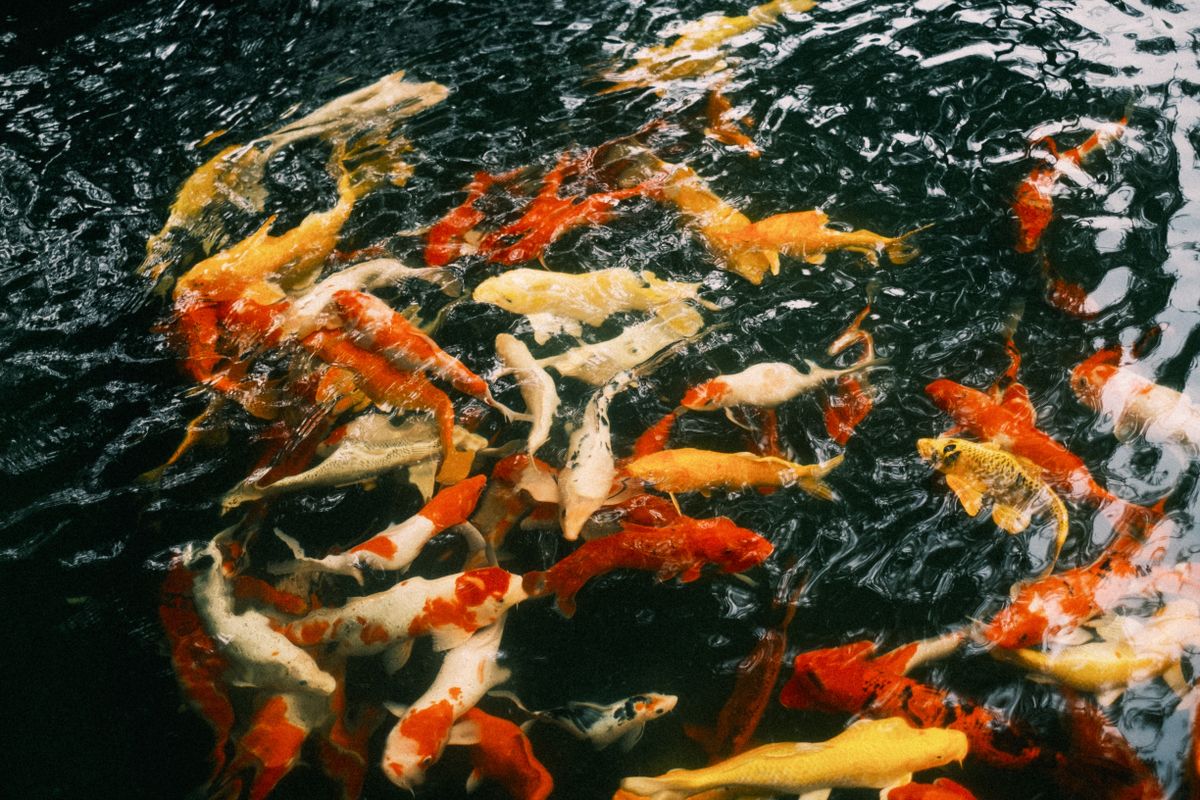
In Japanese tattooing, a dragonfly is rarely alone. It is usually paired with koi, with reeds and grasses, or with waves, and each pairing changes the meaning slightly. The most common pairing is with koi, because koi and dragonflies share the same water, and because their meanings complement each other. A koi is a symbol of perseverance, of swimming upstream against the current, and of strength in the face of difficulty. A dragonfly is a symbol of victory, of flying forward and not retreating. Together, they tell a story about a person who keeps going, in water and in air, and who does not give up. That is a powerful combination, and it is why koi and dragonflies are so often shown together in Japanese tattooing.
Our koi fish tattoo designs guide shows how koi are drawn in the Japanese style, with bold outlines, flowing fins, and water around them, and a dragonfly added to that scene should be drawn in the same style, with the same line weight and the same colours, so the two creatures look as if they belong in the same picture. A dragonfly drawn in a different style, or in a different scale, will look as if it was added as an afterthought, and the design will feel unbalanced. The artist should draw the whole scene together, with the koi swimming below and the dragonfly flying above, so the eye moves from water to air, from perseverance to victory.
Reeds and grasses are the second pairing, and they are the most natural one, because dragonflies rest on reeds and hunt among grasses. A dragonfly shown on a reed, with the reed bending slightly under its weight, is a classic Japanese image, and it is a good choice for a smaller tattoo, where there is not room for a koi. The reed should be drawn with a few leaves, not a dense thicket, so the dragonfly remains the focus. The Japanese tattoo flowers guide on this site shows how plants are used in Japanese tattooing to set the season and the place, and a reed or a grass is a plant that sets the season as autumn, and the place as the edge of a pond.
Waves are the third pairing, and they are the most dramatic. A Japanese wave is drawn with bold, curling lines, and a dragonfly flying over a wave is an image of movement, of a creature that can fly above the water while the wave crashes below. That pairing suits a larger tattoo, on the back or the sleeve, where there is room for the wave to be drawn properly. A small wave with a small dragonfly can look cramped, so if you want waves, plan for a larger piece, and let the artist draw the wave first, then place the dragonfly in the space above it. The chrysanthemum tattoo meaning guide also shows how a flower can be added to a wave scene, and a chrysanthemum, which is an autumn flower, is a natural addition to a dragonfly and wave design.
Placement and Colour in Irezumi
Placement in Japanese tattooing is part of the meaning, and a dragonfly should be placed so that it flies forward with the body. On the upper arm, a dragonfly with its body running along the arm and its head pointing toward the shoulder will fly forward as you walk, while a dragonfly placed with its head pointing down will look as if it is falling. On the back, a dragonfly placed high on the shoulder blade, flying toward the neck, will feel as if it is rising, while one placed low on the back, flying toward the waist, will feel as if it is leaving. On the leg, a dragonfly flying up the calf will feel energetic, while one flying down will feel heavy. These are small details, but they are the details that make a Japanese tattoo feel right, and a good artist will talk about direction before they talk about size.
The most common placements for a Japanese dragonfly are the upper arm, the shoulder, the back, and the forearm, and each suits a different size. A single dragonfly on the forearm can be a small, elegant tattoo, while a dragonfly with koi and waves on the back can be a large, multi-session piece. The best rib cage tattoo designs guide on this site shows how a long, vertical design can follow the ribs, and a dragonfly on the ribs, with its body running along the rib line, can be a beautiful, flowing choice, though it will be painful. The chest is another option, though a dragonfly on the chest is less common in traditional irezumi, where the chest is often reserved for larger floral panels. The peony tattoo meaning guide shows how a large flower can fill the chest, and a dragonfly added to that scene, flying above the peony, can be a lovely, unexpected detail.
Colour in a Japanese dragonfly is usually restrained. The body is often black or dark grey, with a touch of red, blue, or gold, and the wings are often left as clear, unfilled space, with only the outlines and the veins drawn in. That restraint is part of the Japanese style: the Japanese art tradition values empty space, and a dragonfly with clear wings, set against a dark background of water or a wave, will stand out more than a dragonfly filled with bright colour. A red dragonfly, or aka tonbo, is a special case: red dragonflies are a symbol of autumn in Japan, and a red dragonfly can be a beautiful, seasonal choice, especially when paired with maple leaves or chrysanthemums. A blue dragonfly, like the ones in the first photograph in this guide, is also common, and it suits a design with water, because the blue echoes the pond.
Blackwork and grey shading are the backbone of a Japanese dragonfly. The body should be drawn with a bold outline, so it stays readable as the tattoo ages, and the wings should be drawn with fine lines, so they look delicate and clear. The contrast between the bold body and the fine wings is what makes a dragonfly drawing work, and it is also what makes it hard to draw well. A Cleveland Clinic tattoo pain chart is worth checking before you book, because a dragonfly on the ribs or the sternum will hurt more than one on the arm, and a large, multi-session piece will need more stamina than a small one. The Mayo Clinic guide to tattoos also explains the risks of tattooing, including infection and allergic reaction, and it is worth reading before any tattoo, especially a large one.
Designing Your Dragonfly Tattoo
Designing a Japanese dragonfly tattoo starts with the meaning, not with the picture. Decide first what you want the dragonfly to say: is it victory after a hard time, is it courage, is it a reminder of autumn, or is it a pairing with a koi that means perseverance? Once you know the meaning, the design will follow: a victory dragonfly should be shown in flight, flying forward, with its wings swept back; a seasonal dragonfly can be shown at rest on a reed, with autumn leaves around it; a paired dragonfly should be drawn with the koi, the wave, or the flower it belongs with, in the same style and at the same scale. Bring reference images to your artist, but be ready for the artist to change them, because a reference image that was drawn for a different body, in a different style, will need to be redrawn for yours.
Choose an artist who has done Japanese tattooing before, and who can show you healed Japanese work, not just fresh photographs. Japanese tattooing is a distinct style, with its own rules about line weight, shading, background, and composition, and an artist who works mainly in another style may draw a dragonfly that looks Japanese in colour but not in structure. Ask to see the artist’s dragonflies, their koi, and their waves, and ask how they would place a dragonfly on your body, in which direction, and at what size. A good artist will draw the design on your body first, with a stencil, and will check it while you are standing, because a dragonfly that looks right when you are lying down may look wrong when you stand up.
Size is the other decision that affects everything else. A dragonfly needs room for its wings, and a dragonfly that is too small will lose its wings, its body, and its sense of flight, and will become a smudge within a few years. A good minimum for a single dragonfly is about eight to ten centimetres across the wings, and a dragonfly with a koi or a wave will need much more room. The Cleveland Clinic tattoo aftercare guide explains how to care for a new tattoo, and that care matters for a dragonfly, because the fine lines of the wings are the first part to fade if the tattoo is not cared for properly. Keep the tattoo out of the sun while it heals, wash it gently, moisturise lightly, and protect it with sunscreen once it has healed. The American Academy of Dermatology guide to tattoos gives similar advice, and it is worth reading before your appointment.
Finally, remember that a Japanese dragonfly tattoo is a commitment to a meaning, not just to a picture. The dragonfly means victory, courage, and the refusal to retreat, and it is a meaning that will still matter in ten years, when the trend that inspired the tattoo has passed. If that meaning speaks to you, a dragonfly is a good choice. If you only like the look of a dragonfly, and you do not care about its meaning, you may be happier with a different insect, or with a dragonfly drawn in a Western style, where the meaning is less important. Either way, choose the design that feels right to you, and choose it for the right reasons, and the tattoo will be one you are glad to carry.
Our View
“A Japanese dragonfly should fly forward, or it is not a Japanese dragonfly. The victory meaning is the whole point, and it is lost if the insect is drawn without direction, without water, and without the season it belongs to. Pair it with koi or reeds, place it so it moves with your body, and keep the colour restrained. A dragonfly drawn that way will still mean something in twenty years, long after a decorative dragonfly has faded into a pretty smudge.” — Tattoo Designs Pictures
Frequently Asked Questions
What does a dragonfly mean in Japanese tattooing?
In Japanese tattooing, the dragonfly, or tonbo, means victory, courage, and the refusal to retreat, because it flies only forward and cannot fly backward. Samurai carried it as the winning insect, and it is linked to autumn, rice fields, and water.
Is a dragonfly the same as a butterfly in Japanese tattooing?
No. A butterfly means transformation and the soul, and it is linked to spring and flowers, while a dragonfly means victory and courage, and it is linked to autumn and water. They are different insects, with different bodies, wings, seasons, and meanings.
What is a good pairing for a dragonfly tattoo?
Koi is the most common pairing, because koi means perseverance and dragonfly means victory. Reeds and grasses, waves, chrysanthemums, and maple leaves are also good pairings, because they are all autumn or water motifs that belong with a dragonfly.
Where is the best placement for a dragonfly tattoo?
The upper arm, shoulder, back, and forearm are the most common placements, because they give the dragonfly room for its wings and let it fly forward with the body. A dragonfly on a long, narrow placement, such as the forearm, works well because its body is long and straight.
Should a Japanese dragonfly be in colour or black and grey?
Both can work, but Japanese dragonflies are usually restrained in colour, with a black or grey body, clear wings, and a touch of red, blue, or gold. A red dragonfly is a classic autumn choice, and a blue dragonfly suits a design with water.
How big should a dragonfly tattoo be?
A single dragonfly should be at least eight to ten centimetres across the wings, so the wings and body stay readable as the tattoo ages. A dragonfly paired with koi or waves will need a larger piece, often a sleeve or a back piece.
Questions about this guide? Visit the Tattoo Designs Pictures home page to browse more tattoo designs, placements, and meanings.
Sources
- Dragonfly – Wikipedia, on the insect, its flight, and its life cycle.
- Irezumi – Wikipedia, on traditional Japanese tattooing and its motifs.
- Koi – Wikipedia, on koi and their symbolism.
- Chrysanthemum – Wikipedia, on the flower and its meaning in Japan.
- Japanese art – Wikipedia, on the traditions of Japanese art.
- Rice – Wikipedia, on rice, rice fields, and their importance in Japan.
- Water – Wikipedia, on water and its role in nature and art.
- Autumn – Wikipedia, on autumn, its seasons, and its symbols in Japan.
- Tattoos: Understand risks and precautions – Mayo Clinic, on tattoo risks and precautions.
- Tattoo Aftercare: Instructions and Healing Tips – Cleveland Clinic, on how to care for a healing tattoo.
- Tattoo Pain Chart – Cleveland Clinic, on which placements hurt most.
- Tattoos – American Academy of Dermatology, on tattoo care and safety.