In Japanese tattooing, the peony is the flower that never apologises. It blooms huge, red and unmissable across a shoulder or a back, holding its own beside dragons, koi and samurai — and it has done so for nearly two hundred years. In Japan it is called botan, and it is called the King of Flowers, a title it earned not by being delicate but by being magnificent: a flower so large and so richly coloured that it became the symbol of wealth, honour and good fortune itself. The problem for anyone choosing a peony tattoo today is that the flower means several different things at once, and the wrong combination can say something you never intended. A red peony with a lion means one thing; a white peony with a skull means another; a peony alone means something else again. This guide explains what the peony has meant in China and Japan, how it entered Japanese tattooing through the woodblock prints of Kuniyoshi, what its colours and pairings add, and how to design a peony tattoo that says what you actually mean.
In This Guide
Start with the flower itself and its Chinese roots, then follow it into Japanese tattooing, learn what each colour and pairing means, and finish with placement, style and aftercare. For the flower that shares the peony’s place in Japanese tattooing, read our guide to cherry blossom tattoo meaning, and for the tradition the peony belongs to, see Japanese tattoo flowers and Japanese tattoo meanings.
Key Takeaways
- The peony is the King of Flowers. In Japan the tree peony, Paeonia suffruticosa, is called the King of Flowers, and in China it is the flower of riches and honour — a symbol of wealth, good fortune and prosperity, not of delicacy.
- It entered tattooing through woodblock prints. The peony became a tattoo motif through the ukiyo-e artist Utagawa Kuniyoshi, whose illustrations of tattooed warrior-heroes in the 1800s made the flower part of the Japanese tattoo tradition.
- Colour changes the meaning. Red peonies mean honour, wealth and passion; pink peonies mean romance and good fortune; white peonies mean purity, shyness and remembrance — choose the colour as carefully as the flower.
- Pairings decide the message. A peony with a lion means bravery and protection, with a koi means perseverance and good luck, with a dragon means power balanced by beauty, and with a skull means the beauty of life beside death.
- Peonies suit large, bold work. The flower’s layered petals and large scale suit the back, chest, thigh and upper arm, where a traditional Japanese design has room to breathe.
- The peony is also a flower of shame and bashfulness in the West. In the Victorian language of flowers, the peony meant shame — a reminder that the same flower can carry opposite meanings in different cultures.
Table of Contents
- The Flower Itself: Botany and the King of Flowers
- From China to Japan: Wealth, Honour and the Imperial Gardens
- How the Peony Entered Japanese Tattooing
- What Each Peony Colour Means
- Classic Pairings: Lion, Koi, Dragon and Skull
- Placement and Style: Where a Peony Belongs
- Peony, Cherry Blossom and Chrysanthemum Compared
- Choosing Your Peony Design: A Practical Guide
- Aftercare and How a Peony Tattoo Ages
- Frequently Asked Questions
The Flower Itself: Botany and the King of Flowers
The peony is a big flower, and that is the point. Peonies are flowering plants in the genus Paeonia, the only genus in the family Paeoniaceae, and the current consensus counts 33 known species, native to Asia, Europe and western North America. As the botany of the peony describes, most are herbaceous perennials up to a metre tall, but some are woody shrubs up to three and a half metres, and all of them produce large, often fragrant flowers in colours ranging from purple and pink to red, white and yellow. The flowers have a famously short blooming season — usually only seven to ten days — which is part of why the flower became a symbol of the beauty of the moment: it is magnificent, and it does not last. In tattooing, that short season is turned inside out: the tattoo makes the brief bloom permanent.
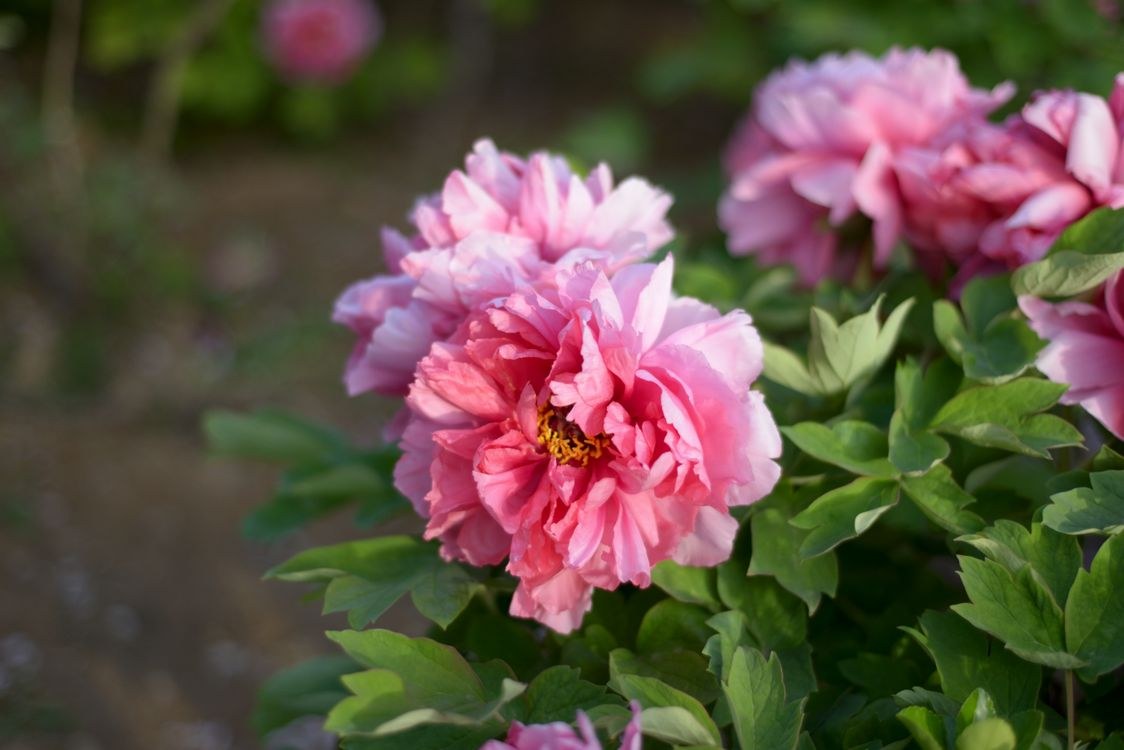
Two peonies matter for tattooing, and they are not the same plant. The tree peony, Paeonia suffruticosa, is a woody shrub with huge, layered blooms, and in Japan it is called the King of Flowers; the Chinese herbaceous peony, Paeonia lactiflora, is called the Prime Minister of Flowers. The distinction matters because the tree peony is the one most often drawn in Japanese tattooing: its flowers are the largest, its petals the most layered, and its form the most dramatic. The tree peony is a cultivated hybrid swarm rather than a single wild species, bred over centuries in China for ever larger and more richly coloured blooms, and the flowers that appear in Japanese tattoos are almost always these big, double, many-petalled forms — the kind of flower that needs a shoulder or a back to do it justice. A small, single-petalled peony is a different flower altogether, and a tattoo artist who knows the tradition will draw the many-petalled form.
The peony’s leaves are part of the design. A Japanese peony tattoo is never just a flower head: the deeply lobed, dark green leaves, the woody stems and the buds are drawn with the same care as the bloom, because they fill the space around the flower and give the composition its structure. The leaves are what make a peony tattoo read as a peony rather than as a generic flower, and they are what allow the design to flow across a shoulder or down an arm. When you look at a peony tattoo, look at the leaves first: if they are drawn as simple green shapes, the artist is copying a photograph; if they are drawn as layered, lobed, almost architectural forms, the artist knows the Japanese tradition. Our guide to Japanese tattoo flowers shows how the same attention to leaves and stems shapes the cherry blossom and the chrysanthemum too.
| Flower | Core meaning in Japanese tattooing | Character |
|---|---|---|
| Peony (botan) | Wealth, honour, good fortune, bravery | Bold, large, magnificent — the King of Flowers |
| Cherry blossom (sakura) | The fleeting nature of life, beauty and death | Delicate, brief, falling — the flower of impermanence |
| Chrysanthemum (kiku) | Longevity, perfection, the imperial family | Layered, formal, enduring — the flower of the throne |
| Lotus (hasu) | Purity, rebirth, enlightenment | Serene, rising from mud — the flower of the spirit |

From China to Japan: Wealth, Honour and the Imperial Gardens
In China, the peony is the flower of riches and honour. The tree peony, known in Chinese as mǔdān, is called fùguìhuā — the flower of riches and honour — and it has been cultivated in China for well over a thousand years, grown in the imperial gardens of the Tang dynasty and celebrated in Luoyang, the city that remains the centre of peony cultivation today. In 1903 the Qing dynasty declared the peony the national flower of China, and although the modern People’s Republic has never formally ratified the choice, the peony remains the flower most Chinese people would name as their national flower. The meaning is consistent across all of this history: the peony stands for wealth, prosperity, good fortune and honour, and it is the flower you give to wish someone success. That is the meaning the flower carried with it when it travelled to Japan.
In Japan, the peony became the King of Flowers. Peonies were introduced to Japan from China, and over time Japanese growers developed many varieties of their own, particularly during the Edo to early Shōwa periods, when breeding by self-fertilisation and crossbreeding produced the many forms grown today. In Japan the tree peony is called the King of Flowers and the herbaceous peony the Prime Minister of Flowers — a courtly ranking that tells you exactly how the flower was understood: not as a wildflower, but as royalty. The peony also entered Japanese medicine and culture more broadly: the root of Paeonia lactiflora was used in kampo, the Japanese adaptation of Chinese medicine, and the flower became a common subject in painting, lacquerware and textiles. By the time it reached tattooing, the peony was already one of the most loaded flowers in the Japanese visual language — a flower that meant wealth, honour and good fortune, and that everybody recognised at a glance.
The Western reading is the opposite, and it matters. In the Victorian language of flowers, the peony meant shame or bashfulness — the story was that mischievous nymphs hid in the petals, giving the flower a meaning of hiding and embarrassment. That reading has no roots in China or Japan, and it does not belong in a Japanese tattoo, but it is a useful warning: a flower’s meaning is not universal, and a peony tattoo designed from a Western flower guide will say something different from one designed from the Japanese tradition. If you want the Japanese meaning — wealth, honour, good fortune and bravery — design from the Japanese tradition, with a Japanese tattoo artist, and let the flower’s size and colour do the talking. The cultural history of the peony records both readings side by side, which is exactly why it is worth knowing which one you are wearing.
How the Peony Entered Japanese Tattooing
The peony became a tattoo because of a woodblock artist. The popular use of peonies in Japanese tattooing was inspired by the ukiyo-e artist Utagawa Kuniyoshi, whose illustrations of the Suikoden — a classical Chinese novel of warrior-heroes — showed his heroes covered in pictorial tattoos that included large peonies. As the record of the peony in tattoo culture notes, Kuniyoshi’s prints made the tattooed hero a romantic figure, and the peony, drawn large and red beside a warrior’s muscles, became part of the visual language of the Japanese tattoo. That is why the peony is so often paired with strength: it was never a decoration added to make a tattoo prettier, it was part of the hero’s armour, a flower worn by men who fought. The tradition is called irezumi, the Japanese art of tattooing, and the peony is one of its oldest and most respected floral motifs.
The peony filled the spaces other motifs could not. A traditional Japanese bodysuit is a composition, not a collection: the dragon, the koi or the hero occupies the centre, and the flowers fill the ground around them, linking the separate elements into one flowing design. The peony is the best flower for that job, because its large, layered head can fill a shoulder, a hip or a gap between two larger motifs, and its leaves can trail across the body and tie the composition together. That is why you will rarely see a traditional Japanese peony alone on a small patch of skin: it belongs in a larger design, where its size is an advantage rather than a problem. The flowers in wabori tattoo work the same way — the traditional Japanese bodysuit is built from large, bold elements that flow with the body, and the peony is one of the largest and boldest of them all.
The meaning grew from the flower’s character, not from a rulebook. In Japanese tattooing, a motif’s meaning comes from what the thing is: the peony is large, rich and unafraid, so it means wealth, honour and bravery; the cherry blossom is brief and falling, so it means the fleeting nature of life; the koi swims upstream, so it means perseverance. That is why the peony is so often paired with lions, dragons and warriors — it is a flower that can stand beside them without being overwhelmed. A peony on its own still carries that meaning: it says that its wearer values honour and good fortune, and is not afraid to be seen. If you are comparing the peony with other flowers in the tradition, our guide to Japanese tattoo meanings sets out the whole system, and our guide to cherry blossom tattoo meaning shows the flower that is the peony’s opposite in every way.

What Each Peony Colour Means
Red is the classic peony, and it means honour and wealth. A red peony is the flower of the traditional Japanese tattoo: bold, unmissable, and instantly read as a symbol of honour, wealth, passion and good fortune. Red is also the colour that ages best in a tattoo, because red ink holds its warmth for years, and a red peony on the shoulder or back will still be red in a decade. If you want one peony and one meaning, choose red. It is the colour Kuniyoshi drew, the colour of the tree peony in its most famous form, and the colour that says the most with the least explanation. A red peony with a lion or a dragon is the most traditional combination in the whole tradition, and it is traditional because it works.
Pink means romance, good fortune and a gentler kind of wealth. Pink peonies are the colour of romance and affection, and they suit a design that is about love, family or a new beginning rather than about honour and bravery. A pink peony is also the colour most often chosen for a first Japanese-style tattoo, because it is softer than red and easier to wear every day, and because it pairs beautifully with a koi, whose orange and white scales echo the pink of the flower. The trade-off is that pink ink fades faster than red, especially in the sun, so a pink peony needs sunscreen and will need a touch-up sooner. White peonies mean purity, shyness and remembrance, and they are the most delicate choice of all: white ink is the least durable colour in tattooing, and a white peony is often drawn in outline with pale shading rather than in solid white, so that the design survives. A white peony with a skull or a memorial inscription is a quiet, serious design — the flower of remembrance beside the reminder of death.
Other colours are rarer, and they change the design. Purple peonies are uncommon in Japanese tattooing and usually mean mystery or enchantment; yellow peonies are rarer still and can mean new beginnings or, in some readings, a love that has faded. Black and grey peonies — drawn in blackwork with no colour at all — are a modern choice, and they suit a design that is about the shape of the flower rather than its colour: the layered petals, the lobed leaves and the bold outline carry the whole piece. A black peony is also the most practical choice for a tattoo that will be seen in formal settings, because it reads as a graphic design rather than as a colourful flower. Whichever colour you choose, choose it for the meaning and for the ageing, not just for how it looks on the day: the colour you pick is the meaning you will carry, and the colour that fades fastest is the one you will be touching up soonest. For more on how colour and meaning interact across the tradition, see our guide to Japanese koi tattoo, where the colour of the fish changes the meaning of the whole design.
Classic Pairings: Lion, Koi, Dragon and Skull
The peony and the lion are the most famous pairing in Japanese tattooing. The lion in Japanese tattooing is not the African lion but the karajishi, the mythical Chinese lion-dog, a guardian creature that protects against evil — and it is almost always drawn with peonies. The pairing works on every level: the lion’s fierce, muscular form against the flower’s soft, layered petals; the guardian’s strength against the flower’s wealth and honour; the dark, solid body of the lion against the bright red of the bloom. A peony with a lion means bravery, protection and good fortune, and it is the design most often chosen by people who want a traditional Japanese tattoo that says they can protect what they love. The peony softens the lion, and the lion gives the peony its edge — together they are the classic image of power balanced by beauty.
The peony and the koi are the most popular pairing of all. Peonies are a common subject in tattoos, often used along with koi fish, and the combination is the one most people picture when they think of Japanese tattooing: a bright orange koi swimming upstream through red peonies, the fish’s scales echoing the flower’s petals. The koi means perseverance, determination and good luck — the fish that swims upstream against the current and, in legend, becomes a dragon — and the peony adds wealth and honour to that perseverance. Our guide to Japanese koi tattoo explains the koi’s own meanings in full, including how the colour of the fish changes the message; paired with a peony, the koi’s meaning is completed, not changed. A koi and peony design suits the back, the thigh or a full sleeve, where the fish has room to swim and the flowers have room to bloom.
Dragons, skulls and warriors give the peony its darker readings. A peony with a dragon means power balanced by beauty — the dragon’s strength and wisdom against the flower’s wealth and honour — and it is a design for people who want a large, dramatic piece. A peony with a skull is the most philosophical pairing: the flower of life and wealth beside the reminder of death, a design that says beauty and mortality belong together, and that wealth means nothing without the knowledge that it ends. The skull does not cancel the peony’s meaning; it completes it, in the same way that the cherry blossom’s beauty is completed by its brief life. A peony with a samurai or a hero from the Suikoden is the most traditional pairing of all, the one Kuniyoshi himself drew: the warrior’s strength and the flower’s honour, worn together on the same body. Whichever pairing you choose, remember that the peony is the flower that holds the composition together — it is the ground the other motifs stand on, and the design will only work if the flowers are drawn as carefully as the hero.
Placement and Style: Where a Peony Belongs
The peony needs room, and the best placements give it room. A traditional Japanese peony is a large flower, and it belongs on a large, flat canvas: the back, the chest, the thigh, the upper arm or a full sleeve. On the back, a single large peony can sit between the shoulder blades with a lion or a dragon; on the thigh, a peony and koi composition has room to flow; on the upper arm, a peony can wrap around the muscle and be framed by its leaves. What does not work is a peony shrunk to the size of a coin: at that scale the layered petals become a smudge, the leaves disappear, and the flower loses the very quality — its size — that makes it a peony. If you want a small peony, choose a different style: a fine-line peony on the forearm or the ankle can be beautiful, but it is a different flower, drawn with different rules, and it will not carry the traditional meaning in the same way. For a comparison with a placement where small flowers work well, see our guide to rose tattoo on ankle, where the flower is chosen for the spot rather than the spot for the flower.
Traditional Japanese style is the peony’s home. The style — bold black outlines, solid colour, large scale, flowing composition — was built for flowers like the peony, and a traditional peony will look right for decades because the thick outlines hold the colour in and the simple shapes have nothing to blur into. The ukiyo-e woodblock prints that inspired the tradition used the same bold lines and flat areas of colour, and a tattoo drawn in that style is a direct descendant of Kuniyoshi’s prints. Modern styles can work too: a watercolour peony, with soft washes of pink and red and no hard outline, is beautiful when fresh but fades faster than a traditional one; a blackwork peony, with no colour at all, is striking and durable but loses the flower’s colour meaning; a realistic peony, drawn from a photograph, is impressive but often too detailed to age well. The honest advice is to choose traditional Japanese style if the meaning matters to you, and to choose another style only if you understand what you are giving up.

Peony, Cherry Blossom and Chrysanthemum Compared
The three great flowers of Japanese tattooing are a system, not a menu. The peony means wealth, honour and good fortune; the cherry blossom means the fleeting nature of life; the chrysanthemum means longevity and perfection. Together they cover the whole of a life: the peony’s prosperity, the blossom’s brief beauty, and the chrysanthemum’s endurance. That is why they are so often drawn together in a single composition — a sleeve that carries all three is a sleeve that says something complete. The differences are in their character: the peony is large and bold, the cherry blossom is small and falling, the chrysanthemum is layered and formal. A design that mixes them should respect those characters: the peony as the anchor, the blossom as the scattering, the chrysanthemum as the crown. Our guide to cherry blossom tattoo meaning explains the blossom’s own story in full, and it is worth reading alongside this guide before you choose between them.
The lotus is the peony’s quiet opposite. Where the peony is about wealth and honour in this world, the lotus is about purity and rebirth beyond it — a flower that rises clean from muddy water. A peony and a lotus together are a design about both worlds, and they are sometimes combined for exactly that reason. The practical difference is in the drawing: the lotus is drawn with open, serene petals and a calm, symmetrical form, while the peony is drawn with crowded, overlapping petals and a rich, almost chaotic fullness. If you love both flowers, consider a design that gives each its own space — the peony on the shoulder, the lotus on the chest — rather than crowding them together. And remember that the peony’s Western meaning, shame and bashfulness, has no place in this system at all: it belongs to a different flower language, and a Japanese tattoo artist will not know it.
Choosing Your Peony Design: A Practical Guide
Start with the meaning, not the picture. Before you look at a single reference photograph, decide what you want the tattoo to say: honour and wealth, romance and good fortune, remembrance, or bravery and protection. That decision chooses the colour and the pairing for you — red with a lion for bravery, pink with a koi for romance and good fortune, white with a memorial for remembrance — and it stops you from choosing a design that looks beautiful but says the wrong thing. Then decide the size: a traditional peony needs to be large, at least the size of your palm, and it needs a placement that gives it room. Bring your artist reference photographs of healed traditional peonies, not just fresh ones, and ask to see their own healed work. A good Japanese-style artist will draw the peony from the flower, not from another tattoo, and will know the difference between a tree peony and a herbaceous one.
Work with the artist on the composition, not just the flower. A peony tattoo is a composition: the flower, the leaves, the stems, the buds, and whatever it is paired with all have to flow with the body. Ask the artist to draw the design on your skin with a pen while you stand and move, and look at it from every angle, because a peony that looks perfect on paper can sit awkwardly on a shoulder. Agree the colour palette in advance, and ask how the colours will age: red holds, pink fades, white disappears, and black outlines hold everything together. And budget for time: a large traditional peony takes several hours, and a peony with a lion or a koi takes several sessions. A tattoo of this scale is not a lunchtime decision, and the best ones are the ones the wearer thought about for months. For more on the tradition it belongs to, see our guides to Japanese tattoo flowers and Wabori Tattoo, and for the broader system of meanings, Japanese tattoo meanings.
Aftercare and How a Peony Tattoo Ages
A large colour tattoo needs careful aftercare. The rules are the same as for any tattoo, but the scale makes them more important: keep the tattoo clean and dry for the first two weeks, wash it gently with lukewarm water and fragrance-free soap, pat it dry, and apply a thin layer of aftercare balm. Keep it out of the sun while it heals, and use sunscreen on it afterwards — ultraviolet light breaks down tattoo ink, and red and pink inks fade fastest of all. Do not swim, soak or use a hot tub for two weeks, and do not pick at flakes or scabs, which pull ink out with them. Mayo Clinic’s guide to tattoo risks and precautions lists the signs of infection to watch for, and a large tattoo that becomes infected needs treatment quickly. The health effects of tattoos are mostly about infection and allergy, and most of the risk is in the first fortnight — get that right and the rest is straightforward.
A traditional peony ages better than almost any other flower tattoo. The bold black outlines hold the colour in, the large scale gives the ink room to spread without blurring the design, and the simple, layered shapes have nothing small to lose. A traditional red peony will still be red and readable in twenty years, while a fine-line or watercolour peony of the same age will have faded and softened. That is the real advantage of the traditional style: it was designed to last, by artists who knew their work would be worn for a lifetime. Expect a touch-up after ten years or so, mainly to refresh the reds and pinks, and choose an artist who will still be there to do it. The peony’s own story is a story of endurance — a flower cultivated for over a thousand years, carried from China to Japan, from woodblock prints to skin — and a tattoo drawn in that tradition is built to endure in the same way.
Our View
The peony is the flower for people who want their tattoo to be seen and to mean something. Choose it in red, draw it large, pair it with a lion or a koi, and put it where it has room to bloom — and it will carry the King of Flowers’ meaning for the rest of your life: wealth, honour, good fortune and bravery, worn without apology. — The Tattoo Designs Pictures Team
Frequently Asked Questions
What does a peony tattoo mean?
In Japanese tattooing, the peony means wealth, honour, good fortune and bravery. In China it is the flower of riches and honour, and in Japan the tree peony is called the King of Flowers. The exact meaning depends on the colour and the pairing.
What does a red peony tattoo mean?
A red peony means honour, wealth, passion and good fortune. Red is the classic colour for a Japanese peony tattoo, it ages best, and it is the colour Utagawa Kuniyoshi drew in his woodblock prints of tattooed heroes.
What does a peony with a lion mean?
A peony with a lion means bravery, protection and good fortune. The lion is the karajishi, a guardian creature, and the pairing is the most famous in Japanese tattooing — power balanced by beauty.
Is the peony a good tattoo for a woman?
Yes. The peony is worn by women and men alike in Japanese tattooing, and its meanings — wealth, honour and good fortune — are not gendered. Pink peonies are often chosen for romance and good fortune, and red peonies for honour and bravery.
Where is the best place for a peony tattoo?
On a large, flat canvas: the back, chest, thigh, upper arm or a full sleeve. The peony is a large flower, and it needs room for its layered petals and leaves. Small peonies lose the flower’s character and blur faster.
How long does a peony tattoo take?
A single large peony takes several hours, and a peony paired with a lion, koi or dragon takes several sessions. Traditional Japanese work is built up over multiple sittings, and the best results come from planning the whole composition in advance.
Questions About Your Design?
If you are choosing a peony design, wondering about colour or pairing, or comparing the peony with another flower, we are happy to help. Visit our home page to browse the full collection of tattoo guides, or start with our guide to Japanese tattoo flowers.
Sources
- Peony — Wikipedia
- Paeonia suffruticosa — Wikipedia
- Paeonia lactiflora — Wikipedia
- Irezumi — Wikipedia
- Tattoo — Wikipedia
- History of Tattooing — Wikipedia
- Health Effects of Tattoos — Wikipedia
- Tattoos: Understand Risks and Precautions — Mayo Clinic
- Cherry Blossom — Wikipedia
- Chrysanthemum — Wikipedia
- Ukiyo-e — Wikipedia
- Japanese Art — Wikipedia