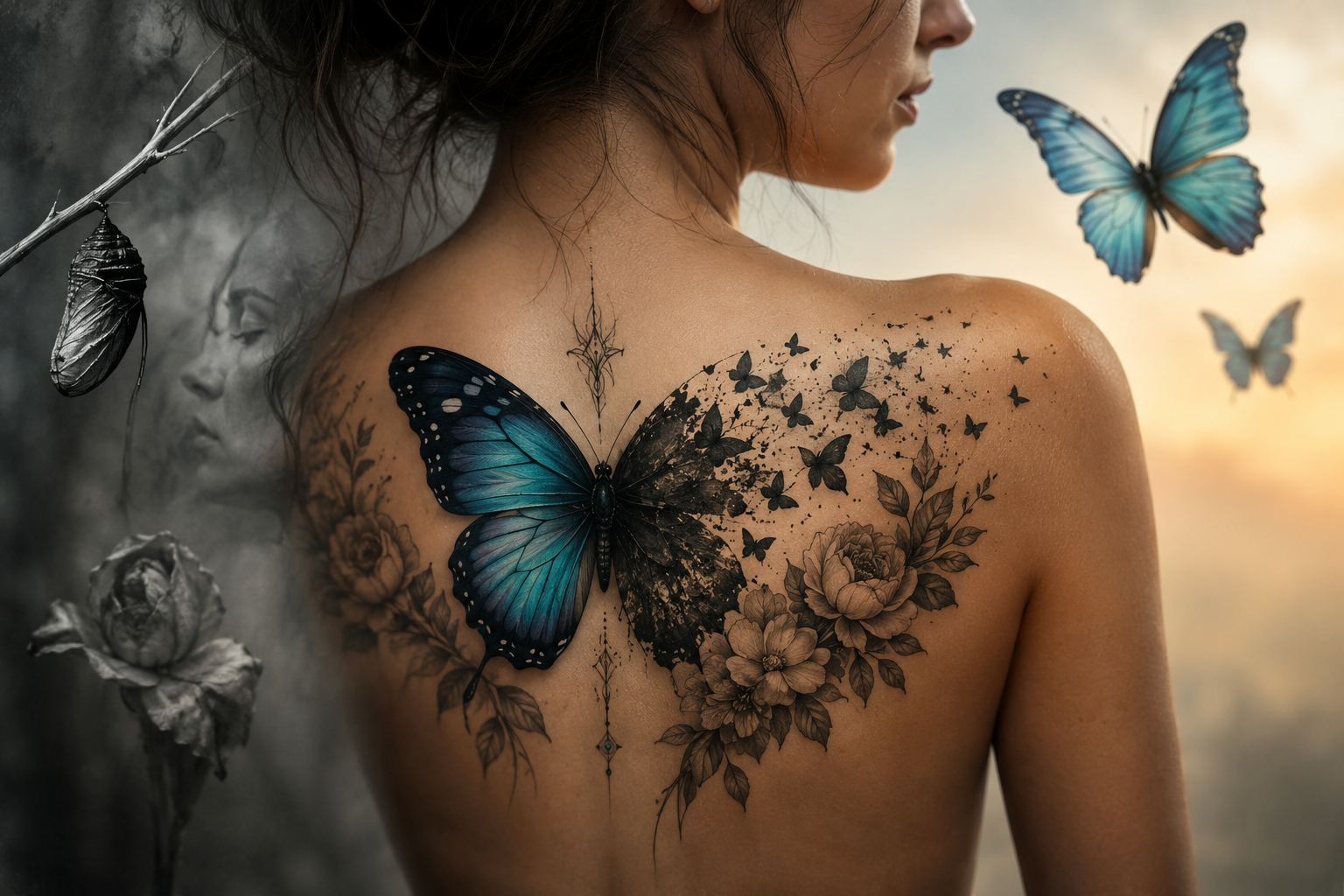
There are certain images that achieve something remarkable in the world of tattoo design — they manage to be simultaneously one of the most popular choices available and one of the most genuinely meaningful. The butterfly is that image. It appears on more skin than almost any other tattoo subject, rendered in styles ranging from the hyper-realistic to the purely abstract, worn by people of every age, background, and cultural context, carrying meanings that span the full range of human emotional experience from grief to joy to hard-won spiritual understanding. The sheer ubiquity of butterfly tattoos might lead a casual observer to dismiss them as generic — as default choices made without genuine reflection. That dismissal would be a significant error. The butterfly is one of the most symbolically rich subjects in the entire catalog of tattoo imagery, carrying thousands of years of accumulated meaning from multiple cultural traditions, and the people who choose it are far more often connecting to that depth than simply following a trend. Understanding the full range of what the butterfly has meant to human beings across history and culture transforms the experience of encountering these tattoos from one of casual recognition to something considerably more interesting.
The Biological Miracle That Created the Symbol
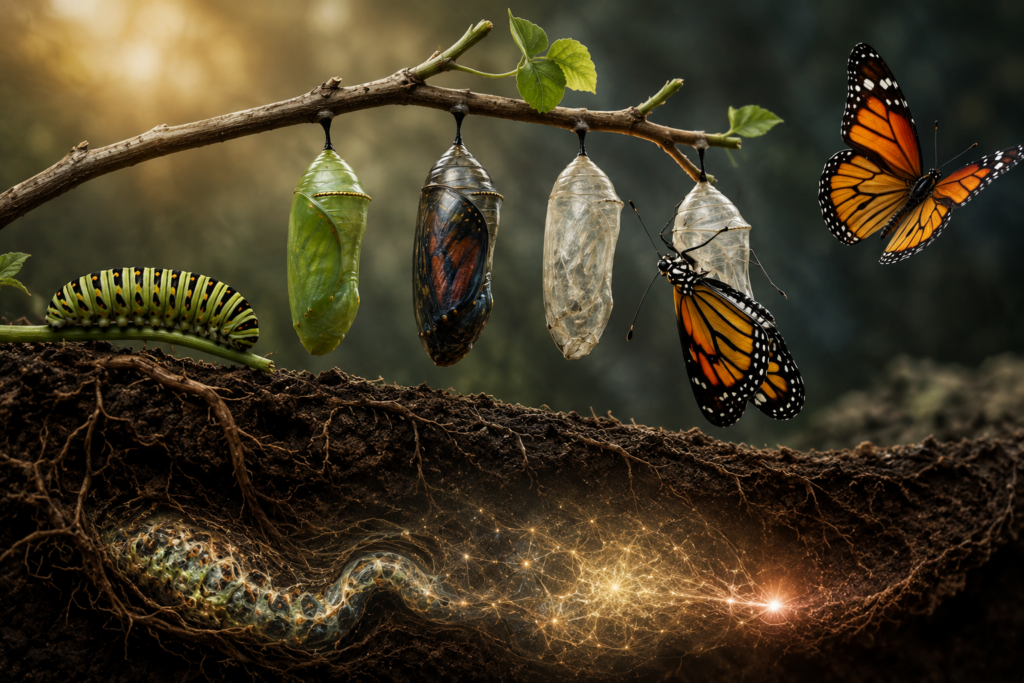
Before exploring what the butterfly means across different cultural traditions, it is worth spending a moment on the biological reality that makes the butterfly such a powerful symbol in the first place. The process of metamorphosis — by which a caterpillar transforms into a butterfly — is genuinely extraordinary, and understanding what actually happens during that process deepens appreciation of why so many cultures independently arrived at the butterfly as their primary symbol of transformation.
When a caterpillar enters its chrysalis, it does not simply rearrange its existing body parts into a new configuration. It essentially dissolves itself — digesting most of its own tissue into a kind of biological soup — and then reorganizes that raw material into an entirely different body plan. The caterpillar and the butterfly share the same DNA and the same continuous thread of life, but the physical form through which that life expresses itself undergoes a dissolution and reconstitution so complete that the two stages are functionally different organisms. The butterfly that emerges from the chrysalis is not a modified caterpillar. It is something genuinely new, built from the substance of what came before but organized according to a completely different blueprint.
This biological reality maps so perfectly onto the human experience of profound personal transformation — the sense of going through a period of dissolution and reconstitution that produces something genuinely new from the material of what was before — that it seems almost designed as a metaphor. Which is probably why cultures that had no knowledge of each other’s existence arrived independently at the butterfly as their primary symbol for exactly this kind of transformation. The metaphor is not invented or imposed. It is observed.
Japanese Butterfly Symbolism: The Soul in Flight
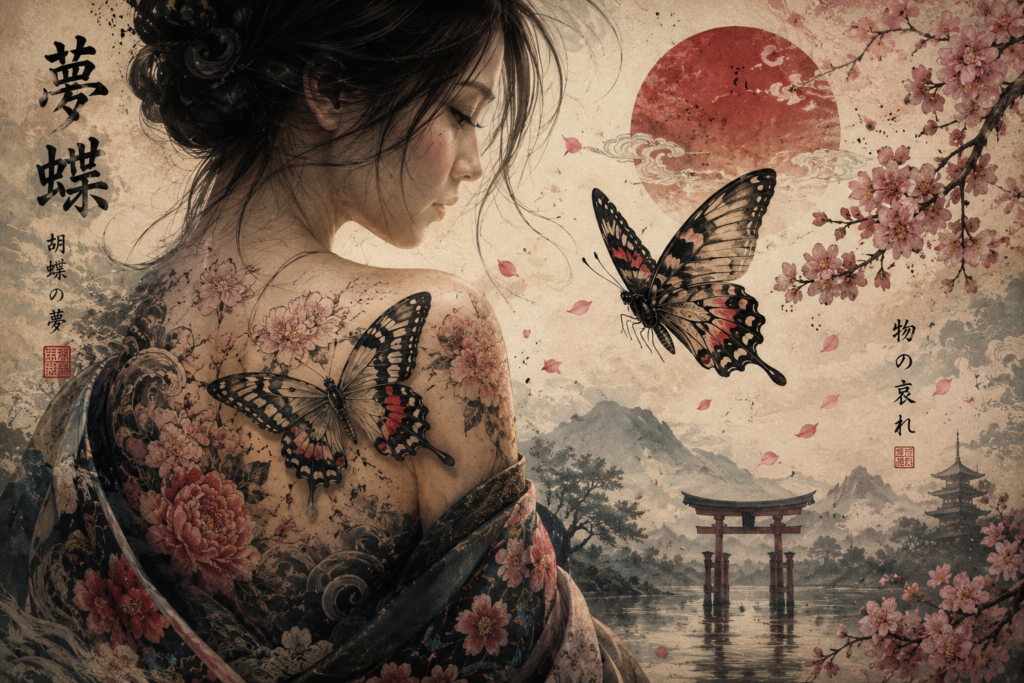
In Japanese cultural tradition, the butterfly carries a rich and multidimensional symbolic significance that encompasses the soul, transformation, the brevity of beauty, and the nature of consciousness itself. The connection between butterflies and the soul in Japanese tradition is ancient and deeply embedded in the culture’s aesthetic and spiritual worldview. The Japanese word for butterfly, chocho or cho, appears throughout classical Japanese poetry and literature as a symbol of the soul’s lightness, its capacity for beauty, and its ultimate impermanence.
One of the most philosophically significant butterfly references in East Asian tradition comes from the Chinese Taoist philosopher Zhuangzi, whose influence on Japanese aesthetic thought through the Zen Buddhist tradition was profound. Zhuangzi famously described a dream in which he was a butterfly, flying freely and completely unaware that he was Zhuangzi dreaming. Upon waking, he found himself genuinely uncertain which was the reality — was he Zhuangzi who had dreamed of being a butterfly, or was he a butterfly now dreaming of being Zhuangzi? This story — known as the Butterfly Dream — became one of the foundational texts of Taoist and Zen thought about the nature of consciousness, the relationship between dreaming and waking reality, and the ultimately mysterious nature of personal identity. A butterfly tattoo drawn from this tradition carries philosophical depth that is genuinely extraordinary — it is a symbol of the fundamental uncertainty about the nature of consciousness and self that sits at the heart of East Asian philosophical inquiry.
In traditional Japanese tattooing, the butterfly frequently appears alongside other symbols of natural beauty and impermanence — cherry blossoms, peonies, and chrysanthemums. The pairing of butterfly and cherry blossom is particularly resonant, since both are symbols of beauty that is inseparable from its transience. The cherry blossom is most beautiful at the moment of its falling, when its brief perfection is most acutely apparent precisely because it is ending. The butterfly’s beauty is similarly heightened by its fragility — the wings that make it magnificent also make it extraordinarily vulnerable. Together, these images create a meditation on the Japanese aesthetic concept of mono no aware — the bittersweet awareness of impermanence that the Japanese tradition regards not as a source of despair but as the very quality that makes beauty possible.
Chinese Butterfly Symbolism: Love, Joy, and Conjugal Happiness
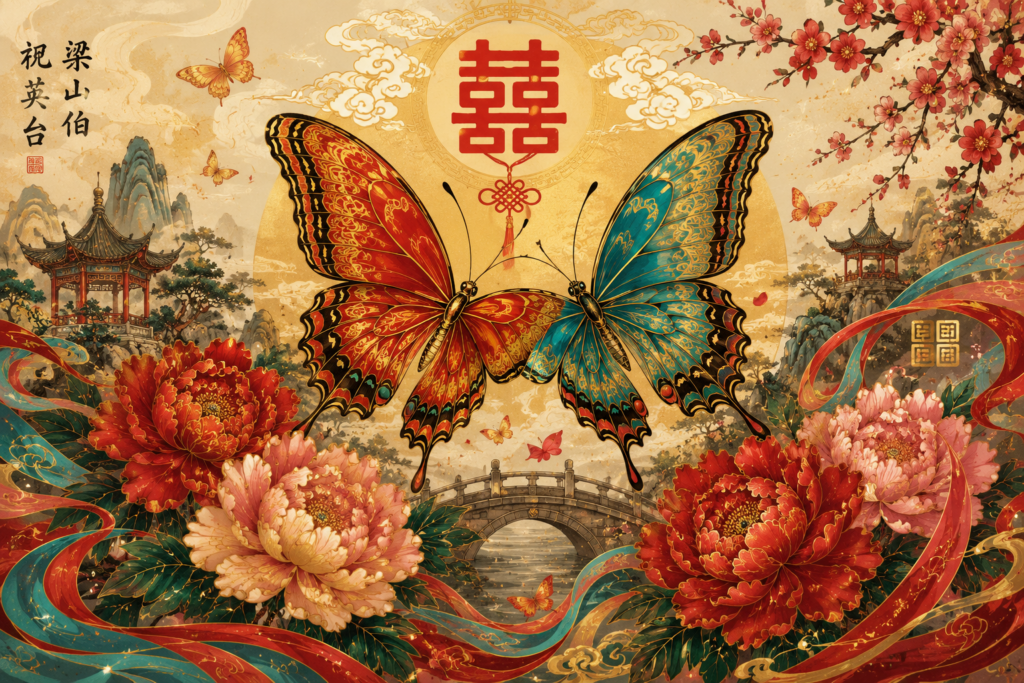
Chinese butterfly symbolism emphasizes different aspects of the creature’s character than Japanese tradition does, focusing less on impermanence and philosophical uncertainty and more on love, joy, and the happiness of partnership. In Chinese culture, two butterflies flying together are one of the most traditional symbols of conjugal happiness — the image of two beings so perfectly matched that they move through the world in perfect synchrony, each enhancing the beauty and freedom of the other. This symbolism makes butterfly tattoos a popular choice for couples, with matching or complementary butterfly designs serving as a declaration of the kind of partnership being celebrated.
The most famous Chinese story involving a butterfly is the legend of Liang Shanbo and Zhu Yingtai, often called the Chinese Romeo and Juliet. In this story, two young people fall deeply in love but are prevented from marrying by their families. When the young man dies of a broken heart and the young woman is forced into an unwanted marriage, she throws herself on his grave — and the two lovers are transformed into butterflies, free to be together in death as they could not be in life. This story, known as the Butterfly Lovers, has been told and retold in Chinese culture for centuries through opera, literature, and film, and it gives butterfly imagery in Chinese tradition a romantic resonance that encompasses both the joy of love and the grief of loss.
Chinese butterfly tattoos frequently draw on the visual vocabulary of traditional Chinese decorative art — bold, flowing lines, vibrant colors including red, gold, and turquoise, and compositions that emphasize the butterfly’s movement and vitality rather than its delicacy. The Chinese decorative tradition tends toward a more exuberant visual energy than the more restrained Japanese approach, and Chinese-influenced butterfly tattoos reflect this difference in their color palette and compositional dynamism.
Celtic Butterfly Symbolism: The Soul’s Journey and Transformation
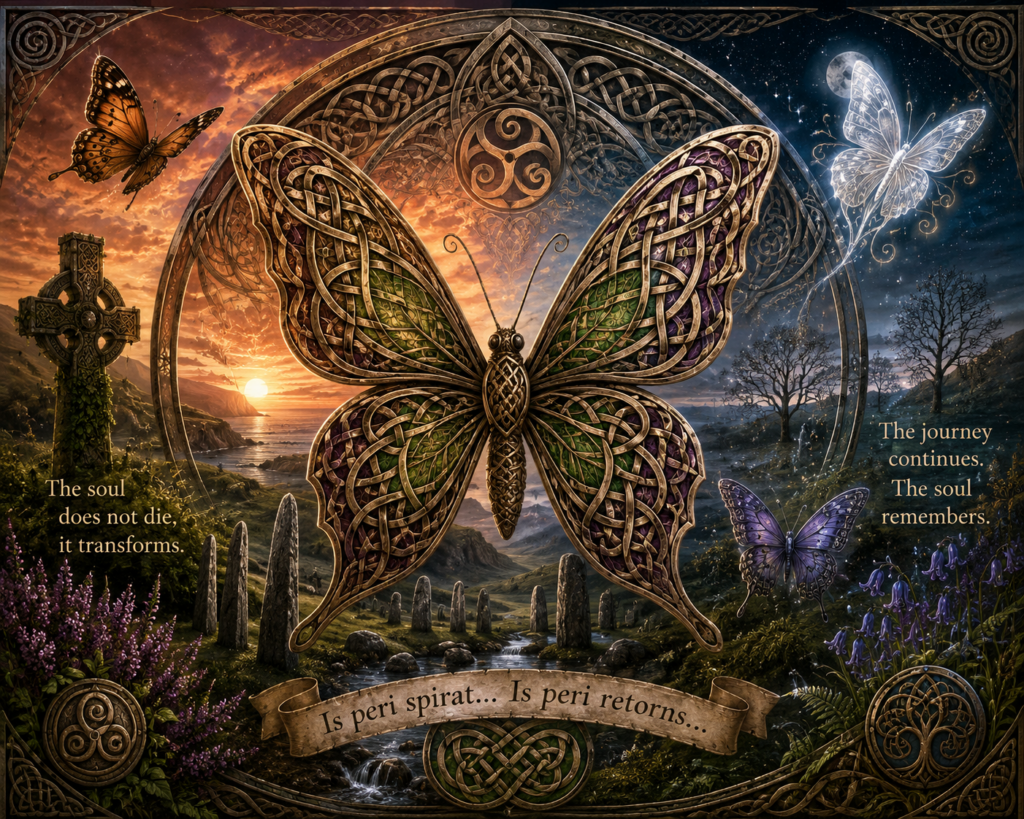
In Celtic spiritual tradition, the butterfly was understood as a symbol of the soul and its journey through multiple lives and states of existence. The Celts, who held a sophisticated belief in the soul’s continuation beyond physical death and its passage through multiple forms of existence, found in the butterfly’s metamorphosis a perfect physical demonstration of the soul’s capacity to transform from one mode of being into another while maintaining its essential continuity.
Celtic butterfly imagery frequently appears in the same interlace knotwork tradition that characterizes Celtic art more broadly — the butterfly’s wings providing a natural canvas for the elaborate interwoven patterns that represent the Celtic understanding of the universe as a web of interconnected forces and relationships in which nothing is truly separate from anything else. A Celtic butterfly tattoo rendered in the knotwork style creates a conversation between the butterfly’s symbolism of transformation and the knotwork’s symbolism of interconnection, suggesting a being who transforms through their relationships rather than in spite of them.
The Celtic tradition also associated specific butterfly colors with specific meanings. A white butterfly was understood as the soul of a recently deceased person, particularly a child — a gentle presence making a final farewell before moving on to the next stage of existence. This association makes the white butterfly a particularly meaningful choice for memorial tattoos honoring a child who has died, combining the general symbolism of the soul’s journey with the specific emotional weight of early loss.
The Butterfly as Memorial Symbol
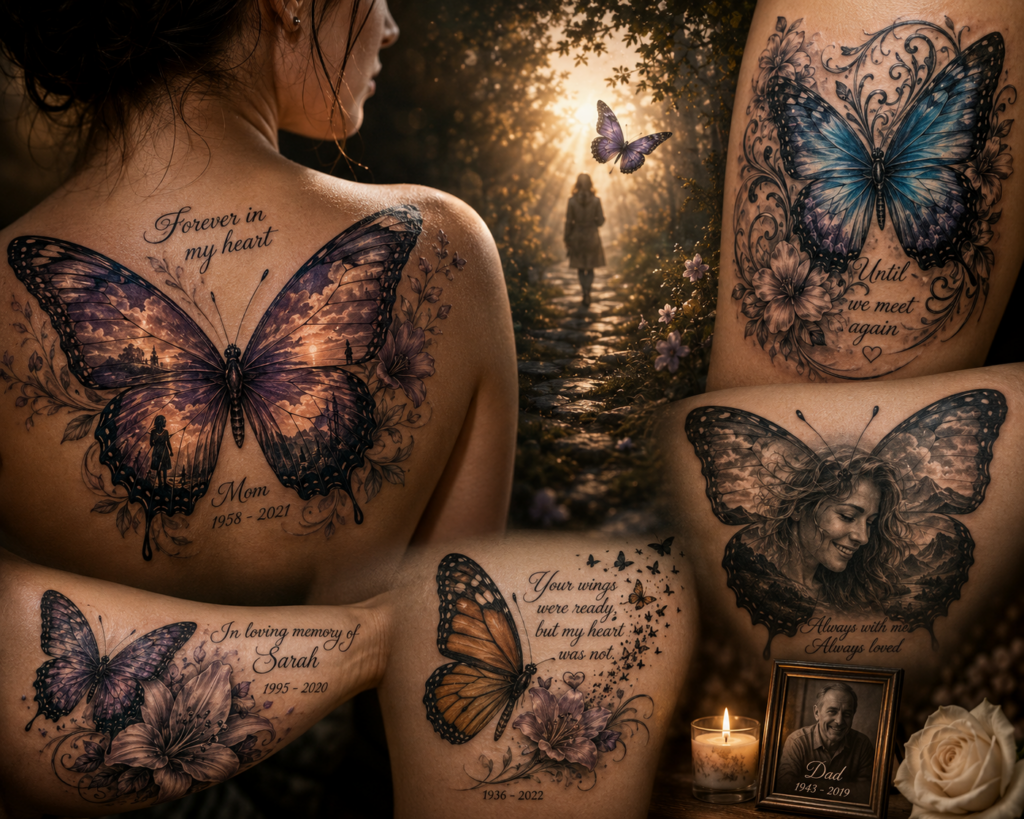
Across multiple cultural traditions, the butterfly’s association with the soul makes it one of the most natural and widely used subjects for memorial tattoos — pieces created to honor and remember a person who has died. The belief that the souls of the dead can appear as butterflies, or that butterflies carry some quality of the beloved dead person’s presence, appears in traditions ranging from Celtic to Japanese to Mexican to various Indigenous North American cultures, suggesting that this association taps into something universal about the human experience of grief and the longing to remain in contact with those who have left.
Memorial butterfly tattoos are among the most emotionally significant tattoos a person can carry, and they come in a range of visual approaches that reflect different relationships with loss. A single butterfly rendered in the colors most associated with the person being honored — perhaps their favorite color, or the colors of a flower they loved — can be a quietly powerful tribute that the wearer carries close to their body. A butterfly emerging from a flower that bears the deceased person’s name makes the memorial content explicit while maintaining the beauty and delicacy of the butterfly image. A butterfly with the dates of a person’s birth and death incorporates the memorial content of traditional commemorative imagery into the natural symbolism of the butterfly’s own metamorphosis.
Some of the most moving memorial butterfly tattoos incorporate an element of the person being honored into the butterfly itself — a butterfly whose wings contain imagery associated with the deceased, or whose wing pattern incorporates a meaningful text, or whose form is combined with a portrait element that brings the person’s face into the composition. These pieces require artists of considerable skill to execute well, but when done successfully they achieve something that purely abstract memorial tattoos sometimes struggle to reach — a genuine sense of the specific individual being remembered, not just the general fact of loss.
Transformation and Personal Reinvention
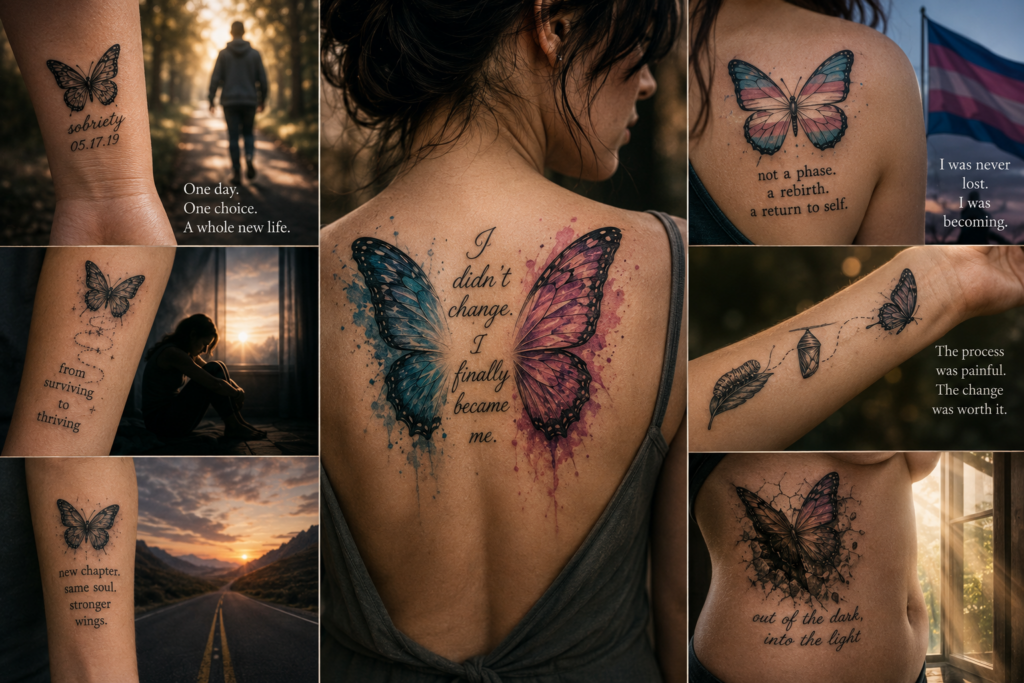
Beyond the memorial context, the butterfly’s most common symbolic use in contemporary tattoo culture is as a symbol of personal transformation — the marking of a significant change in the wearer’s life, identity, or understanding of themselves. This use is so widespread precisely because the butterfly’s metamorphosis maps so well onto so many different kinds of human transformation: recovery from addiction, emergence from depression or anxiety, the end of an abusive relationship, a major career change, a religious conversion, the completion of a period of education, gender transition, immigration to a new country.
What all of these transformations share with the butterfly’s metamorphosis is the experience of going through a period of dissolution — of the old self or the old life being broken down into its component parts — and emerging on the other side as something genuinely new. The person who gets a butterfly tattoo to mark their sobriety anniversary is saying something about having gone through that dissolution and having come out the other side with wings. The person who gets a butterfly tattoo to mark their gender transition is saying that the form they inhabit now is not a modification of the form they had before but a genuine emergence into the self they actually are. The person who gets a butterfly tattoo after leaving a long marriage is saying that something ended, something dissolved, and something new is beginning to fly.
Butterfly tattoos marking gender transition deserve particular attention, as the butterfly has become one of the most widely used symbols within transgender communities. The alignment between the butterfly’s metamorphosis — the emergence of the true form from within the chrysalis of what was before — and the experience of gender transition is felt by many trans people as genuinely profound rather than merely decorative. The butterfly in this context is not simply a pretty image but a precise metaphor for the specific quality of their experience: the sense of having always been the butterfly, even while appearing to others as the caterpillar.
Monarch vs. Blue Morpho: How Species Choice Shapes Meaning
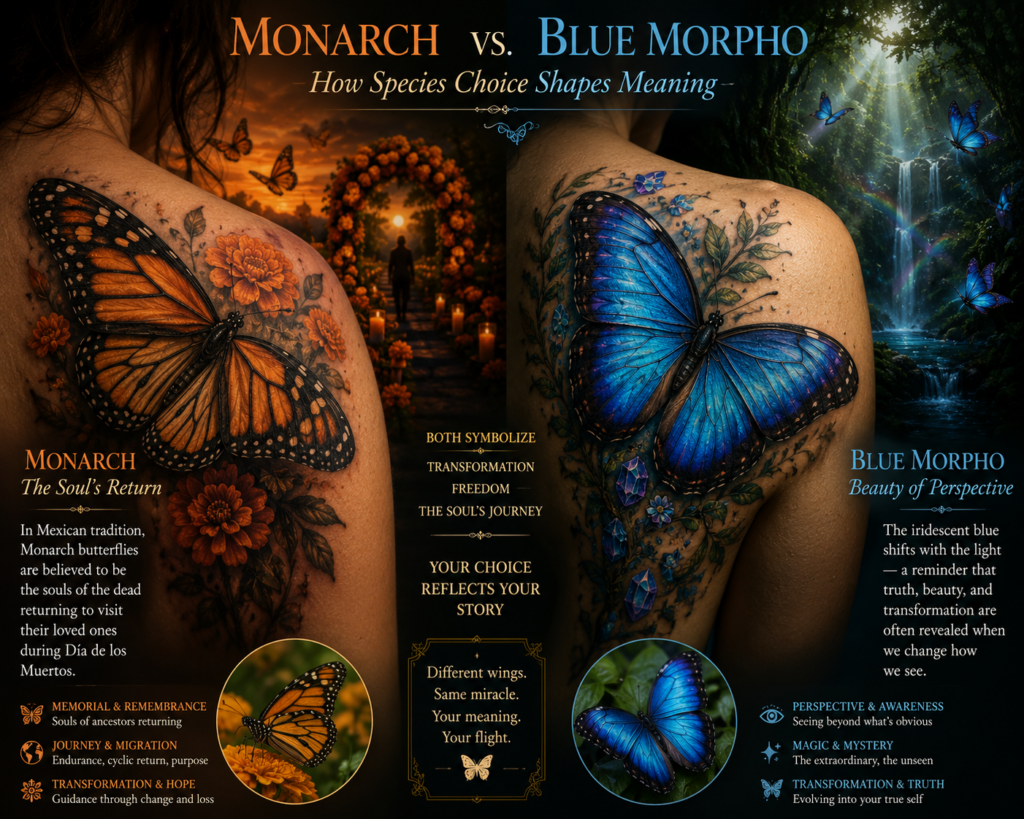
For people getting realistic butterfly tattoos, the specific species of butterfly chosen for the design carries additional layers of meaning beyond the general butterfly symbolism. Different butterfly species have developed their own cultural associations and symbolic resonances, and understanding these can help you choose a species whose specific qualities align with what you want your tattoo to represent.
The Monarch butterfly is probably the most symbolically loaded butterfly species in North American culture, and its association with the Day of the Dead tradition in Mexican culture gives it a specific connection to memorial symbolism that other species lack. Monarchs make an extraordinary annual migration from Canada and the United States to specific overwintering sites in the mountains of central Mexico, arriving each year around the time of Día de los Muertos. Mexican tradition holds that the returning Monarchs are the souls of the dead returning to visit their families, giving the butterfly a literal rather than merely metaphorical connection to the spiritual world. A Monarch butterfly tattoo carries this memorial dimension automatically, making it a particularly meaningful choice for pieces that honor the dead.
The Blue Morpho butterfly, with its extraordinary iridescent blue wings that shift color as the viewing angle changes, has become associated with the mysterious and the magical — the sense that some things in the world are more beautiful and more complex than they initially appear, and that the truth of something often only reveals itself when you change your perspective. A Blue Morpho tattoo rendered in the iridescent blues that characterize the actual butterfly — achieving that shifting quality in tattoo ink requires genuine skill and the right color choices — is one of the most visually spectacular butterfly tattoo options available.
Style and Placement for Butterfly Tattoos
Butterfly tattoos work across the full range of tattoo styles, from hyperrealistic to purely abstract, and the style you choose will shape both the aesthetic impact of the piece and the specific emotional register it occupies. Realistic butterfly tattoos — rendered with careful attention to the actual wing patterns, coloration, and physical structure of a specific butterfly species — have a quality of natural beauty that connects the tattoo to the living world in a way that more stylized approaches do not. These pieces require an artist with strong skills in color blending and fine detail work, and they are most effective at medium to large sizes where the wing detail can be rendered with genuine precision.
Watercolor butterfly tattoos, which apply loose washes of color around or within a butterfly outline to create a painterly, flowing effect, have been among the most popular butterfly tattoo styles for the past decade. The watercolor approach suits the butterfly’s symbolism of transformation and freedom particularly well — the loose, uncontained color suggests a creature that cannot be fully bounded, whose beauty overflows any attempt to contain it in clean outlines. These pieces are visually striking but require touch-ups over time as the diffuse color areas fade and lose definition in the skin.
Placement for butterfly tattoos is enormously varied, but certain placements have particular resonance. A butterfly on the shoulder blade or upper back, positioned where actual wings would be, creates the impression of the wearer in the process of transformation — the wings emerging from the body rather than simply depicted on it. Butterfly tattoos on the collarbone or sternum place the image near the heart, giving it an emotional intimacy that suits the butterfly’s connection to grief, love, and the soul. Wrist and ankle placements keep the butterfly in constant view of the wearer, functioning as a daily reminder of the transformation it marks.
Whatever form your butterfly tattoo takes, it carries with it the accumulated weight of one of the most universal and genuinely meaningful symbols in human visual culture — the evidence, written permanently on your skin, that you have been through a dissolution and come out the other side with wings.